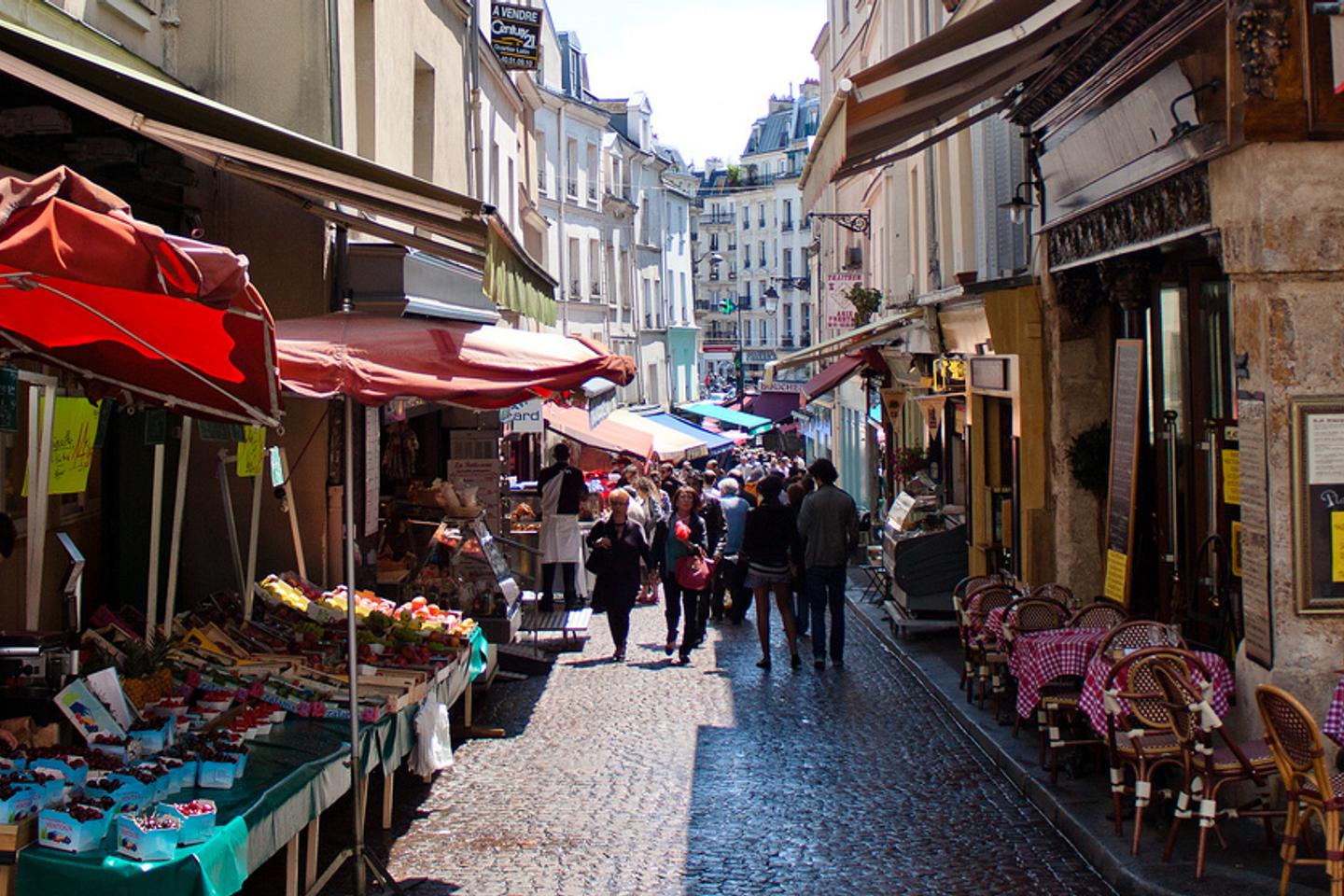
Nowhere in France has a commercial density as high as Paris. According to the Paris Urban Planning Agency (APUR), which conducts a comprehensive survey every three years, the capital in 2023 had 28 shops for every 1,000 inhabitants – far ahead of Nice (19.5), Bordeaux (19.3) and Lyon (17.1). Despite disparities between neighborhoods, the fabric of some 60,800 active Parisian shops remains diverse and robust enough to withstand decline, even as city centers elsewhere see a decline in activity. But this unique feature of the capital now faces two major threats: overtourism and real estate speculation.
"This extremely high density is due to the fact that shops do not cater only to residents," explained Marie-Sophie Ngo Ky Claverie, director general of the Paris branch of MEDEF, France's largest employer federation. "Every day, Paris's population nearly doubles: Three hundred thousand people leave the city while 1.2 million come in from outside to work, in addition to tourists and day-trippers," she continued, pointing out that 39% of all shops in the Paris region are located within Paris itself, even though the city contains just 17% of the region's population. It is precisely this balance – between the needs of residents and those of visitors, which often do not coincide – that is crucial and difficult to maintain.