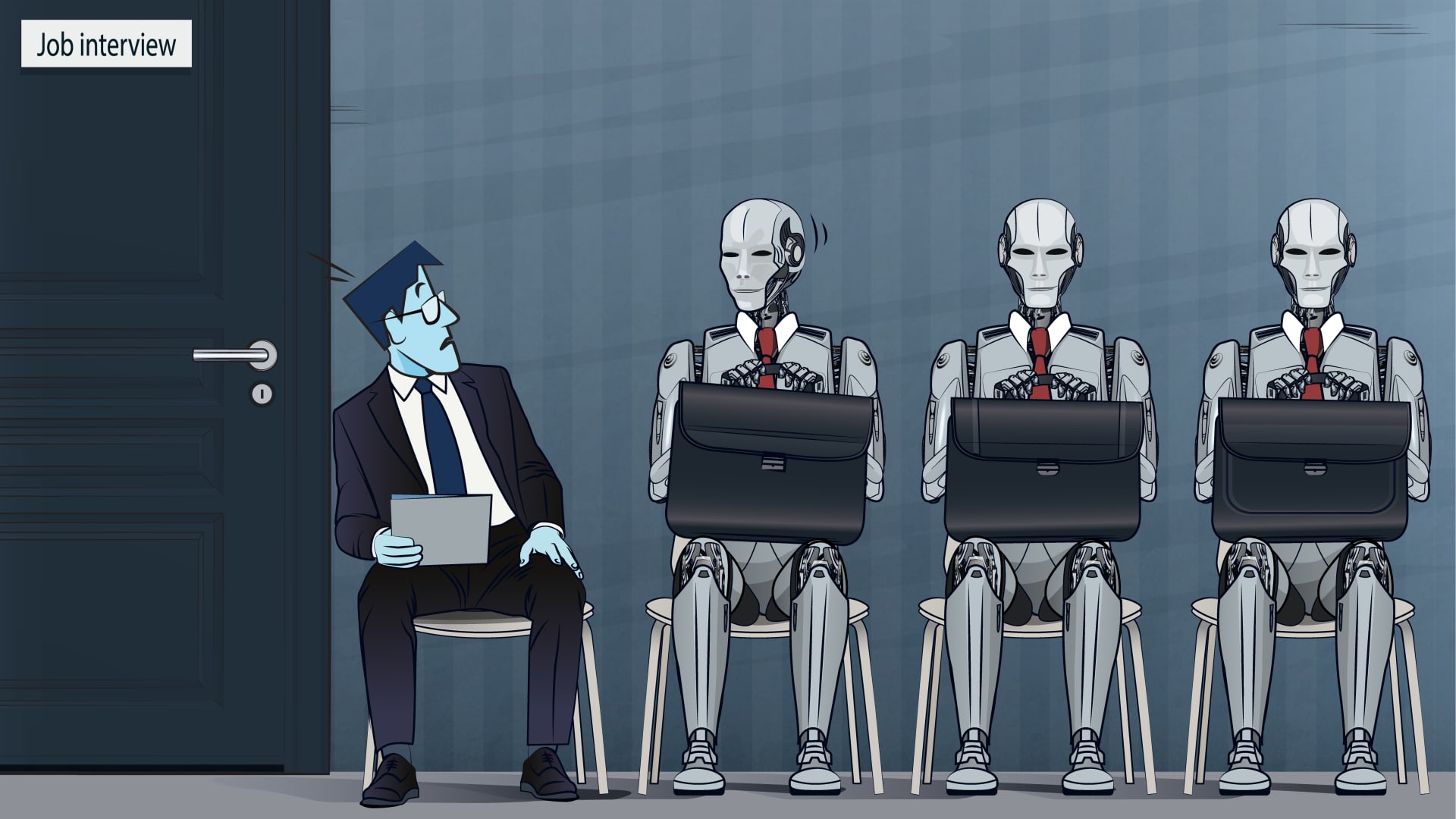
Companies are replacing entry-level jobs with artificial intelligence — and, in the process, are upending the traditional route to career advancement for many young, white-collar workers, according to labor and AI experts.
Typically, new entrants to the job market do grunt work with relatively low stakes — think research or data entry jobs, for example. They acquire skills over years while working alongside more seasoned colleagues, ultimately becoming experts themselves and climbing into managerial roles.
This “expert-novice” approach to skill-building has existed for 160,000 years, said Matt Beane, author of “The Skill Code: How to Save Human Ability in an Age of Intelligent Machines” and an associate professor at the University of California, Santa Barbara.
But the economy isn’t investing in the expert-novice relationship to the same degree anymore, as companies whittle down their entry-level ranks in favor of AI to boost efficiency, cut costs and pad their bottom line, Beane said.
A one-week report that would have once required five people might now take one hour with AI, a value proposition companies and their customers love, he said.