There are 27% fewer art teachers in England today than there were in 2011, and the proportion of students taking arts subjects has plummeted. Here’s what it’s like to work in a job that is essential and often perilously undervalued
W
hen 64-year-old Sue Cabourn began her career in the late 90s, the next generation of artists including Damien Hirst, Tracey Emin and Gillian Wearing were dominating the cultural agenda. All of them were state-educated but, had they attended school now, things might have panned out differently.
There has been an exodus of art teachers (a 27% drop in the number working in English state-secondary schools from 2011 to 2024), lower uptake (48% fewer students have taken on arts subjects at GCSE since 2010), and a reformed system that critics say has stifled creativity and prioritised Stem (science and technology) subjects over arts and humanities.
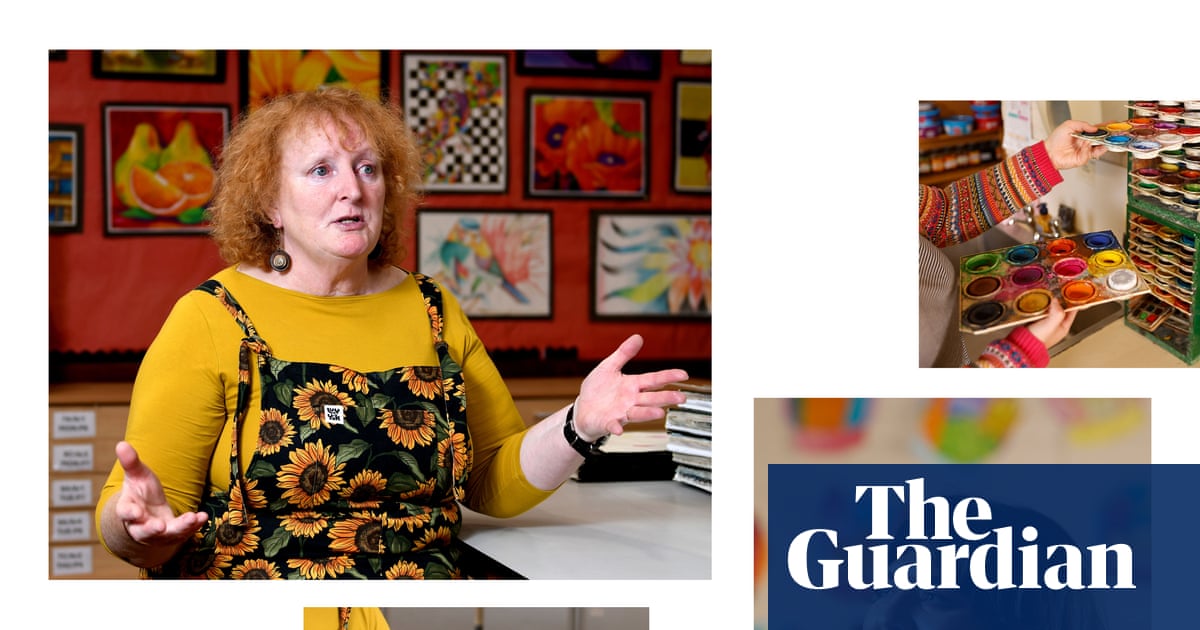
Even outside school, the arts have sustained heavy losses. Last year, the Campaign for the Arts said that culture spending by councils had been cut by more than 50% a person in England since 2010. It sounds like a grim time to be trying to inspire the next generation of would-be artists, but this hasn’t stopped 29-year-old Jasmine Pert from taking on her calling. In the following conversation, Cabourn and Pert talk about the reality of being an art teacher today, with all the challenges (and joys) that come along with the job.