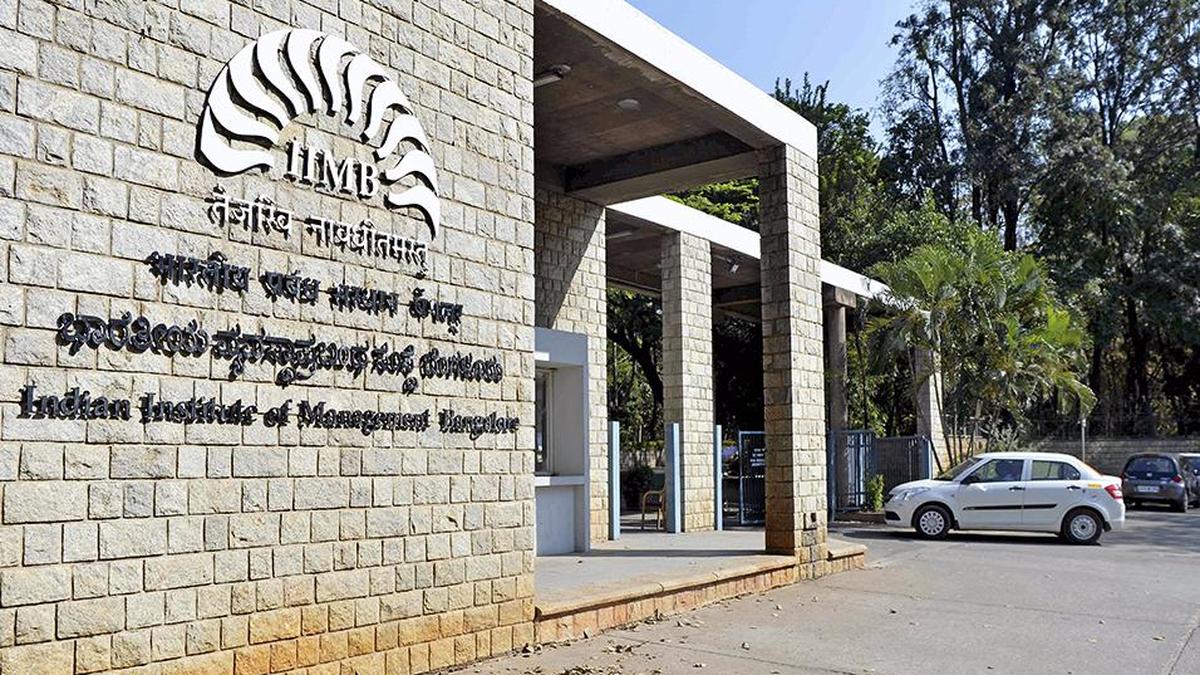
A new research study released by the Indian Institute of Management Bangalore (IIMB) has found that teachers in Bihar’s public schools often misjudge how well their students are performing, and these misjudgments vary sharply by caste.
The research shows that even when students from different caste groups score equally well on standardised tests, the perceptions of the teachers do not match the actual performance, with backward-caste students consistently rated lower than they deserve.
The study, ‘Caste identity and teachers’ biased expectations: Evidence from Bihar, India’, conducted by Soham Sahoo, chairperson of Public Policy, and Ritwik Banerjee, chairperson of Economics, analysed data from 105 government schools across Bihar, gathered through a detailed survey of students, teachers, households, and schools.
The students took standardised subject-specific tests in Maths, Hindi, and English, which determined their true academic rank within the class. Their teachers were separately asked to place them in the top, middle, or bottom group based purely on perception. The difference between test-based rank and teacher-assigned rank forms what the researchers call the ‘Evaluation Bias’.
The study finds that the teachers’ perceptions are often inaccurate in general, but the inaccuracy becomes systematic when caste is involved. Teachers, especially those from forward castes, tend to underrate backward caste students, even when their test scores match those of forward-caste classmates taught in the same classroom.