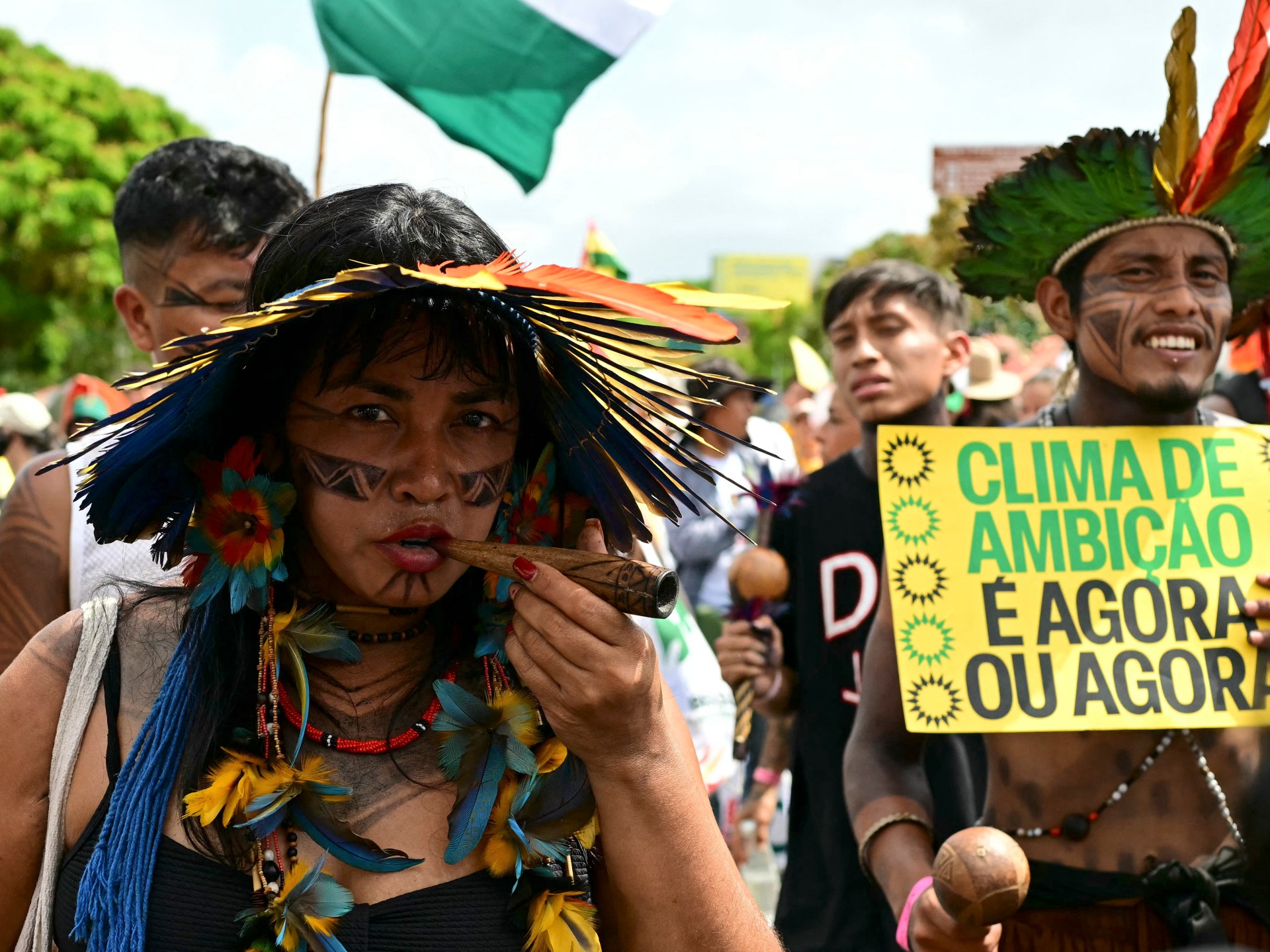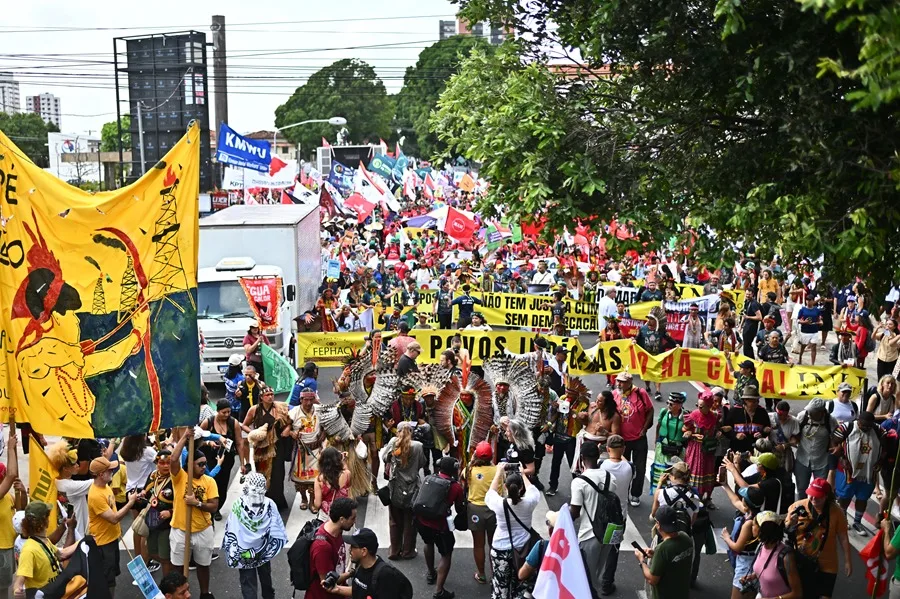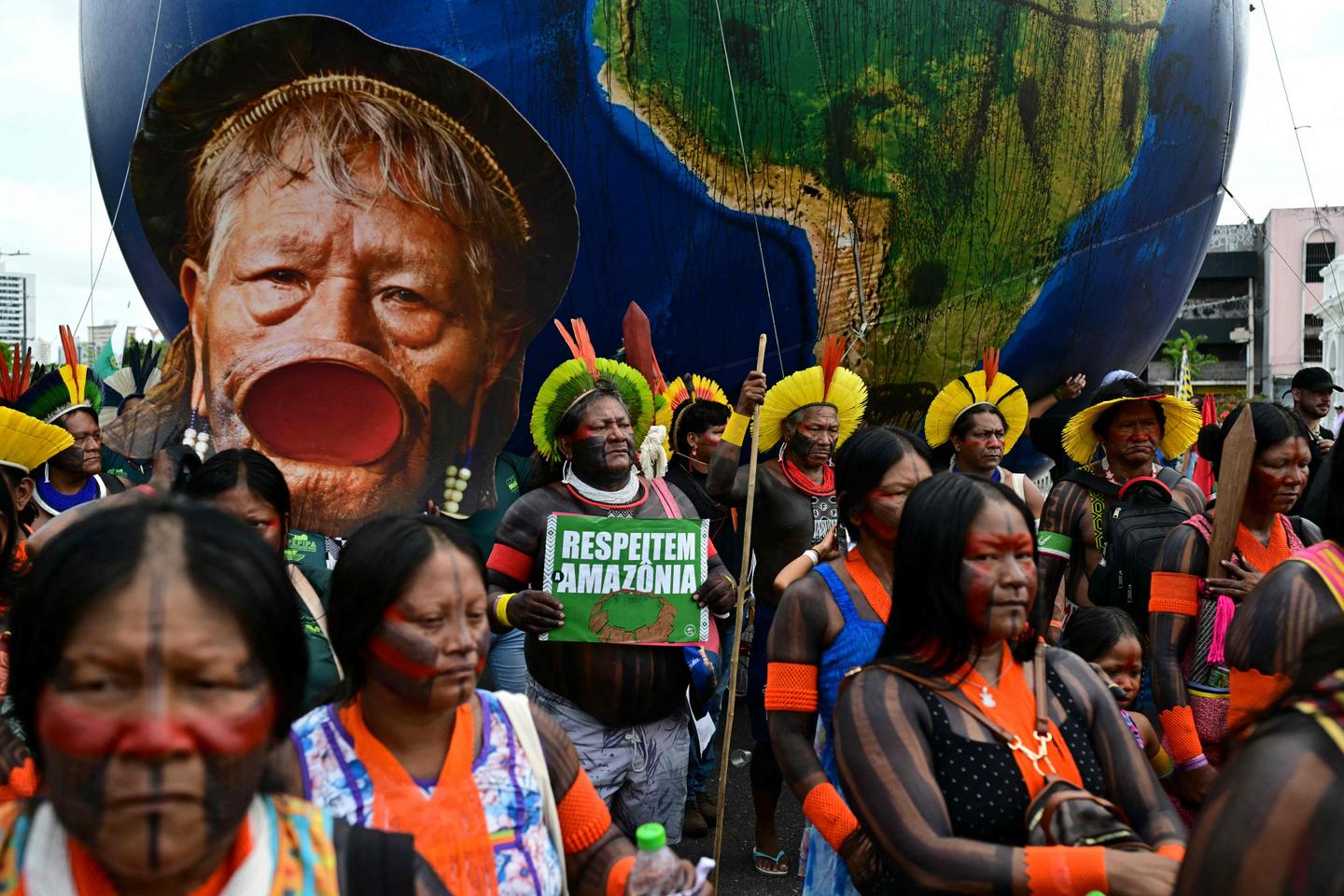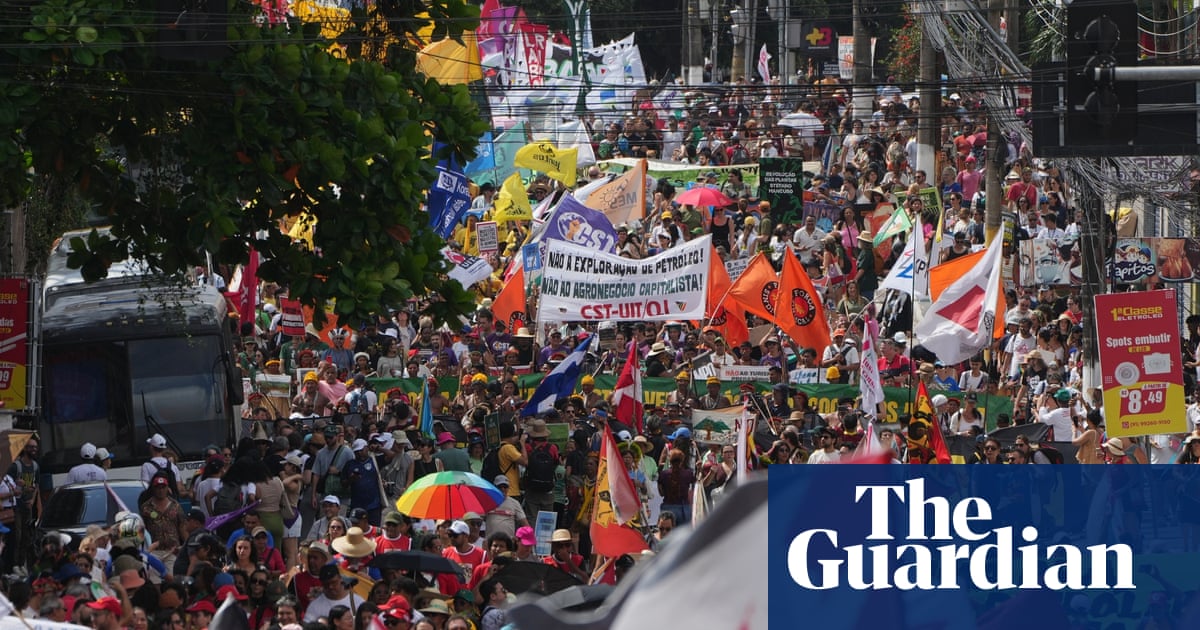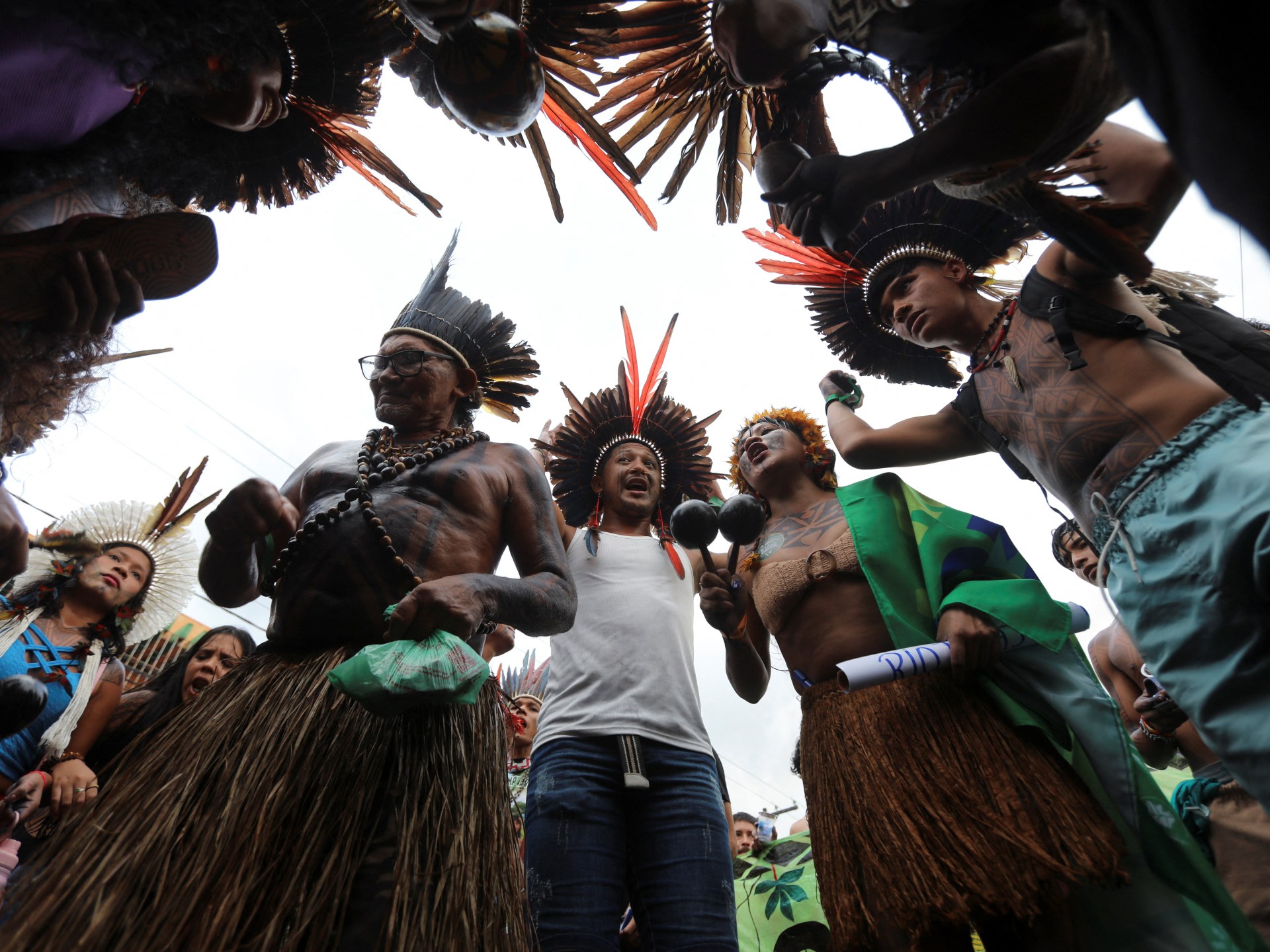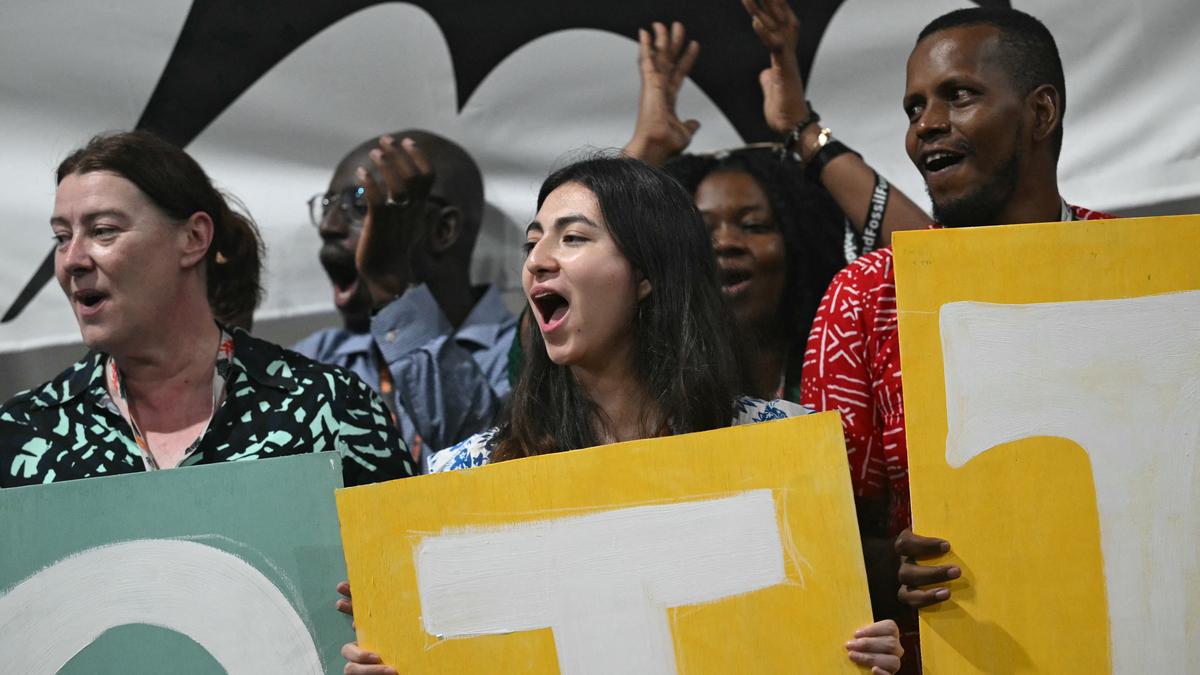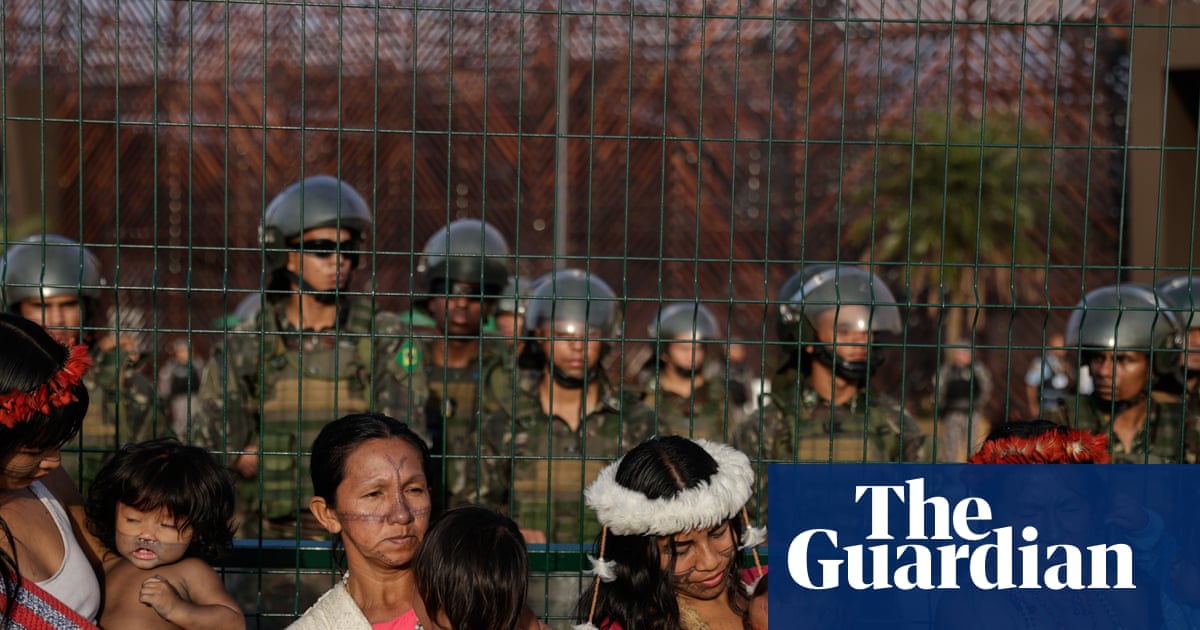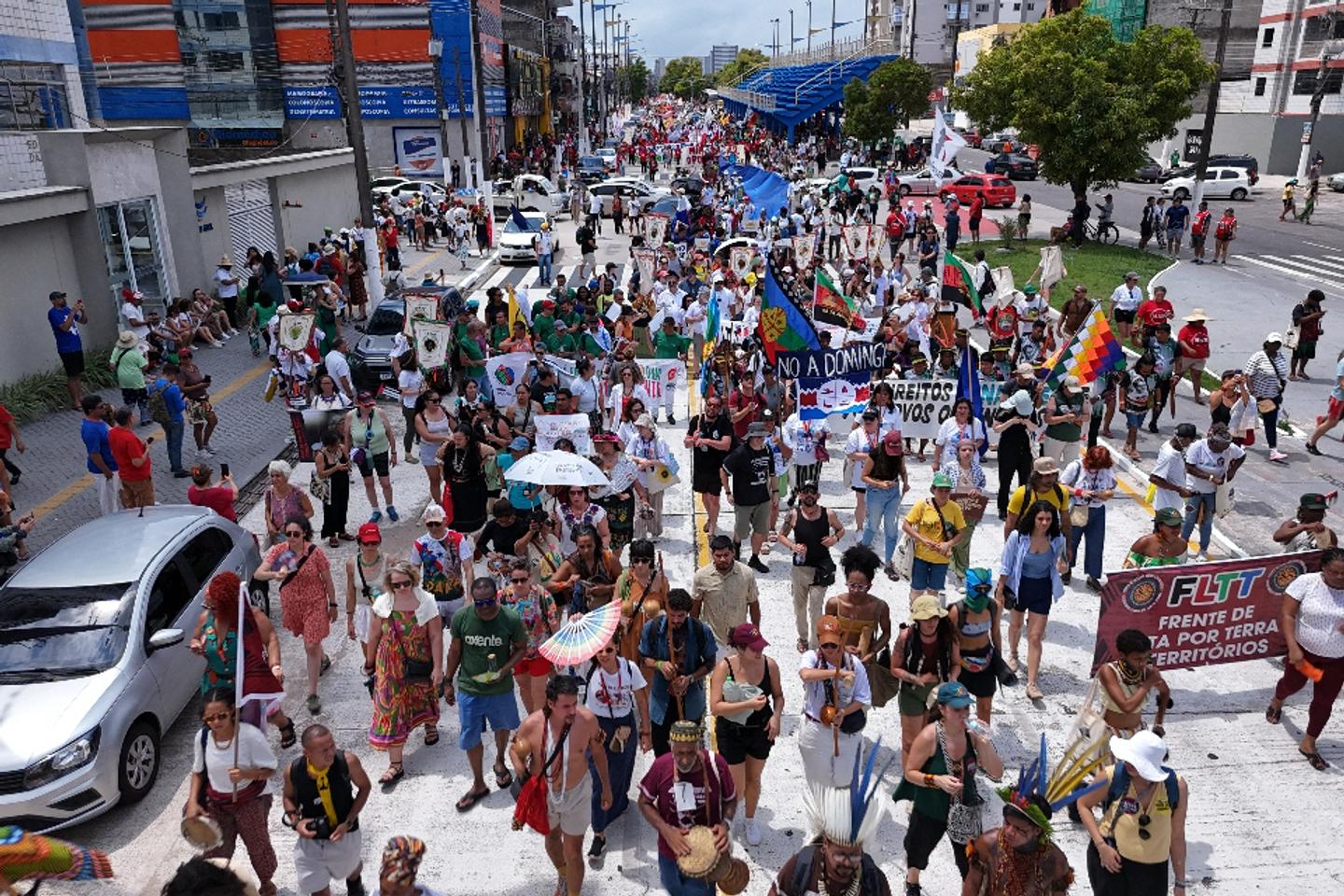
Activists take part in the so-called "Great People's March" in the sidelines of the COP30 UN Climate Change Conference in Belem, Para State, Brazil on November 15, 2025. IVAN PISARENKO / AFP
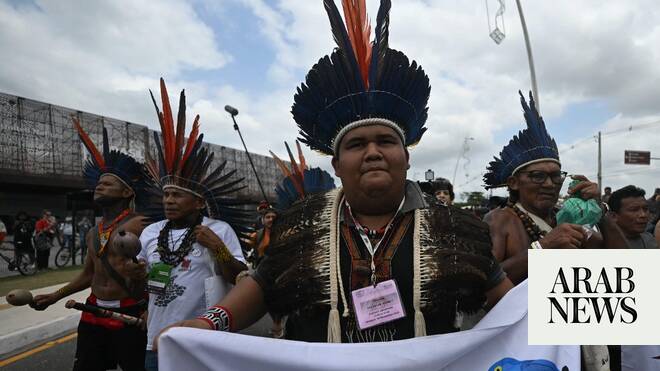
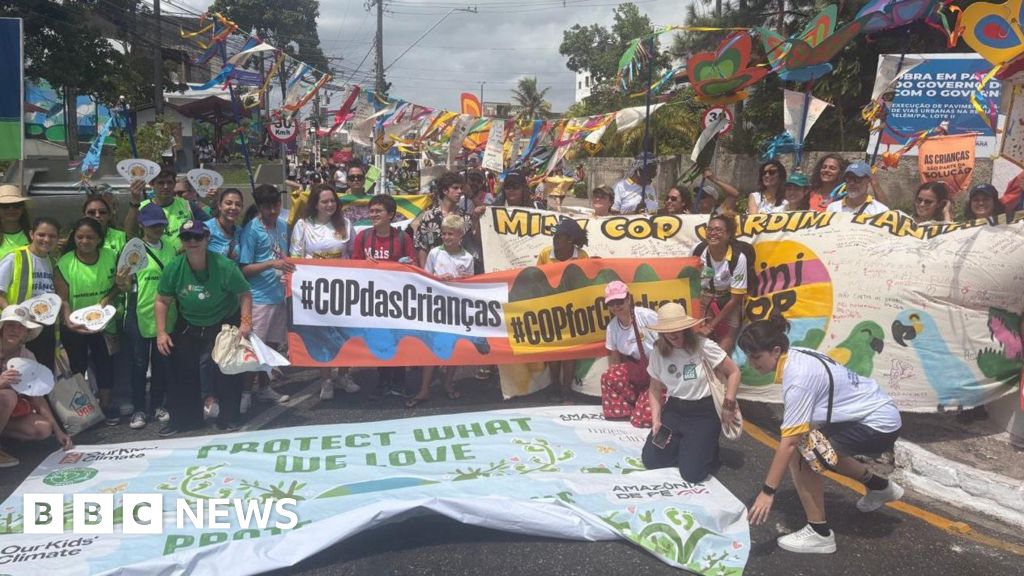
Tens of thousands of people thronged the streets of the Amazonian city hosting COP30 talks on Saturday, November 15, dancing to thumping speakers in the first large-scale protest at a UN climate summit in years. As the first week of climate negotiations limped to a close with nations deadlocked, Indigenous people and activists sang, chanted and rolled a giant beach ball of Earth through Belem under a searing sun.
Others held a mock funeral procession for fossil fuels, dressed in black and pretending to be grieving widows as they carried three coffins marked with the words "coal," "oil" and "gas." "We are here to try to apply pressure so that countries fulfill their promises and we don't accept a regression," Txai Surui, a prominent 28-year-old Indigenous leader, told AFP.
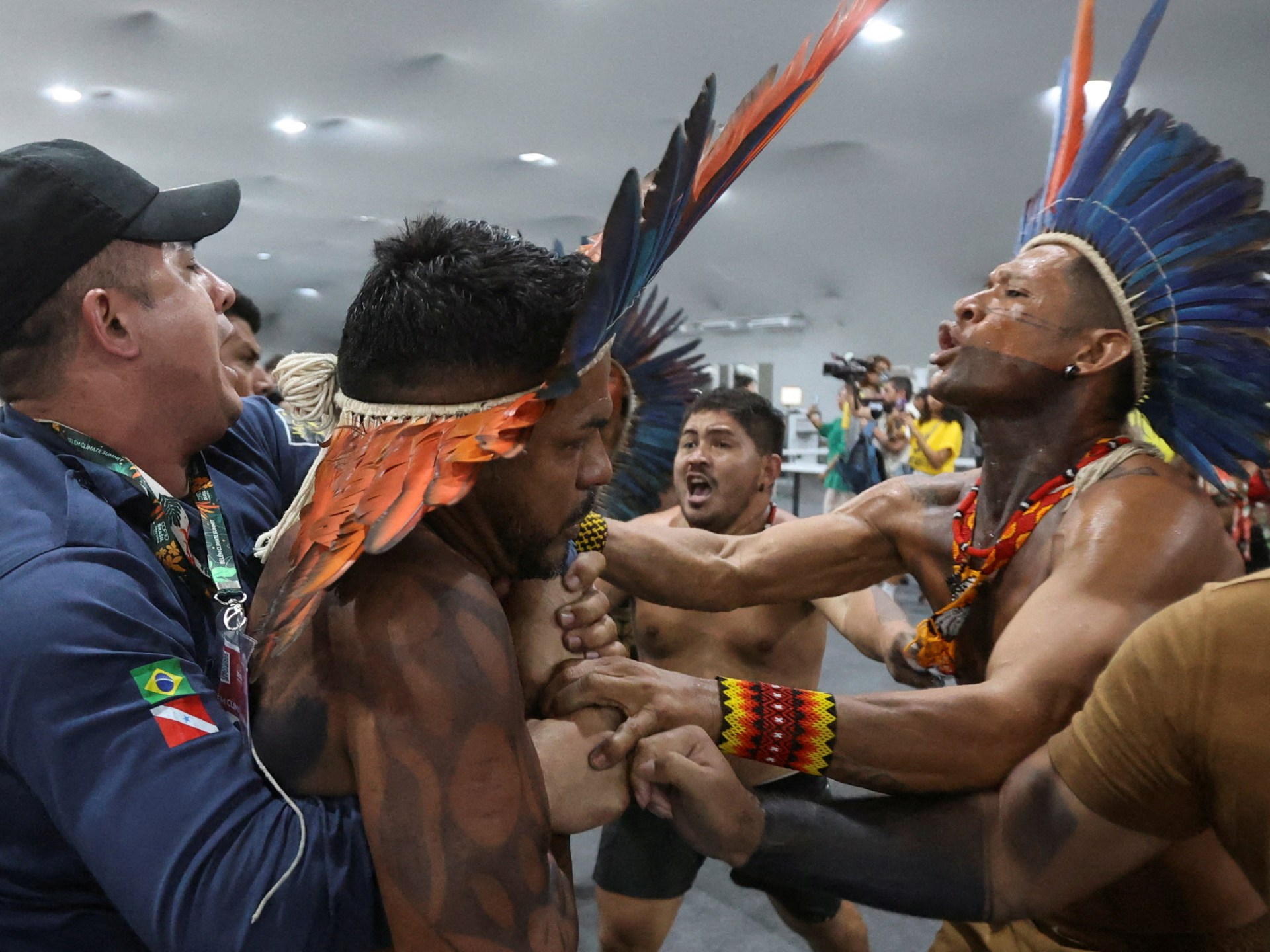
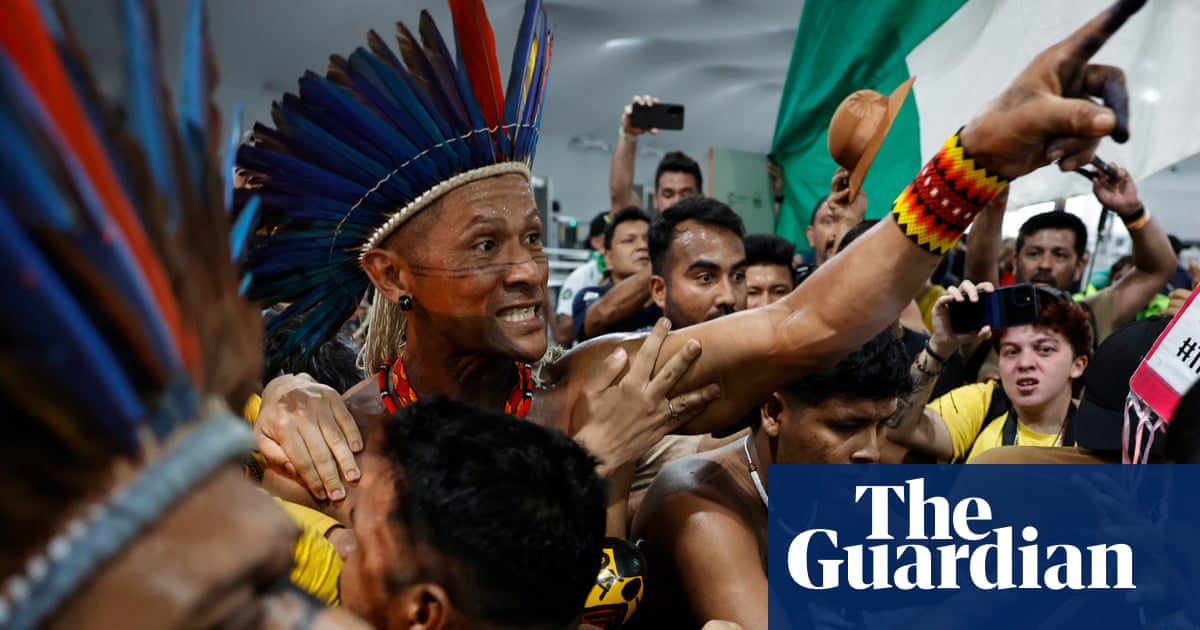
It was the first major protest outside the annual climate talks since COP26 four years ago in Glasgow, as the last three gatherings were held in locations with little tolerance for demonstrations – Egypt, the United Arab Emirates and Azerbaijan. Called the "Great People's March" by organizers, the Belem rally comes at the halfway point of difficult negotiations and follows two Indigenous-led protests that disrupted proceedings earlier in the week.