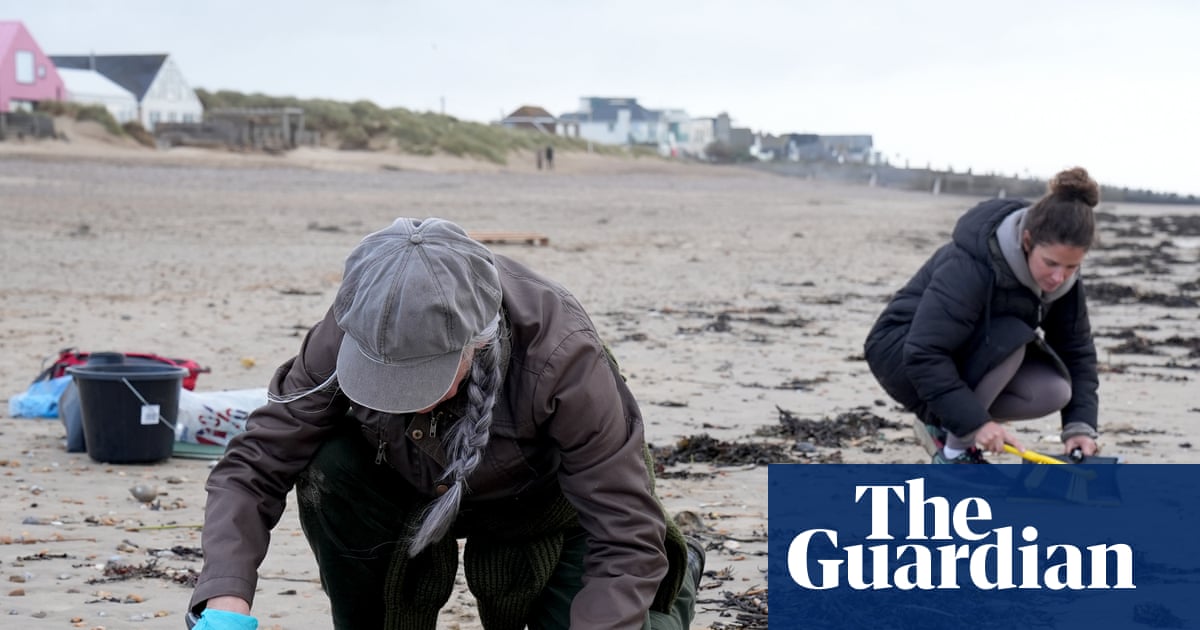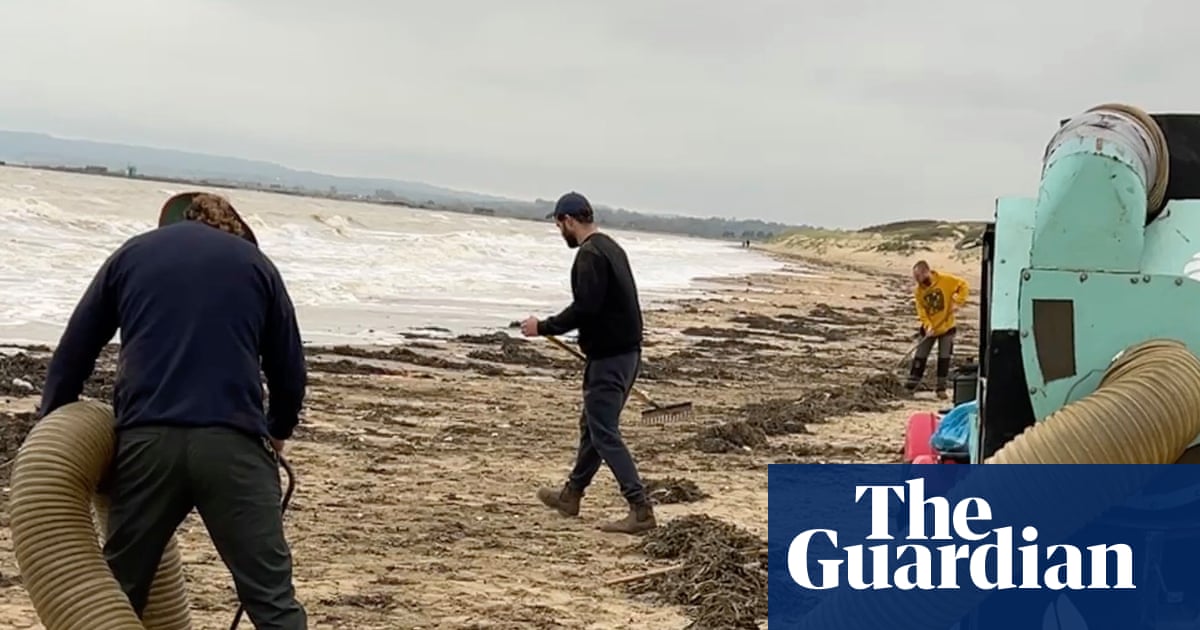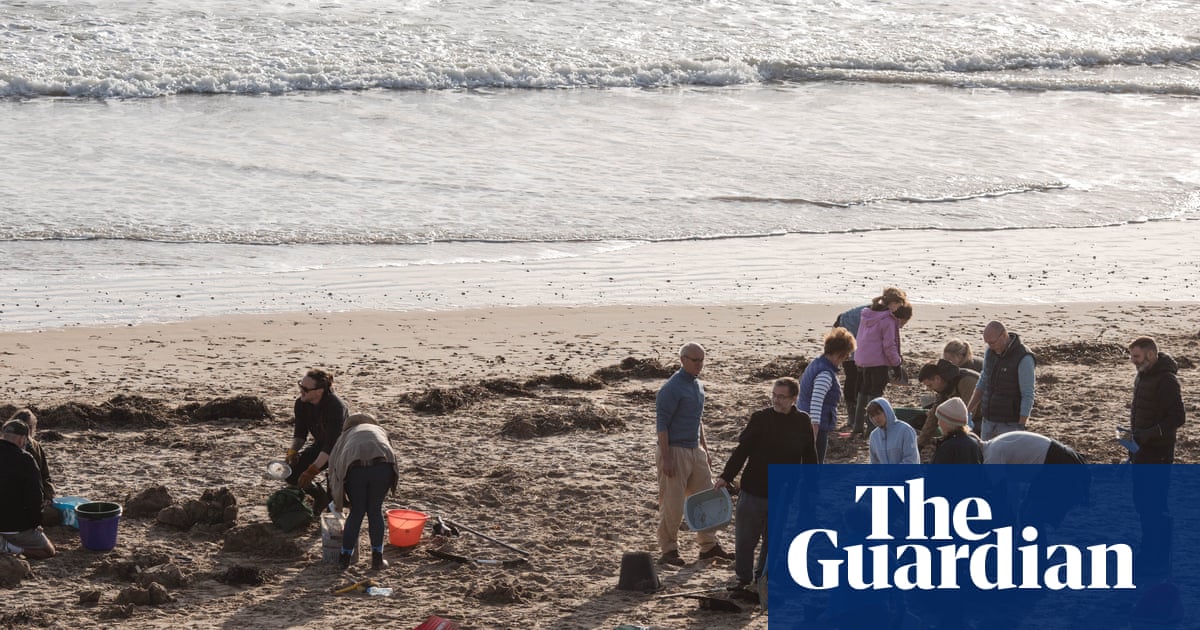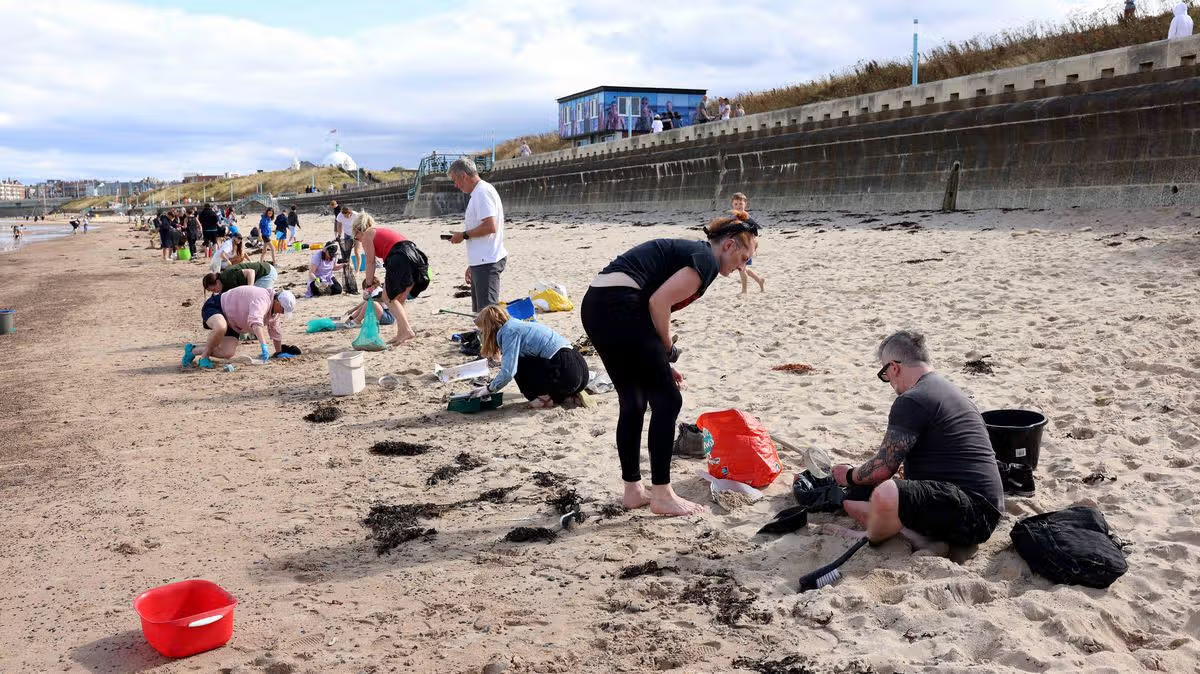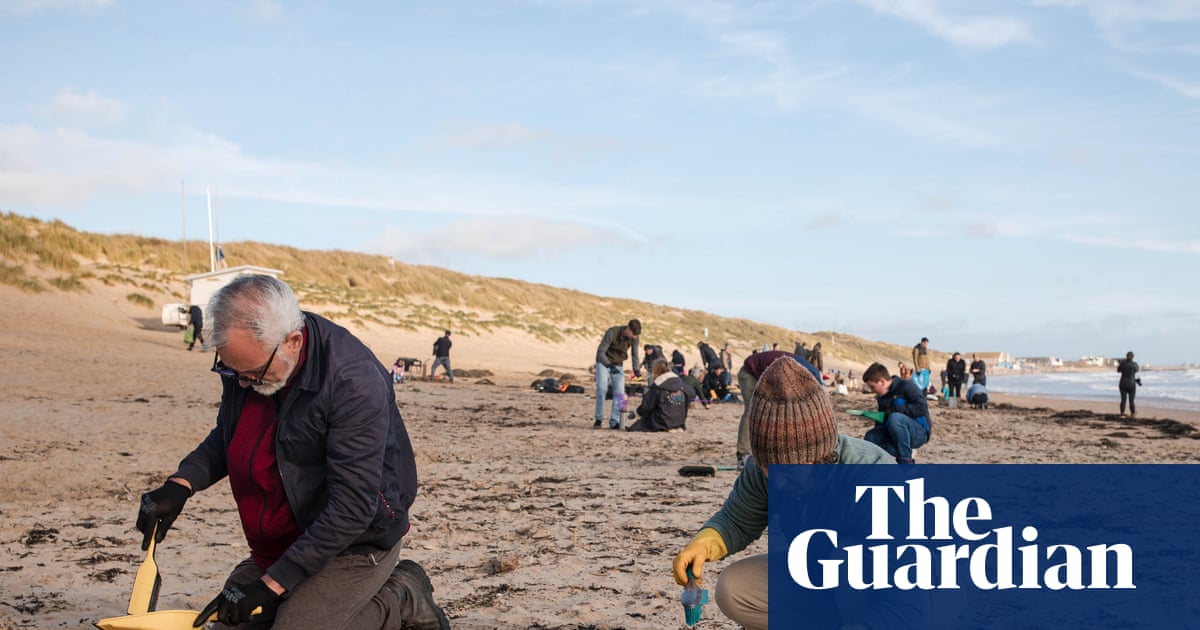
A huge cleanup effort has seen volunteers working to remove beads by hand and machine. They can only wait and see the extent of damage to wildlife and dune habitat
J
ust past a scrum of dog walkers, about 40 people are urgently combing through the sand on hands and knees. Their task is to try to remove millions of peppercorn-sized black plastic biobeads from where they have settled in the sand. Beyond them, a seal carcass grins menacingly, teeth protruding from its rotting skull.
Last week, an environmental disaster took place on Camber Sands beach, on what could turn out to be an unprecedented scale. Eastbourne Wastewater Treatment Works, owned by Southern Water, experienced a mechanical failure and spewed out millions of biobeads on to the Sussex coastline. Southern Water has since taken responsibility for the spill. Ironically, biobeads are used to clean wastewater – bacteria attach to their rough, crinkly surface and clean the water of contaminants.
In the days since, volunteers have flocked to the beach. On a chilly November morning, beneath a blue sky, they painstakingly pick out the minuscule beads by hand. It is mind-numbingly tedious work.