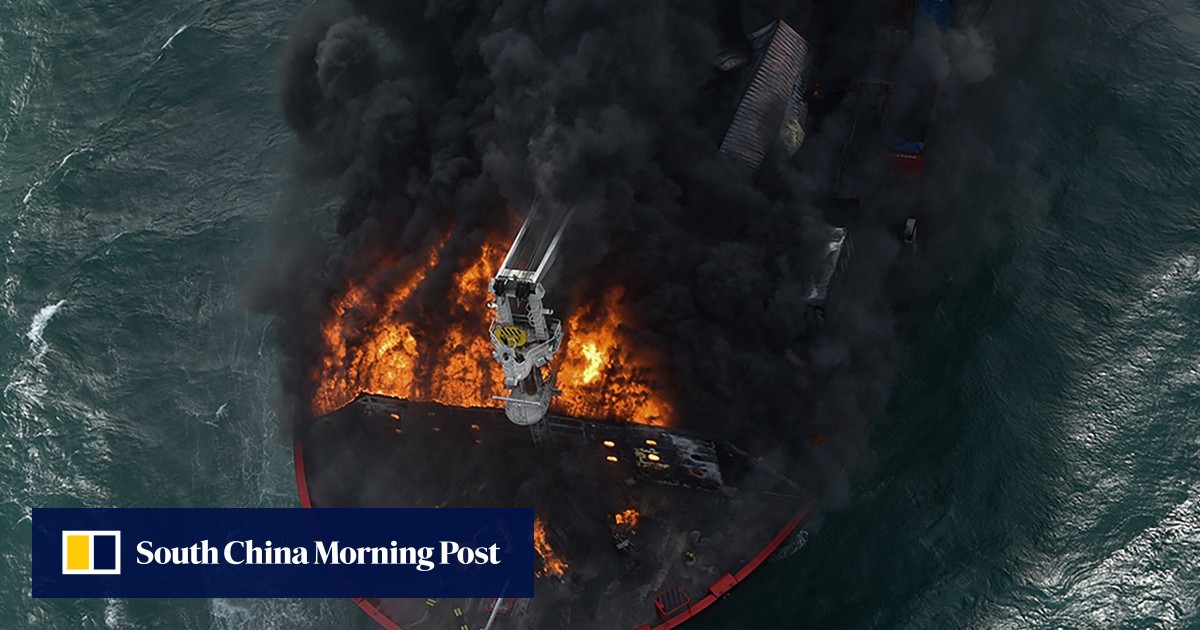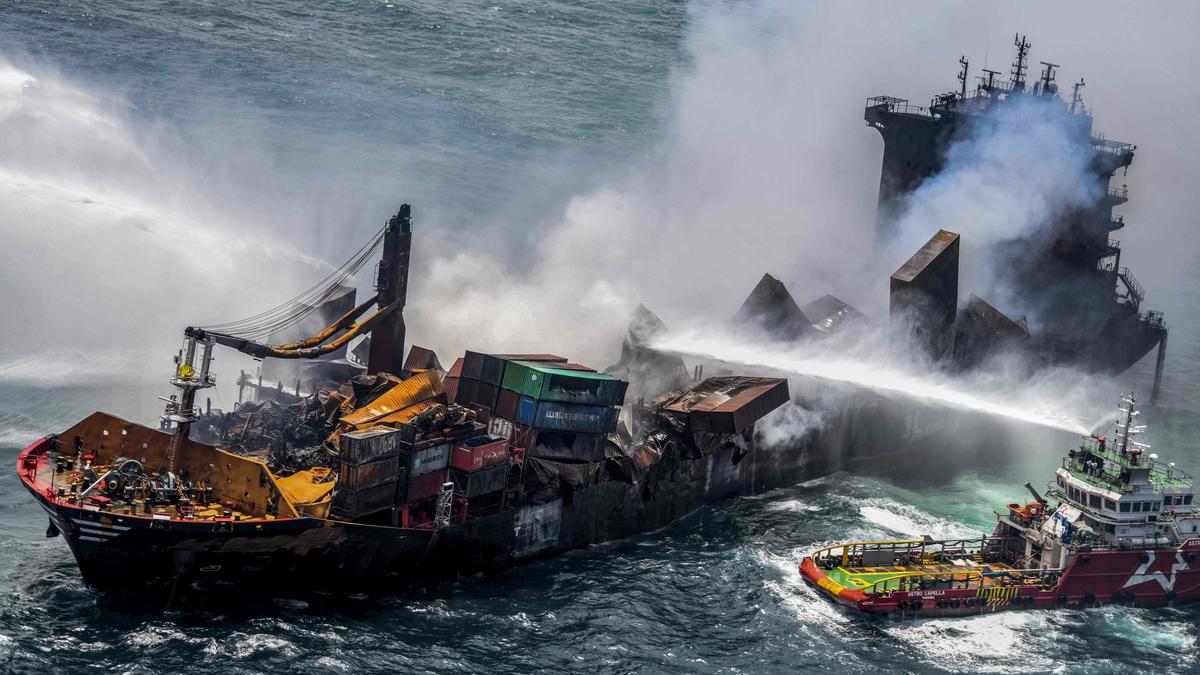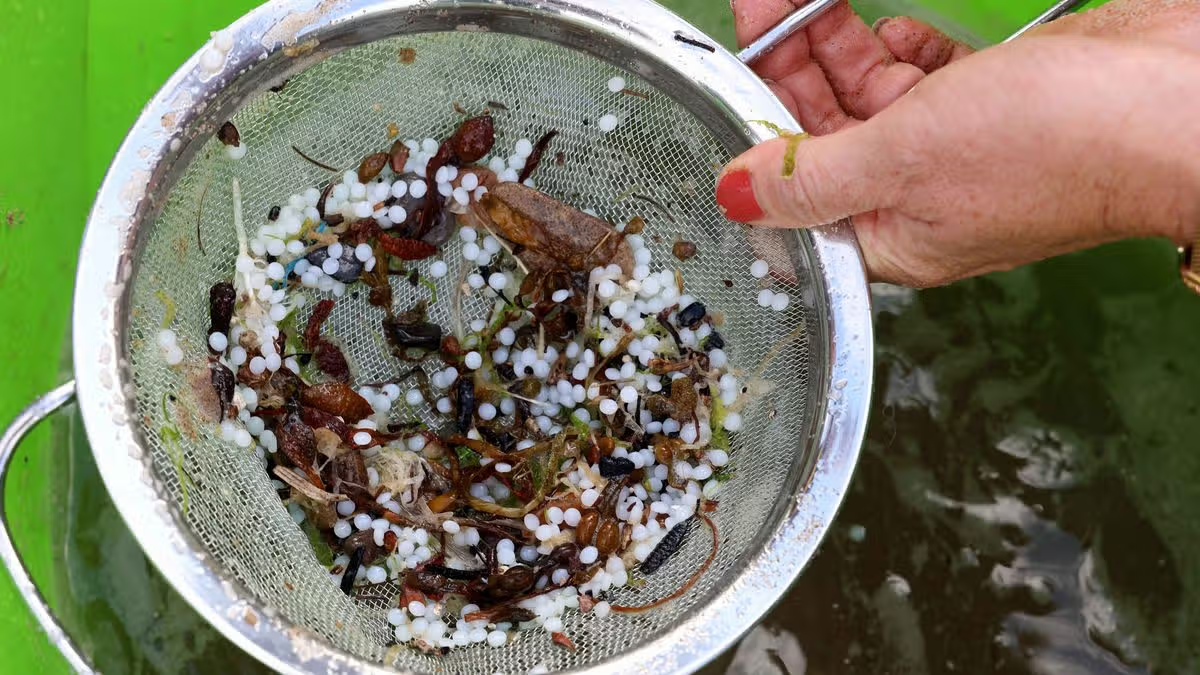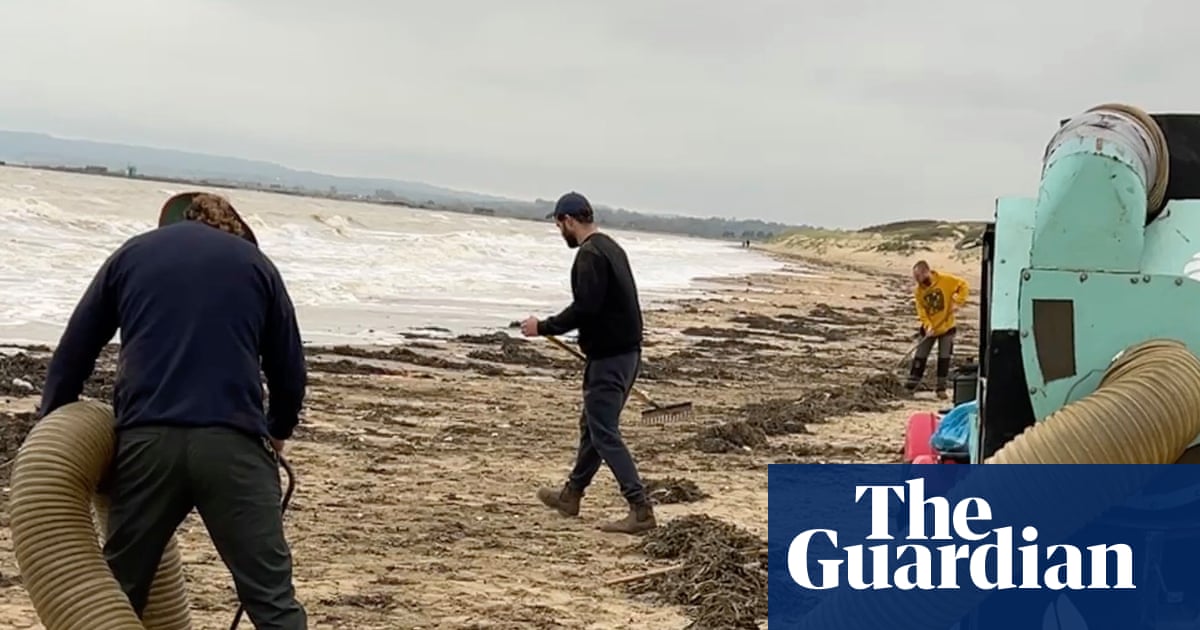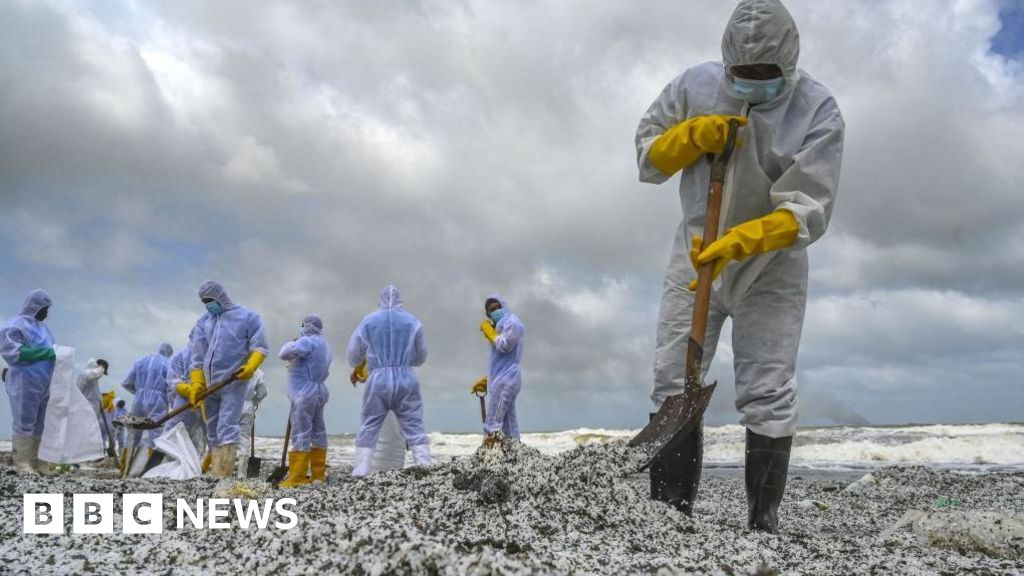
Four years after a stricken cargo ship caused the largest plastic spill ever recorded, volunteers on Sri Lanka's beaches are still sifting kilograms of tiny, toxic plastic pellets from the sand.
Billions of plastic nurdles, as they are called, are thought to have washed up after the X-Press Pearl disaster in 2021, along with tonnes of engine fuel, acid, caustic soda, lead, copper slag, lithium batteries and epoxy resin - all toxic to aquatic life.
The immediate damage was obvious: the nurdles inundated the shoreline, turning it white, while dead turtles, dolphins and fish began washing up.
But scientists are now flagging fears the damage to the environment could be much more enduring than previously thought.
So far, hundreds of millions of nurdles may have been cleared away - but the remaining, lentil-sized microplastic granules have become increasingly difficult to find as they disappear deeper into the sand.