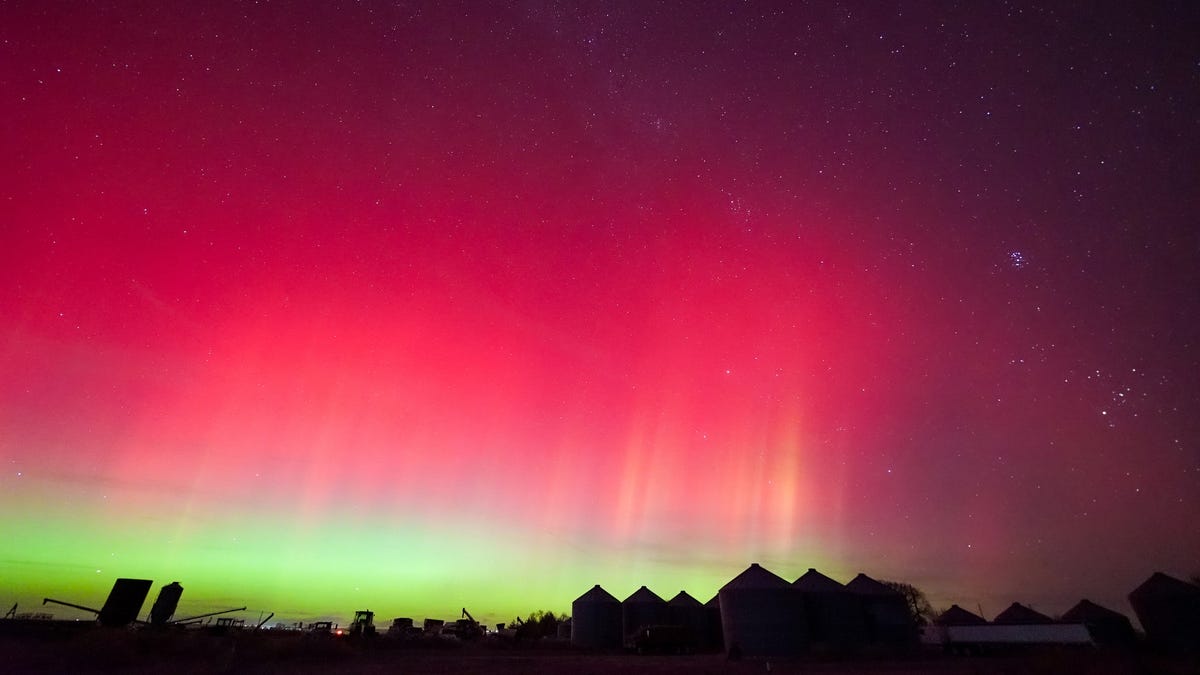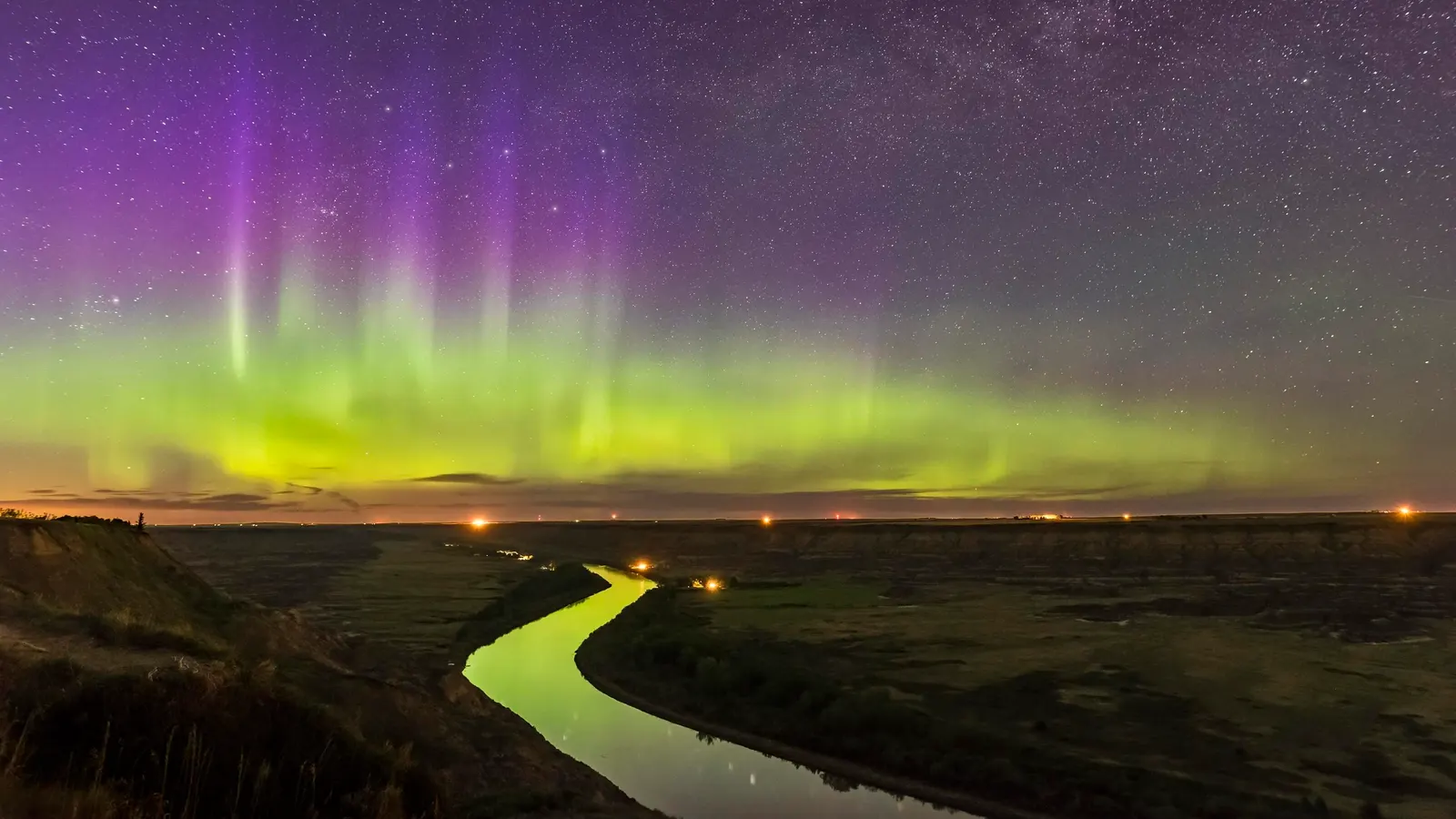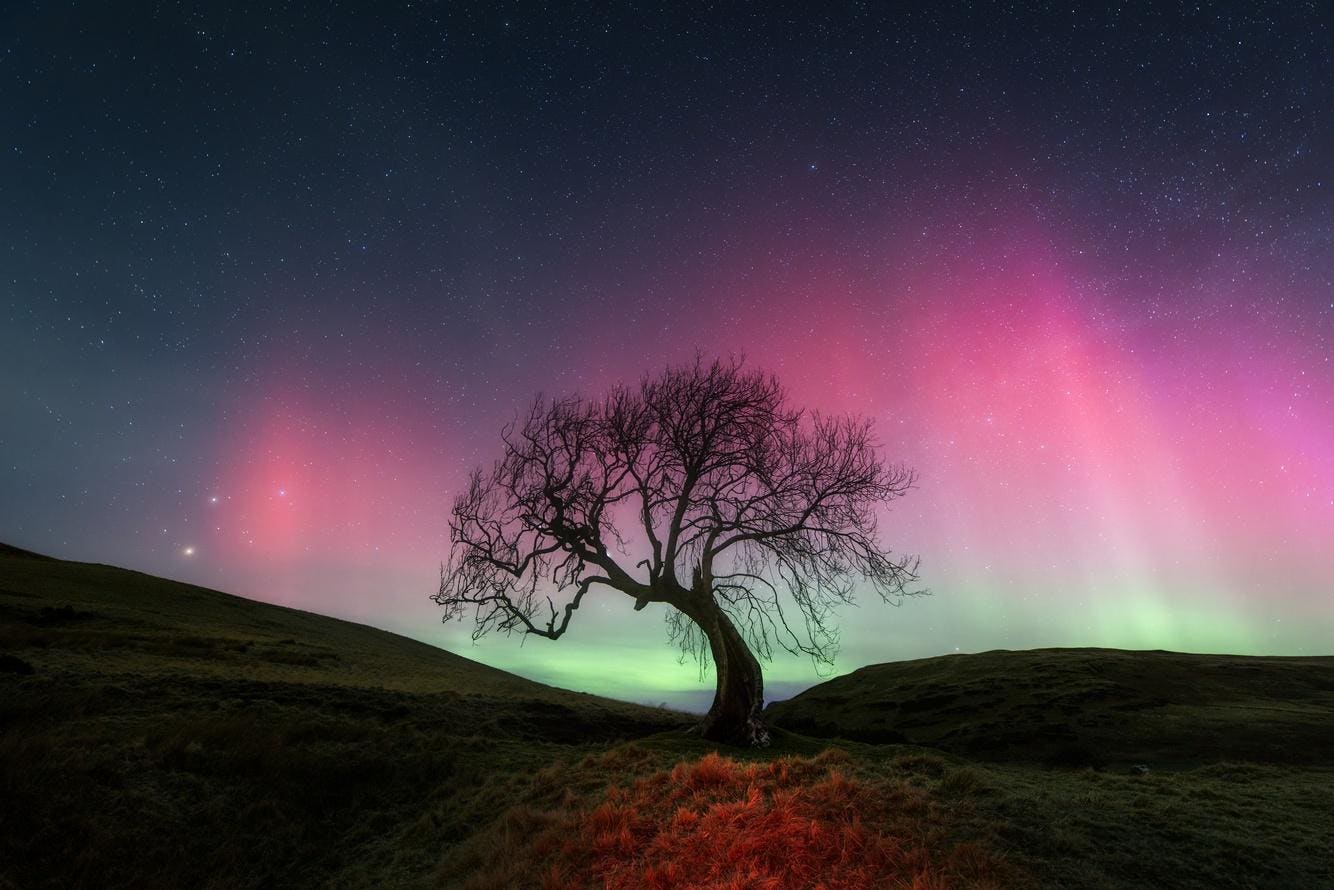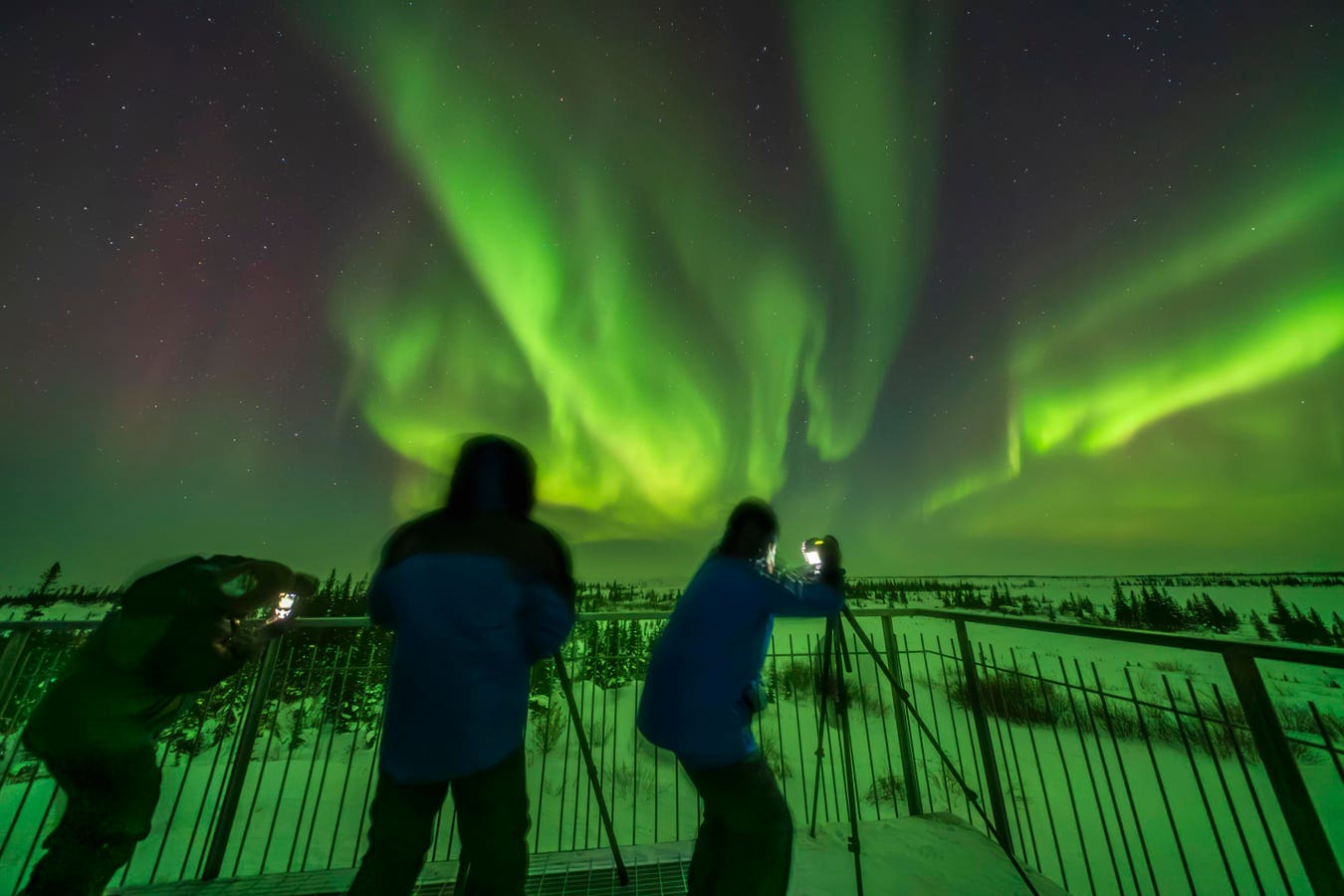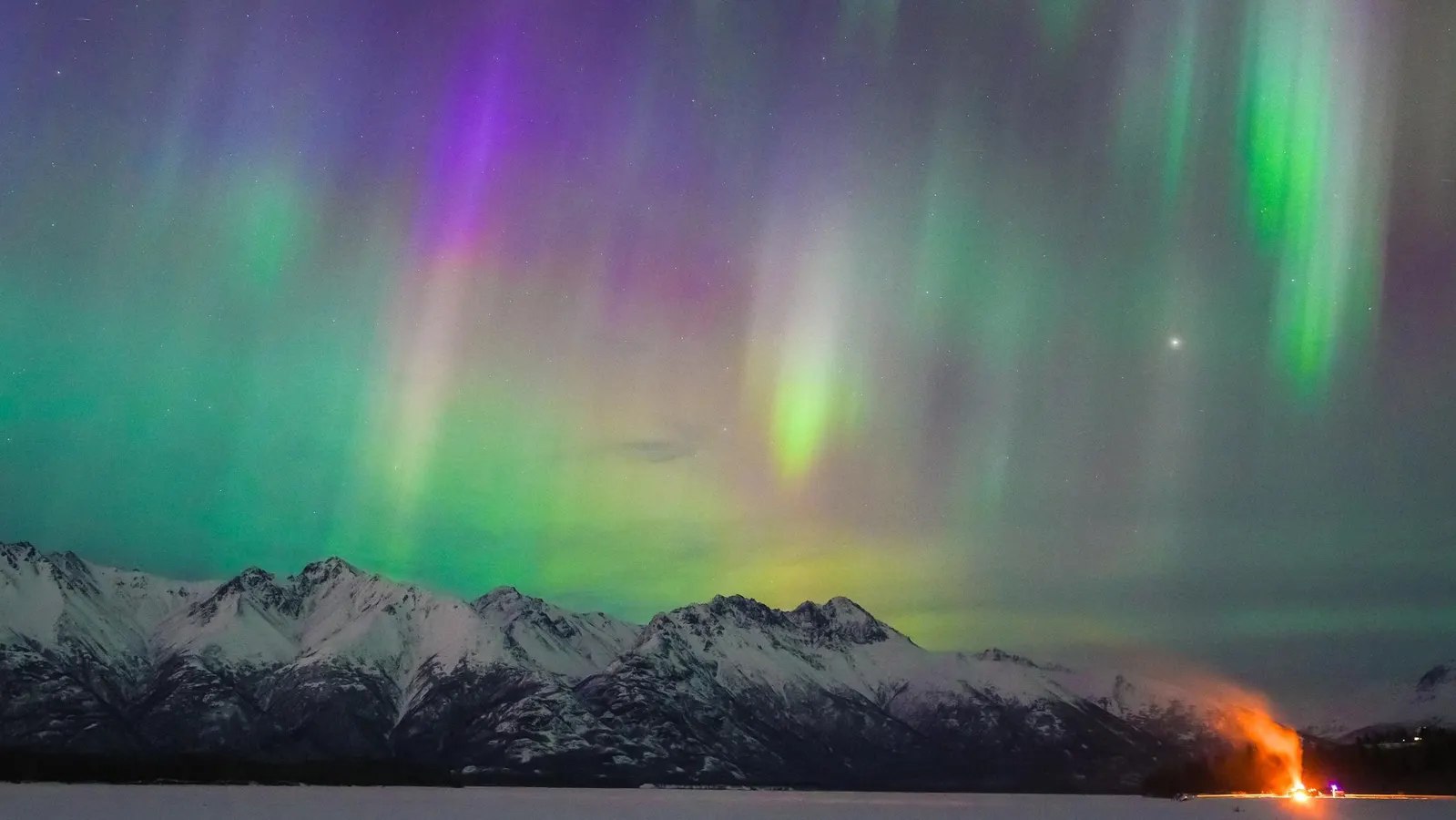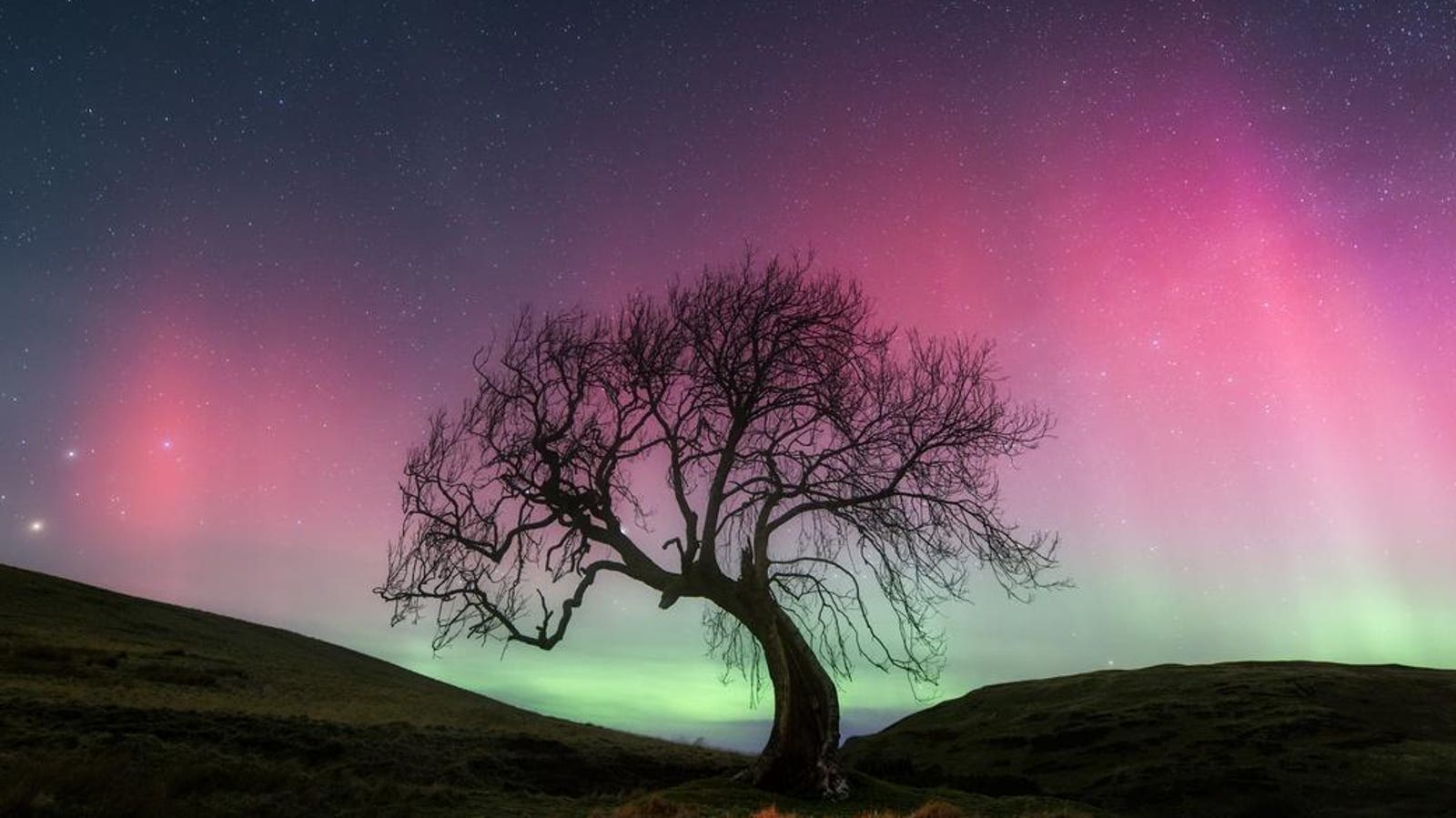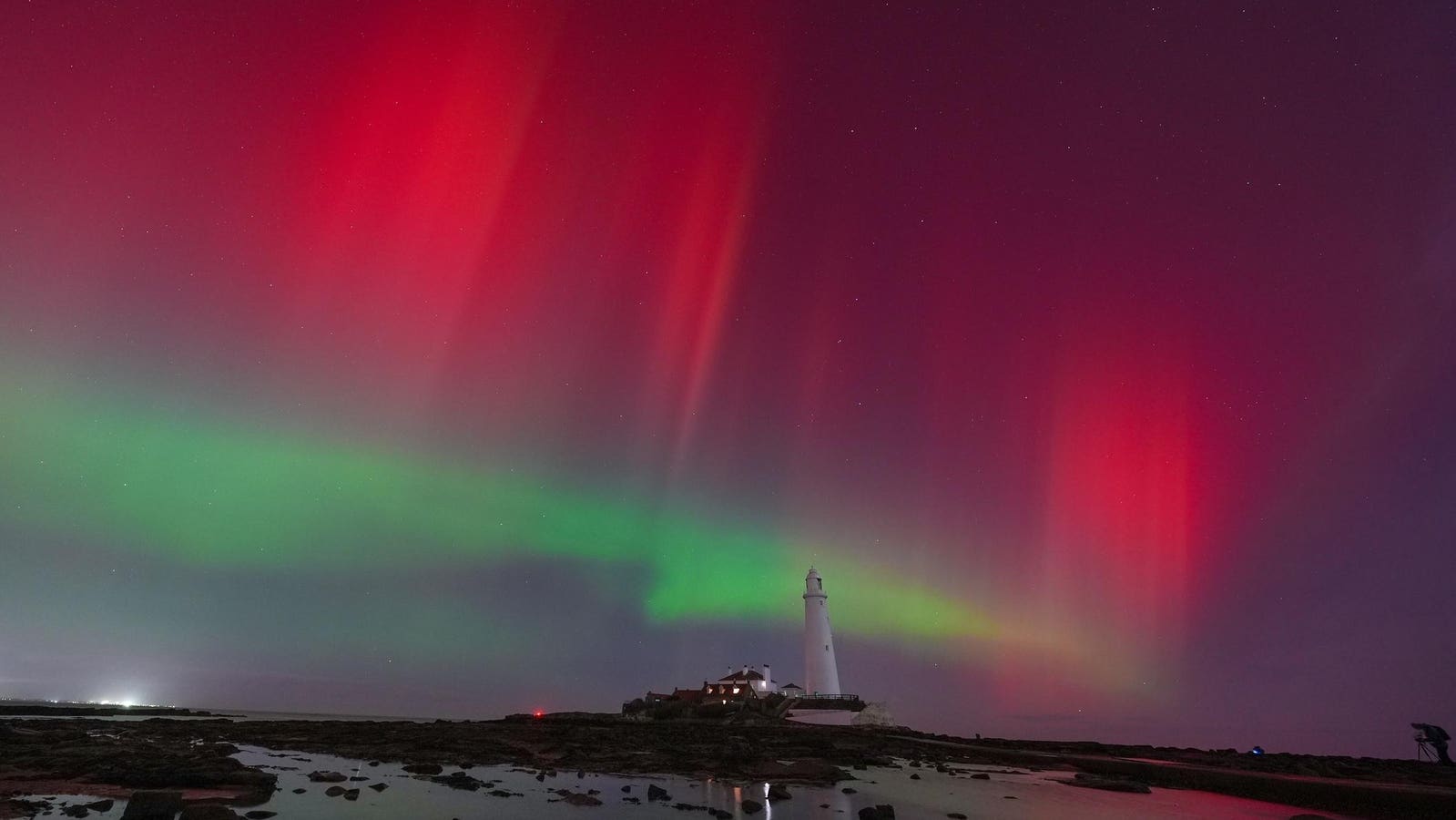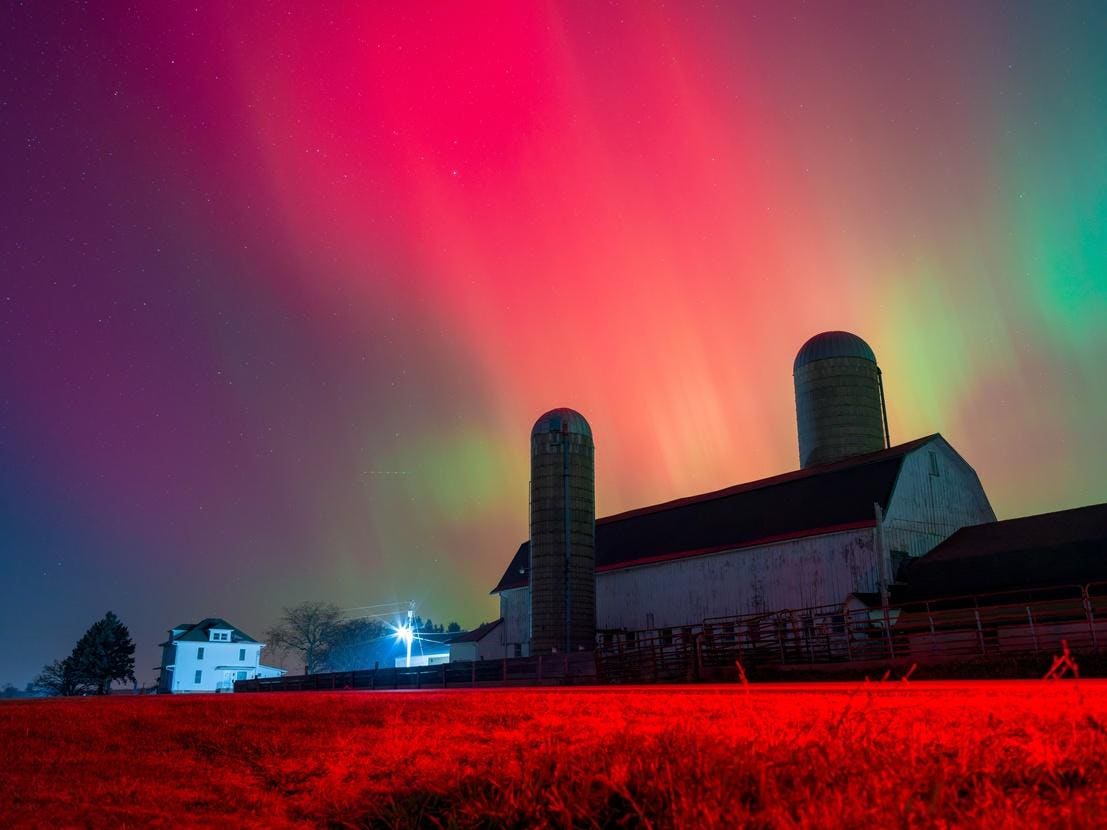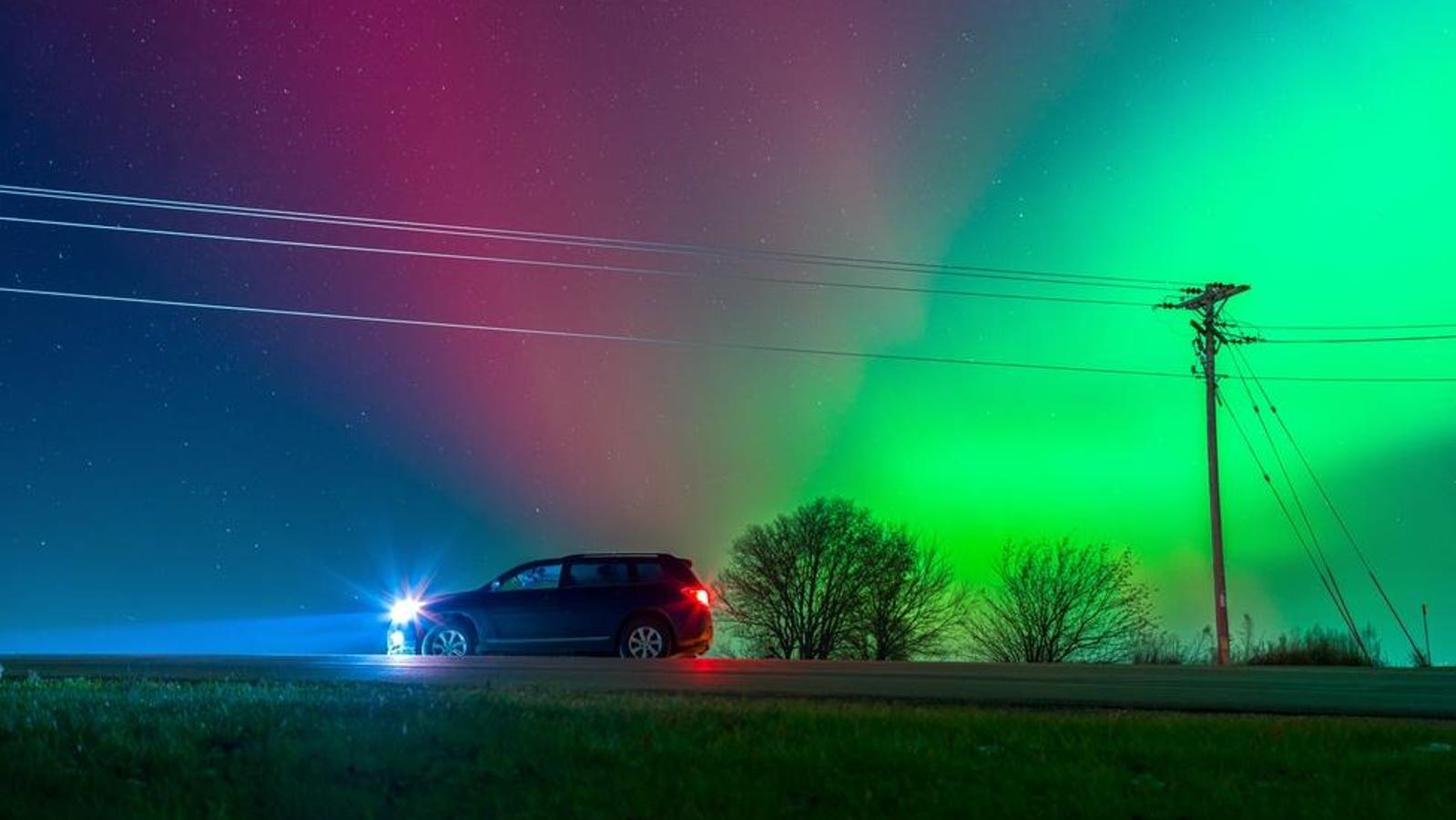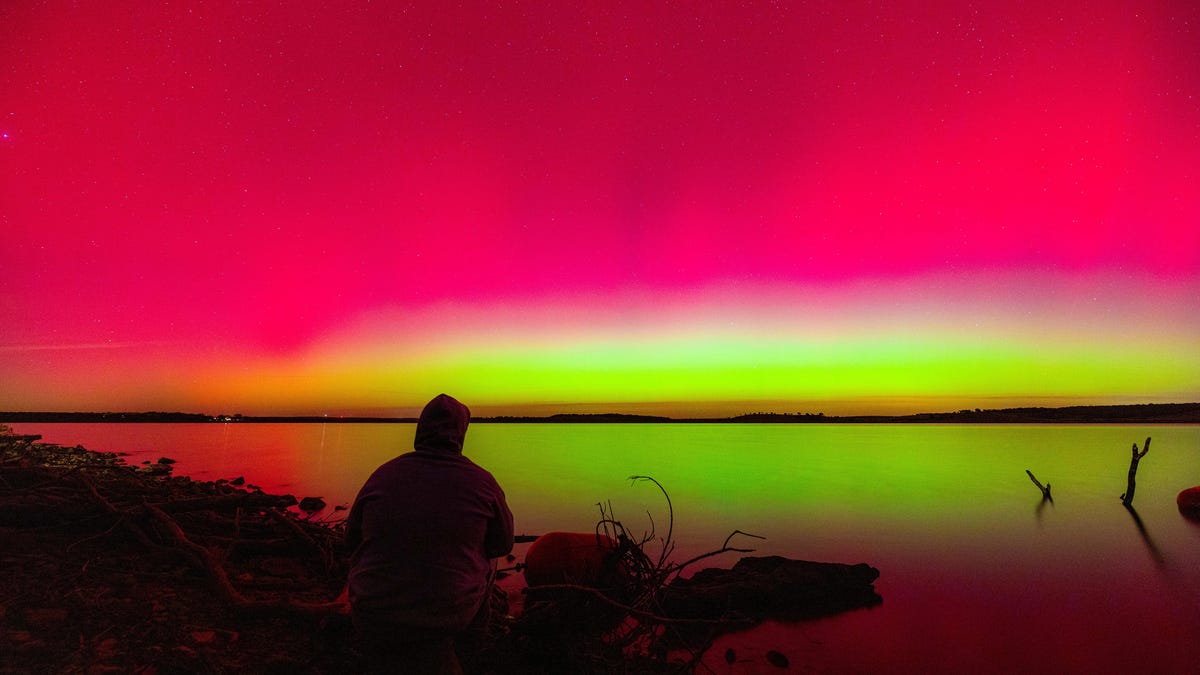
The northern lights flashed across the skies across much of North America on Tuesday, Nov. 11, as a result of a powerful geomagnetic storm.
Geomagnetic storms occur when a coronal mass ejection from the sun's surface arrives in Earth's atmosphere. The ejection that caused the brilliant activity on Nov. 11 erupted from the sun earlier in the week, according to the Space Weather Prediction Center in Boulder, Colorado.
Other states not initially predicted by NOAA, such as Texas, Colorado, and Florida, also witnessed the light show. "The aurora does not need to be directly overhead but can be observed from as much as 1000 km away when the aurora is bright and if conditions are right," NOAA's website says.
The Space Weather Prediction Center warned that the strong event could affect the power grid and communications, and disrupt some GPS signals, on Wednesday, Nov. 12, as the event continues. It could also mean another night of dancing colors in the skies over the northern horizon.
A forecast map from the National Oceanic and Atmospheric Administration showed that at least 21 states could potentially see the aurora, and that the view could last into early Wednesday, Nov. 12. According to NOAA, the northern lights are usually best viewed an hour or two before midnight.