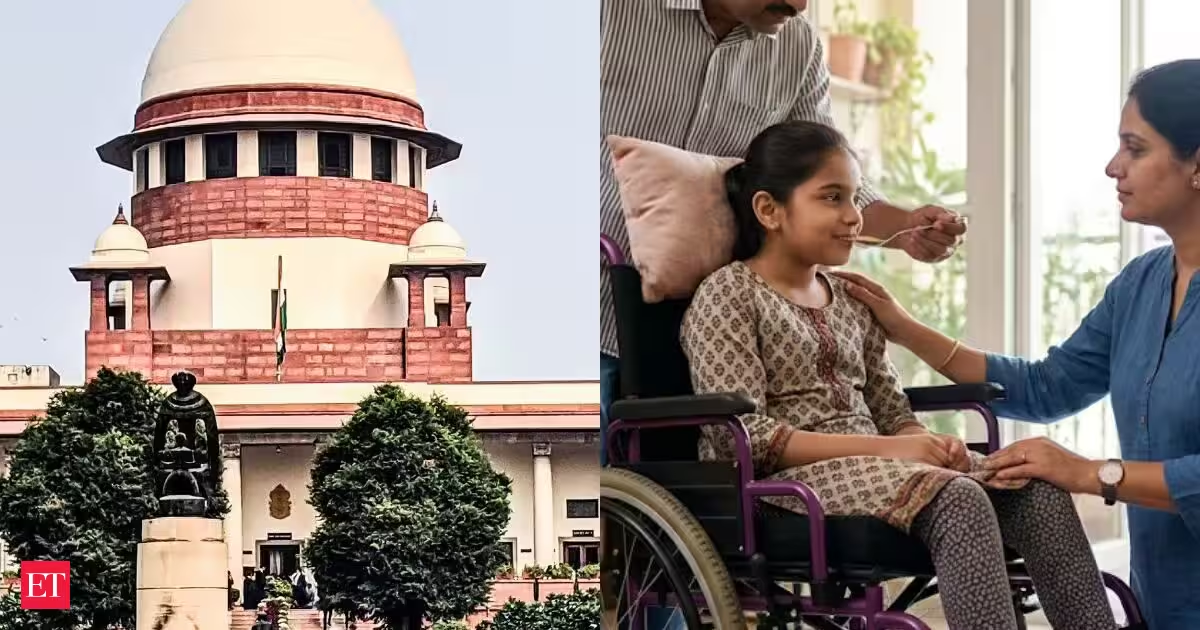
The death of an intellectually-disabled rape survivor three months ago, after years of waiting for the release of her full compensation as a ‘victim of a serious crime’, has led the Supreme Court to realise the lack of awareness about victim compensation and, worse, that many trial judges simply forget to pass the order.
“We find that one of the impediments in disbursement of victim compensation to the victims is the absence of a direction being issued by the Special Courts/Sessions Courts to pay compensation to the victims of a crime. Consequently, the victims have to seek such compensation on their own, either by making an application to the State Legal Services Authority or by any other means known to law. There is also an absence of awareness in this regard,” a Bench of Justices B.V. Nagarathna and R. Mahadevan observed in a recent order.
Trial courts play a crucial part in recommending the States to pay adequate financial compensation to victims of crimes. The compensation is seen as a restorative or rehabilitative measure for victims, which plays an equal part in criminal justice as the reformation of the accused.
Under Section 396 of the Bharatiya Nagarik Suraksha Sanhita 2023, which replaced Section 357A of the Code of Criminal Procedure, every State government, in coordination with the Centre, should prepare a Victim Compensation Scheme, to provide funds to compensate “the victim or his dependents who have suffered loss or injury as a result of the crime and who, require rehabilitation”.