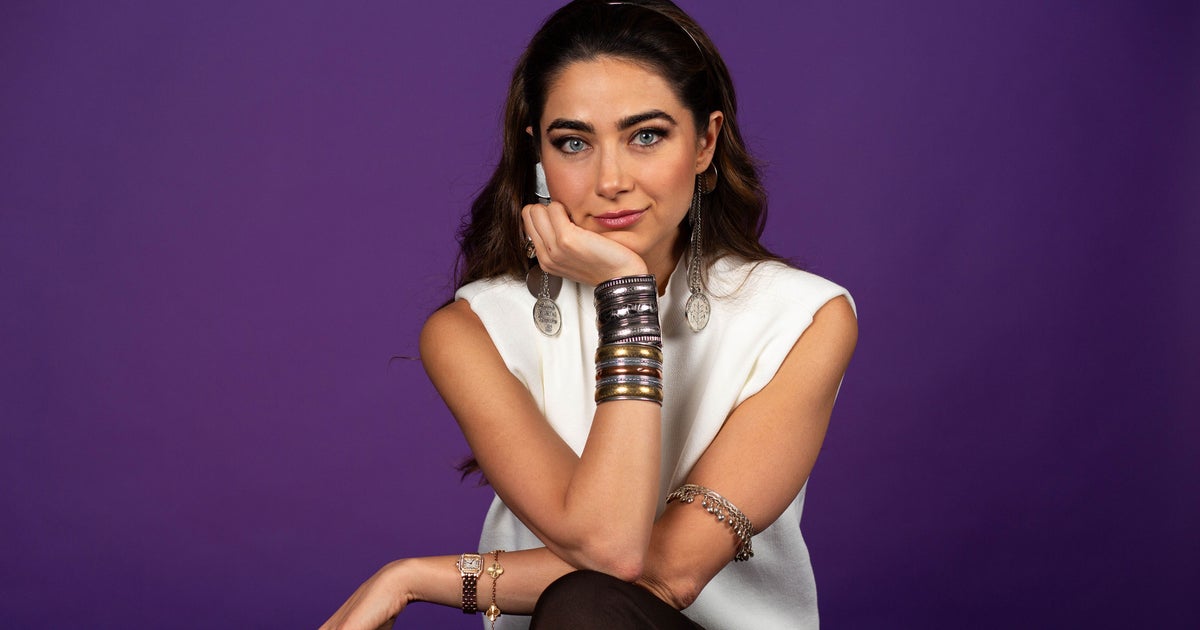
As a child, Dana Salah watched telecast performances of Arab singers, juxtaposed against string and percussion orchestras, with her grandmother.
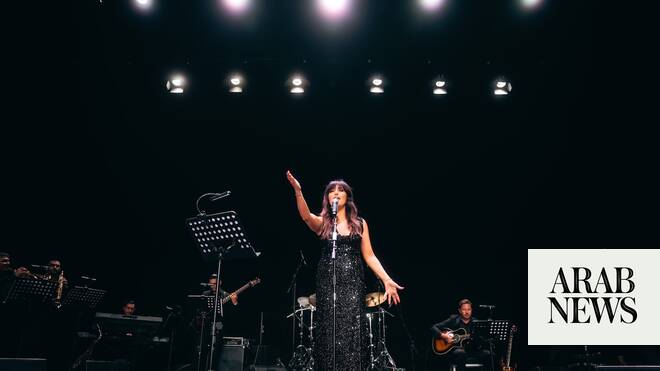
“We don’t have a lot of harmony in Arabic music, but you’ll have a singer centered and a whole orchestra behind her,” the artist tells me. “She’ll sing a line, then the violin will respond, and then the oud will come in. It’s a whole conversation.”
Salah’s own repertoire echoes her life in this way. In some songs, her Palestinian-Jordanian heritage speaks to the hustle she embodied while living in New York City in her 20s, then in Michigan during the COVID-19 pandemic. In others, modernity meets folklore, telling tales of a resistance that Palestinians have wielded for generations. And in recent iterations, Arabic lyrics speak to a global audience. Some know the words and others don’t — but they all dance anyway.
Hailing from Amman, Jordan, Salah was born to a family in which career paths were firmly linear and sequential: graduate from a reputable college, then pursue something in the likes of law, medicine or finance. “I felt like I needed to leave Jordan in order to [pursue music] because we didn’t really have a music industry,” she says.
The only way her parents would let her leave Jordan was if she went to what they considered a “good” college; going to Duke University was her ticket. When Salah graduated, she moved to New York City and picked up DJ and modeling gigs. “That was unheard of for anybody in my community — for a woman to say, ‘I’m going to live by myself, unsupported in this city in the U.S.,’” Salah notes.