https://arab.news/r7yd2
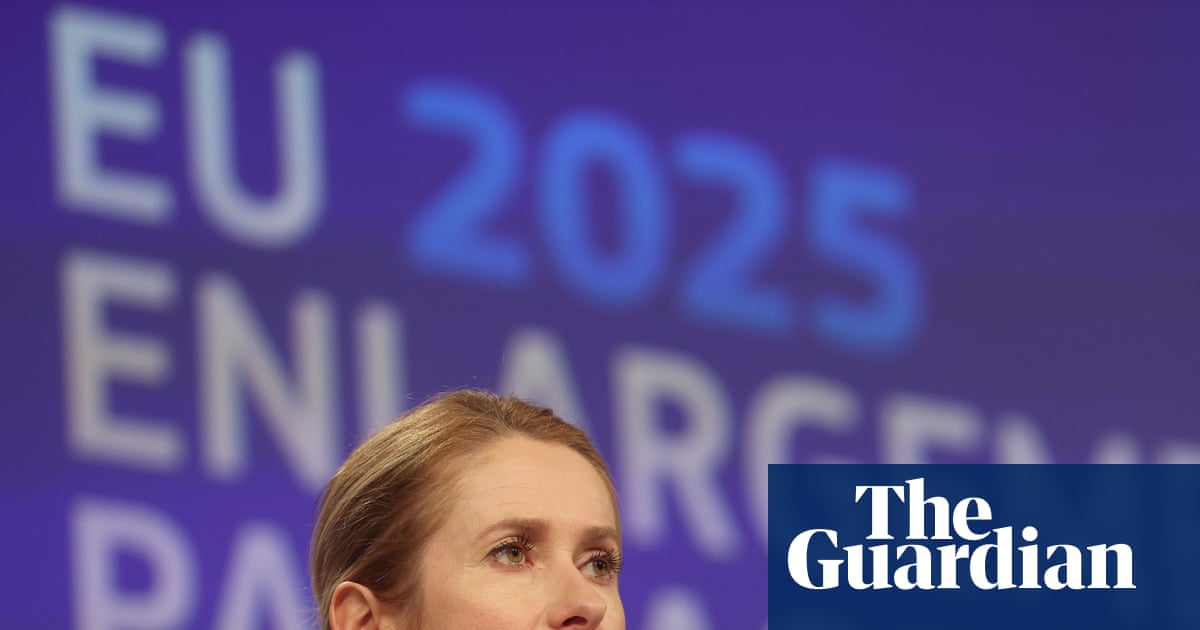
The European Commission on Tuesday published its eagerly awaited “Enlargement Package” report. This report offers the most comprehensive analysis on the state of EU enlargement and the progress, or lack thereof, of the candidate countries.
There are currently 10 countries that are candidates to join the EU: Montenegro, Albania, Ukraine, Moldova, Serbia, North Macedonia, Bosnia and Herzegovina, Kosovo, Turkiye, and Georgia. Each is progressing at a different speed toward membership. One thing is certain when it comes to adding new members to the EU: there is no one-size-fits-all approach.
Since the inception of the European project in 1951, in the form of the European Coal and Steel Community, Europe has used the prospect of adding new members as a way to bring about significant reforms in different countries. When the European Coal and Steel Community was created, there were only six members: Belgium, France, Germany, Italy, Luxembourg and the Netherlands. Over the next 53 years, only nine new members were added to what eventually became the European Economic Community and later the EU, bringing the total to 15.
After the collapse of the Soviet Union and the dissolution of the Warsaw Pact in the early 1990s, the EU decided to focus on enlargement prospects in Central and Eastern Europe. This led to what is known as the “Big Bang” enlargement in 2004, which was the EU’s single largest expansion since its inception. At that time, 10 new countries joined, including seven that were either once part of the Soviet Union or the Warsaw Pact.