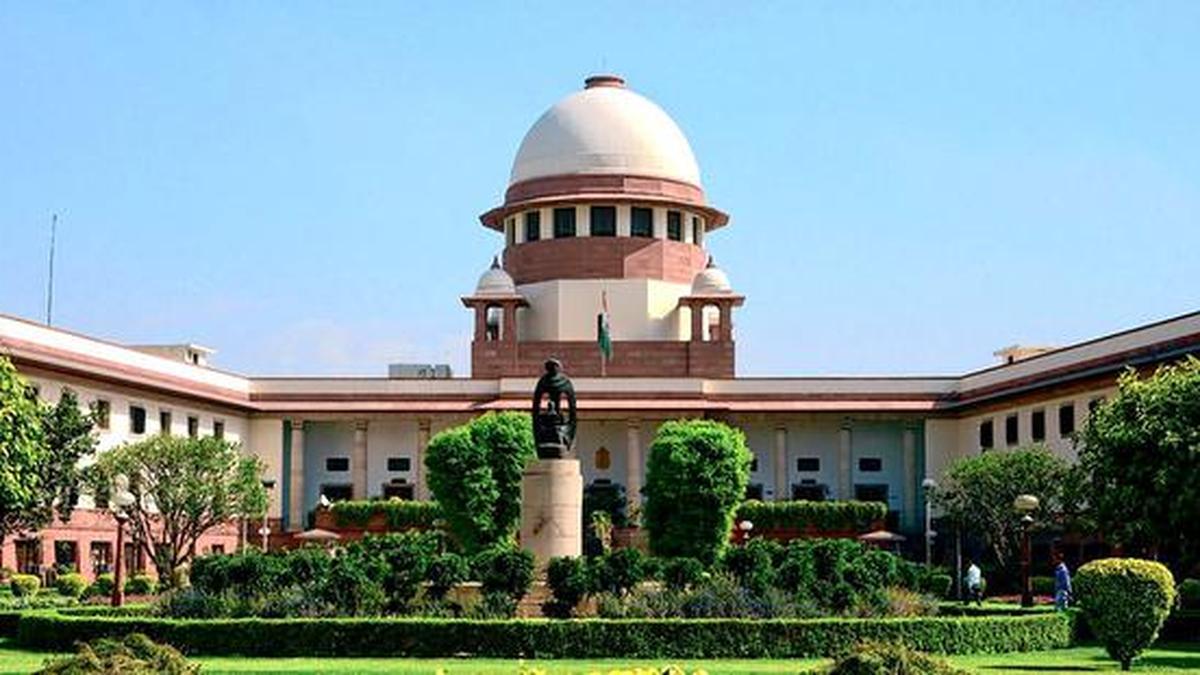
The Supreme Court, in a judgment on Friday, said that buying and selling property in India are “traumatic” experiences, noting that property disputes account for 66% of civil litigation in the country’s courts.
The court asked the Centre to take the lead in adopting Blockchain technology to make the property registration process transparent and easier across the country. It also directed the Law Commission of India to prepare a report on restructuring century-old colonial-era laws governing property transactions, including the Transfer of Property Act, 1882, the Registration Act, 1908, and the Stamp Act, 1899, to align them with modern technology.
“Property purchase has not been easy, it is not difficult to find people grudgingly telling us that it is in fact traumatic,” Justice P.S. Narasimha, who authored the judgment, said.
Justice Narasimha, sitting on the Bench with Justice Joymalya Bagchi, identified fake documentation, land encroachments, delayed verification processes, the role of “intermediaries” in property purchases, red tape at sub-registrar offices, and even the requirement of two witnesses for document verification as some of the factors delaying or hindering property transactions. Registration procedures also vary from State to State, as land is a “State subject” under the Constitution.