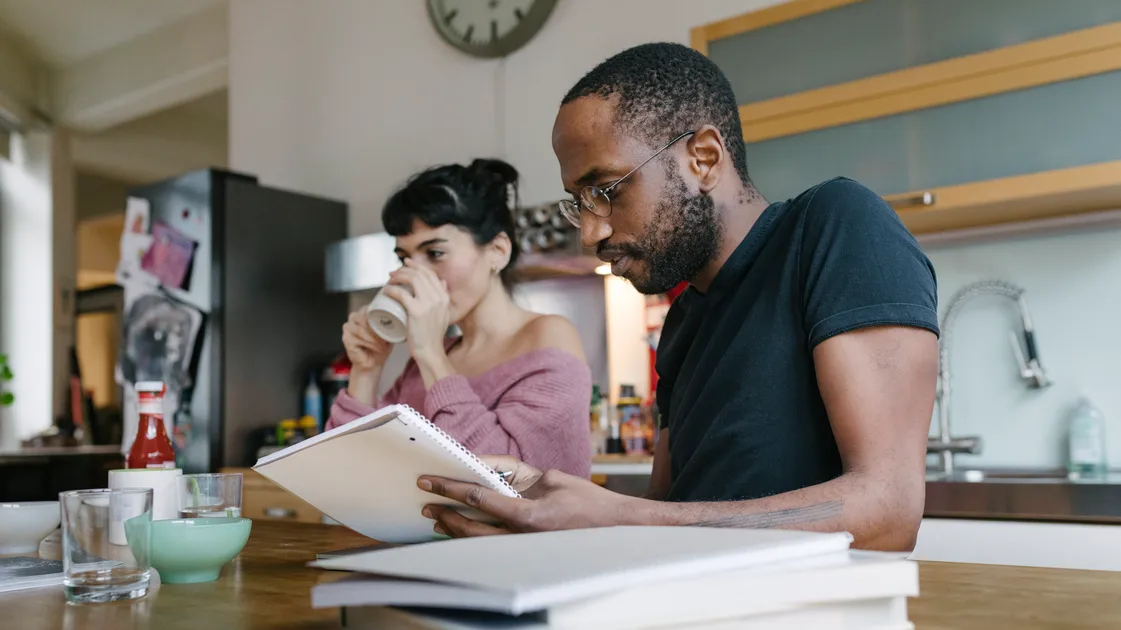
From “situationships” to “pink flags,” many dating and relationship terms have made the rounds on social media in recent years. But one that’s particularly impactful is “parallel play.”This concept isn’t about grand romantic gestures or elaborate date nights, and it gets to the heart of true intimacy and lasting love. There are a few potential limitations to keep in mind, however.So what exactly is parallel play, and how can it help (or harm) relationships? HuffPost asked relationship experts to weigh in.“Parallel play is when two people do unrelated things together in one space at the same time without really talking to each other,” Monica Lynne, a relationship and sex therapist with the dating app Flirtini, told HuffPost. “In romantic relationships, it shows two partners can be in the same space, do their own thing and remain connected through attunement to each other.”For example, one person might be reading while their partner bakes a pie. Or one partner might be playing a video game while the other works on their cross stitch project. “When we hear the term ‘parallel play,’ we usually think of the developmental stage where toddlers play near one another, but aren’t fully playing collaboratively quite yet,” said therapist Natalie Moore. “But a new meaning of the word has sprung up which refers to a phenomenon where romantic partners engage in separate hobbies or activities while sharing the same space.”She emphasized that both partners don’t have to want to do the same thing to spend quality time together. “Both are in the same space, feeding off and being impacted by each other’s energy, but not directly interacting,” said Adam Cohen-Aslatei, a relationship expert and CEO of the matchmaking service Three Day Rule. “I personally do this with my partner ― one of us might be cooking while the other works on the sofa or relaxes. We’re still enjoying being in the same space and feeling connected.”Willie B. Thomas via Getty ImagesBoth partners don’t have to want to do the exact same thing to spend quality time together. Couples who engage in parallel play have typically reached a more comfortable and settled phase of their relationships, where you don’t need constant interaction and attention to experience intimacy and togetherness. “Parallel play often reflects emotional maturity,” Cohen-Aslatei said. “It shows that you can appreciate both closeness and independence. Many long-term couples naturally settle into this kind of companionship, where being quiet together doesn’t feel awkward. It feels comforting.”What are the benefits of parallel play?“Parallel play can build secure attachments by encouraging closeness without dependency,” said Thais Gibson, a relationship expert and founder of The Personal Development School. “It reduces the pressure to ‘perform’ to fill silence and supports individual interests within the relationship. By focusing on building healthy interdependence in relationships, individuals move further away from codependence and can better maintain their sense of identity.”She added that true connection is built not on constant interaction but on two people’s ability to meet their own needs individually and together. In healthy relationships, spending some intentional time in the same room but engaged in different hobbies can still foster closeness.“Studies have shown that simply being in physical proximity to a loved one releases oxytocin, the ‘bonding hormone.’ So even if you’re doing separate things, your brain still registers safety and closeness,” said Damona Hoffman, a dating coach and author of “F the Fairy Tale: Rewrite the Dating Myths and Live Your Own Love Story.”Parallel play is a way to maintain connection without togetherness fatigue, and it gives everyone a chance to recharge in a shared space. “In today’s world where we’re overstimulated by work, screens and constant social input, quiet companionship can be deeply healing,” Hoffman noted. “Parallel play reminds couples that love doesn’t always have to be loud or performative. Sometimes, the simplest form of connection is just being together, separately.”On a practical level, busy couples with differing interests can also reduce conflict with parallel play. “As a therapist who helps couples find compromise and win-win scenarios, I’m a big fan of parallel play,” Moore said. “It allows both parties to get their recreational, rest and creative needs met while still feeling connected to their partner.”The experience also deepens trust, and fosters secure attachment and emotional safety.“Parallel play works because it honors the truth that love isn’t always dramatic or intense,” said Julie Nguyen, a relationship coach with the dating app Hily. “Sometimes love is the steady comfort of being yourself while someone else is beside you. The intimacy is in the choosing to stay close.”There’s a sense of warmth and calm in the familiarity. “You know the other person is there and available, and that’s comforting,” said couples and family therapist Tracy Ross. “It also prevents the burnout that can come from constant togetherness.”When done right, parallel play helps establish a nice balance. “It’s definitely a bonding experience, and being comfortable with silence is another benefit and a good exercise for any relationship. You’re not ignoring each other ― you’re just unwinding together,” Cohen-Aslatei said. “When you do come back together to talk or laugh, those shared moments often feel even more meaningful.”What are the downsides?“A potential downside to parallel play is if one member of the couple is craving face-to-face intimacy versus shoulder-to-shoulder intimacy,” Moore said. “If one partner has a deep yearning to share time in the same activity, it may not be a satisfying enough compromise for them.”She added that if one or both partners has an avoidant attachment style and struggles to be fully present in interactions, parallel play could lead to dissatisfaction.“Sometimes it becomes a form of emotional unavailability or avoidance,” Lynne said. “Some couples live parallel routines out of fatigue from the relationship and use silence to avoid conflict.”Uncomfortable conversations are an important part of intimacy, and partners may start to slowly drift apart without it. There’s also the risk of feeling neglected and sensing a lack of interest.“Some people, especially those who value quality time or reassurance, may also interpret it as disconnection,” Gibson noted. “When one partner consistently prefers parallel play over shared experiences, it can create an imbalance in the relationship.”If partners no longer share updates with each other after time apart, this could be a sign that something is off, she added. “Parallel play becomes a problem when it replaces connection rather than supports it,” Nguyen said. “If it becomes the main way you spend time together, one or both people may start to feel distant or unseen. You might feel like a roommate, a friend, or two ships passing in the night without any intentionality.”Another consideration is the type of activity each person is engaged with. Ross warned that screen time is not always the most conducive to parallel play a swell. “If one partner is absorbed in texting or scrolling, laughing at something you’re not part of, it can feel alienating,” she said. “Some couples eat dinner or watch TV together but aren’t really sharing an experience ― it’s more routine than connection.”What’s a healthy way to approach parallel play in a relationship?“If you want to try out parallel play, saying something like, ‘I’d love to be near you while we each do our own thing,’ turns it into a shared experience rather than passive coexistence,” Nguyen said. Communicating clearly beforehand is essential for setting expectations and establishing intentionality. “Talk about it openly,” advised April Davis, the founder of Luma Luxury Matchmaking. “Be clear about what you’re doing and why. For example ― ‘Let’s both unwind for a bit, then talk about work afterward.’ Making your intentions clear helps prevent misunderstandings.”She noted that you can even maintain a sense of connection by sharing a snack or listening to the same playlist as you do your separate activities. “Take an attitude of experimentation to see what works for your particular relationship and lifestyle,” Moore advised. “Think about activities that you already enjoy doing and how you could increase your proximity while you do them.”You can start small with shorter blocks of time for reading or knitting, for instance. “You might create small rituals like sitting together in the evening, working side by side at a café or starting the morning in the same room with your own hobbies,” Nguyen said. “The point isn’t silence. It’s companionship that doesn’t require effort.”She also recommended checking in with each other to maintain a sense of emotional connection and to figure out how parallel play makes both of you feel. “Having a quick conversation before and after will reinforce that you’re spending time together, not apart,” Davis said. “Respect your differences. Some people need more quality time, while others value space. Talk about what works for both of you and adjust as needed.”Ultimately, the goal with this exercise is to have a mix of shared experiences. “Ensure you’re spending enough time balancing parallel play and engaged, quality time together,” Gibson said. “This will keep the parallel time together intentional and sustainable long-term.”Maybe you spend a few evenings doing your own thing, but you also have intentional date nights and shared fitness routines.“When couples can share a space, get lost in their own world and come back together easily, that’s a sign of real security in the relationship,” Davis said. “I like to remind my clients that closeness isn’t just how much time you spend in conversation. It’s also how comfortable you are just being together, even in silence.”
People In The Happiest Relationships Share This 1 Simple Habit
Dating and relationship experts weigh in on this simple but impactful concept.
1,565 words~7 min read