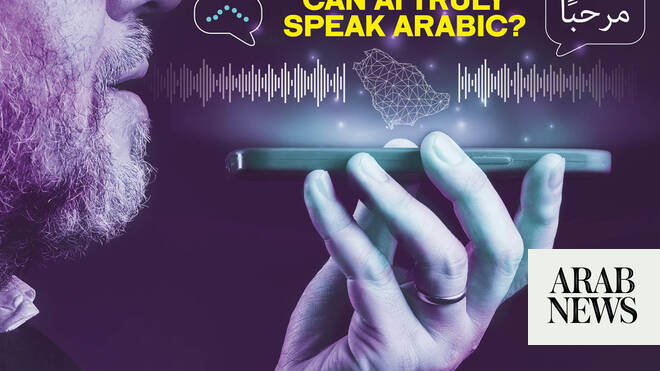
JEDDAH: As developers across the Arab world work to formalize Arabic for artificial intelligence — grappling with its many dialects, limited datasets, and deep cultural nuance — English-based AI systems have continued to surge ahead. Now, industry experts say it’s time for Arabic users to gain the same technological momentum.
The performance gap between Arabic and English natural language processing is most visible in speech recognition, where pronunciation, rhythm, and vocabulary differ sharply across dialects. These variations make it challenging for one model to understand spoken Arabic with consistent accuracy.
Despite these hurdles, progress is accelerating. With rising investment and government-backed initiatives led by Saudi Arabia and other regional powers, Arabic AI is steadily closing in on English in sophistication and accessibility.
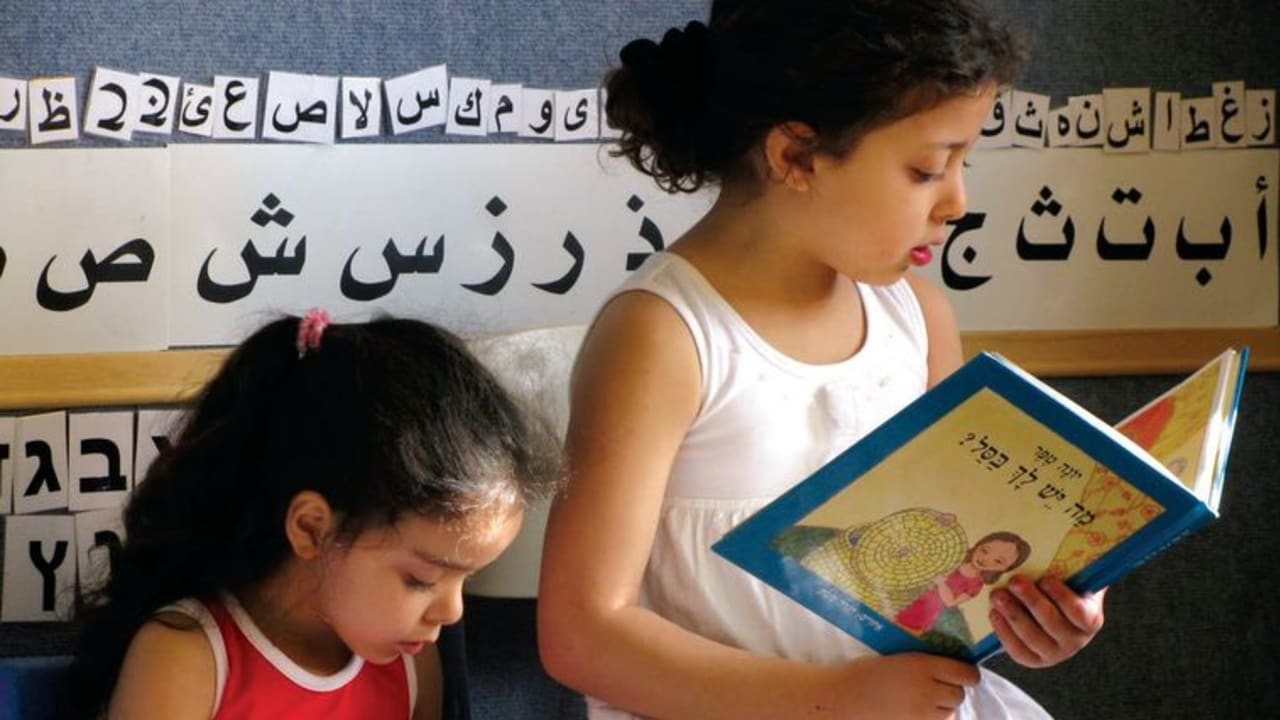
As Arabic AI evolves, experts emphasize the importance of cultural nuance and dialect diversity in future language models. (aramcoworld.com)
Amsal Kapetanovic, head of KSA at Infobip, told Arab News: “While written NLP tasks like basic chatbots can be managed with additional work, speech recognition really exposes the limitations of current models. It requires even more fine-tuning and adaptation to handle the diversity of spoken Arabic effectively. This is where the gap between Arabic and English NLP is most pronounced.”