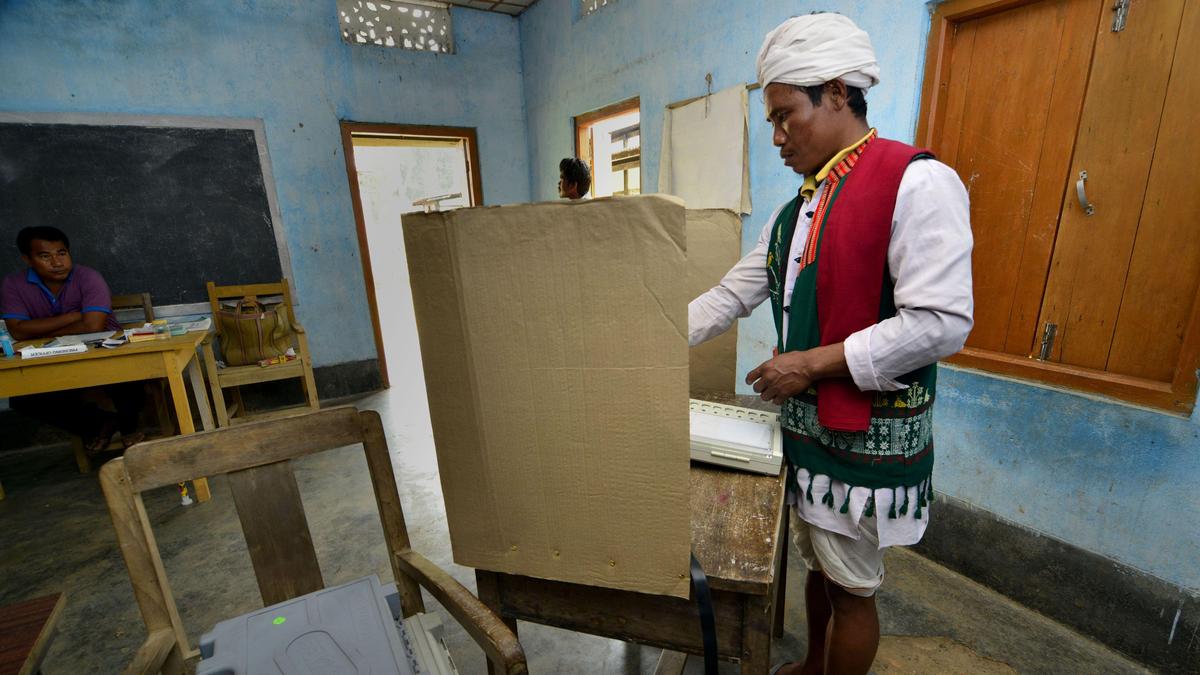
The Supreme Court on Thursday (Noveber 6, 2025) is scheduled to examine the Centre’s argument that the ‘right to vote’ in an election is different from the ‘freedom of voting’, and while one is a mere statutory right the second is a part of the fundamental right to freedom of speech and expression.
The Centre was responding to a petition seeking to declare Section 53(2) of the Representation of the People Act, 1951 and Rule 11 read with Forms 21 and 21B of the Conduct of Elections Rules, 1961, which apply to ‘uncontested elections’, ultra vires the Constitution for violating freedom of speech and expression under Article 19(1)(a).
Section 53(2) kicks in when the number of candidates equals the number of seats to be filled in an Assembly or Lok Sabha election. In such cases, the provision instructs a Returning Officer to declare all such candidates as duly elected by filling in Form 21 ( in case of a general election) or Form 21B (in case of an election to fill a casual vacancy).
Prevents voters’ right to exercise NOTA
The petitioners, Vidhi Centre for Legal Policy, represented by advocate Harsh Parashar, and the Association for Democratic Reforms, through advocates Prashant Bhushan and Neha Rathi, submitted that the RO’s declaration without conducting a poll prevented citizens from expressing their right to vote the ‘None Of The Above’ or the NOTA option and voice their dissatisfaction about the contesting candidate.