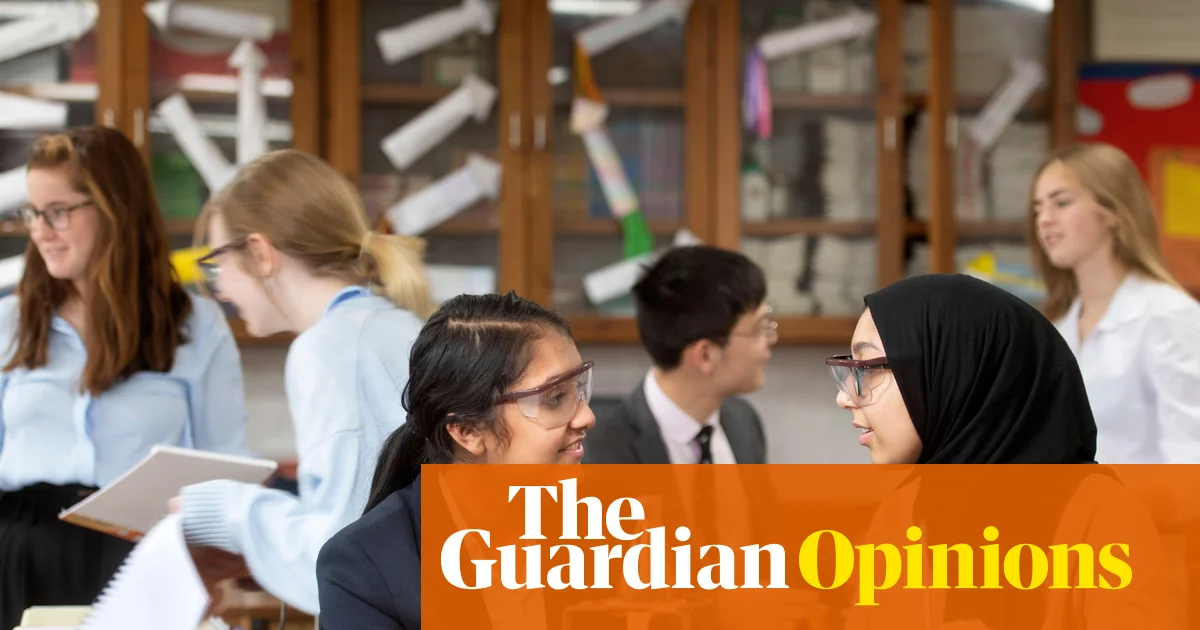
In an age of increasingly capable machines, it makes sense for schools to value creativity and life skills as part of a well-rounded education
S
ocieties evolve and schools are under pressure to adapt, but some features of education policy are perennial. For example, modernisation will always be denounced as a dilution of standards. Inevitably, Conservatives have leapt on recommendations by an independent review, commissioned by the government, as proof that Bridget Phillipson, the education secretary, is “dumbing down” the curriculum.
The basis of these charges is that the review, led by Becky Francis, professor of education at University College London, proposes reducing the burden of GCSE exams and scrapping the English baccalaureate – a cluster of subjects that, when taken together, constitute a metric of success recognised in school league tables. Conservatives are also unhappy about the notion that primary schoolchildren should learn about the climate crisis and be encouraged to value diversity.
That is a selective reading of a wide-ranging review that calls for a more rigorous science curriculum and new tests to catch children whose progress slips between primary school and GCSE. Opposition attacks are premature when the government has not yet drafted any legislation.