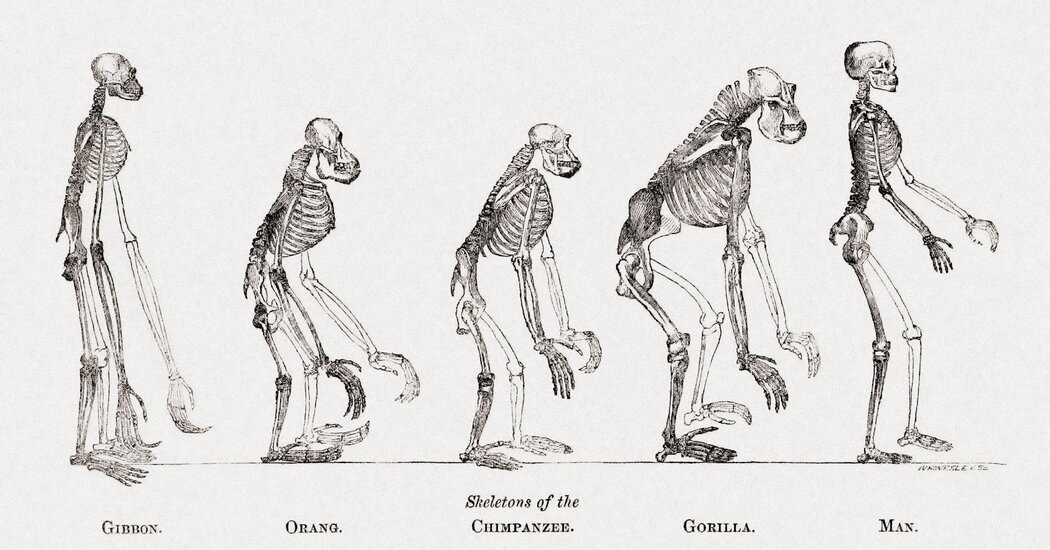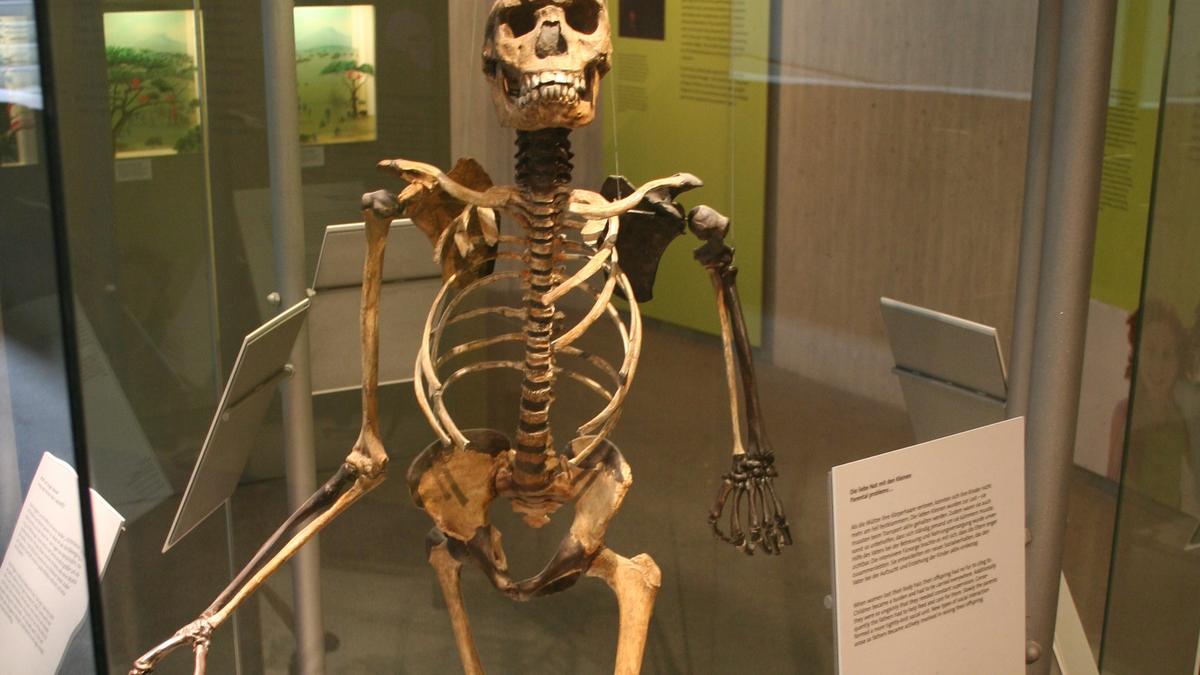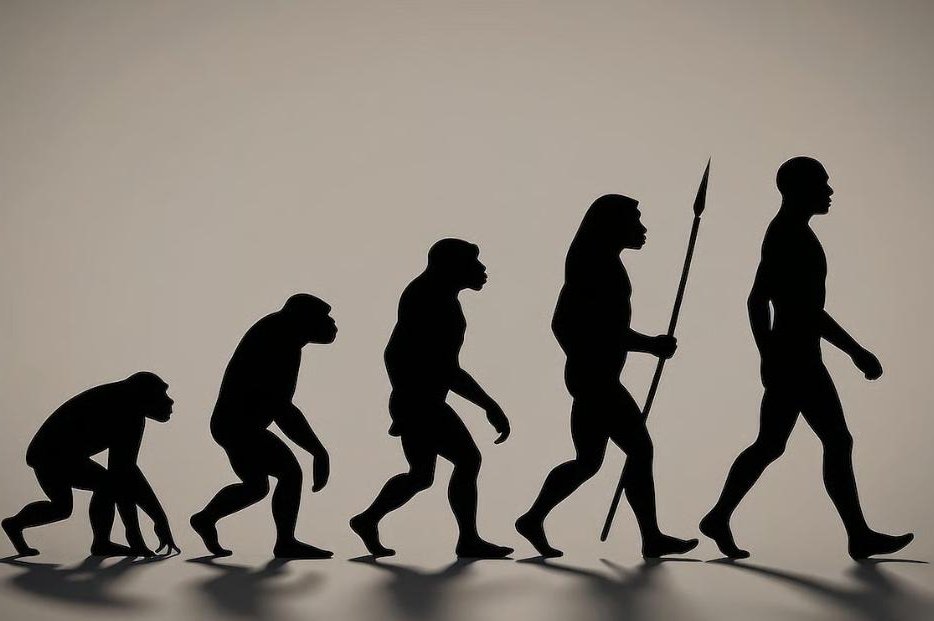
Two small changes in human DNA may have played a big role in helping our ancestors walk upright, researchers say.
The study, recently published in the journal Nature, found that these tweaks changed how a key hip bone developed.
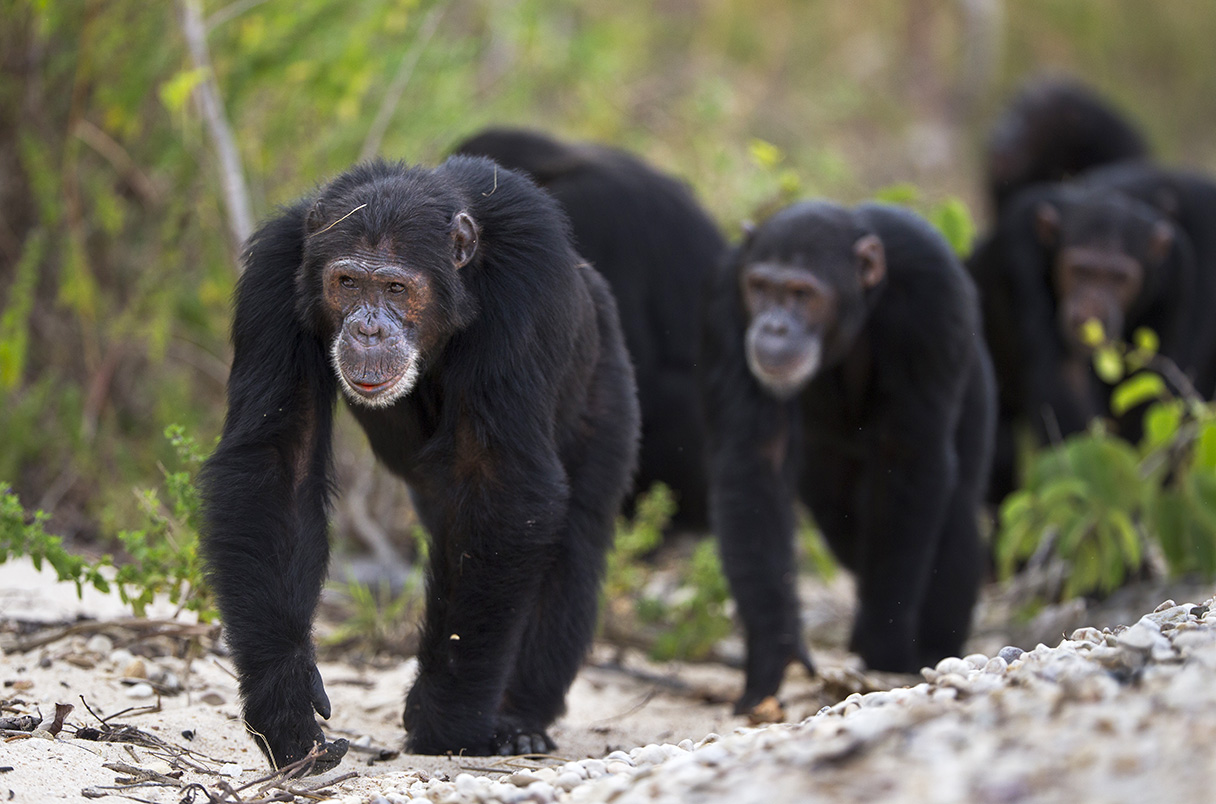
This allowed early humans to stand, balance and walk on two legs instead of moving on all fours like other primates.
One change caused the ilium -- the curved bone you feel when you put your hands on your hips -- to rotate 90 degrees.
Related