Show Caption
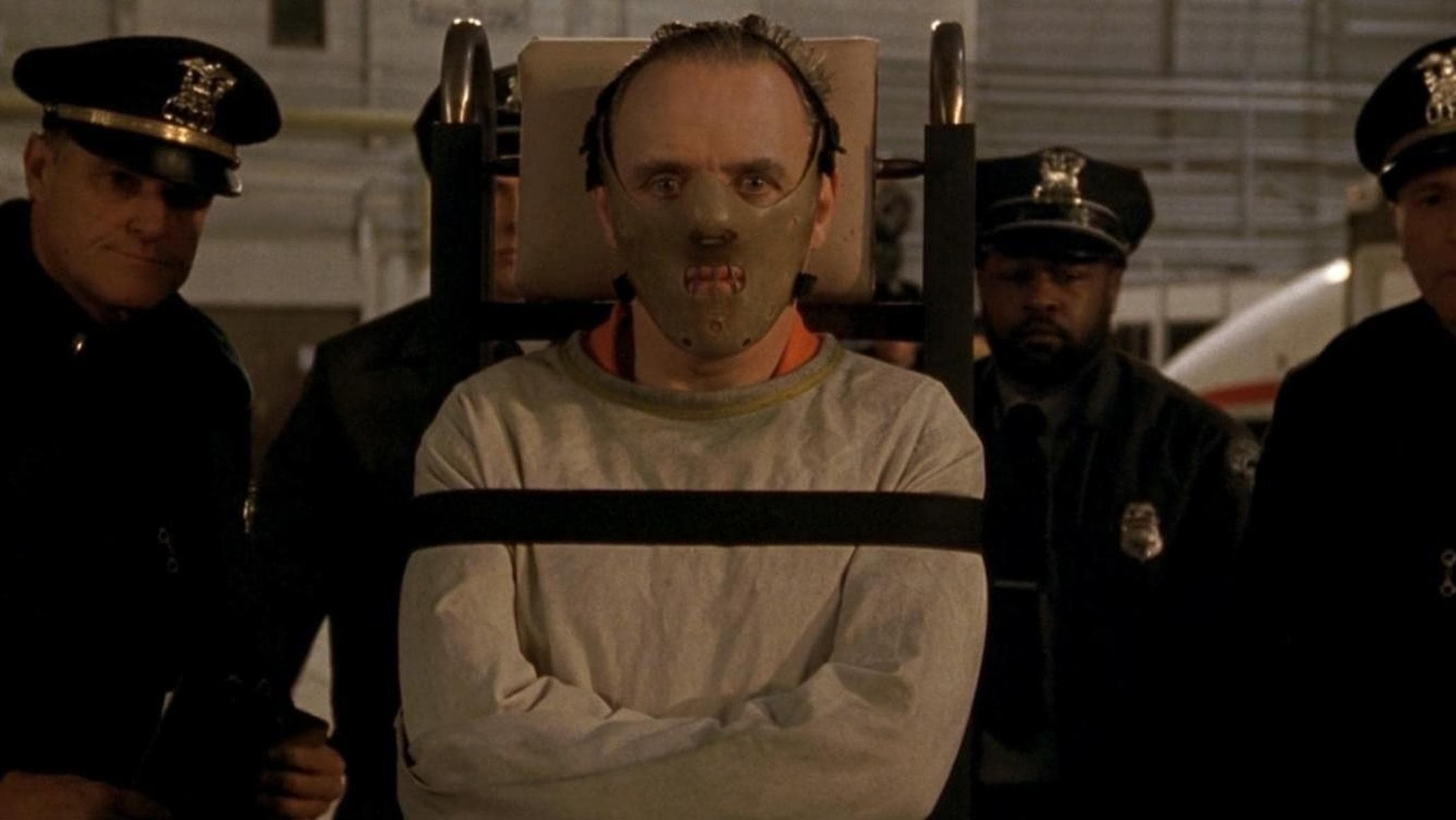
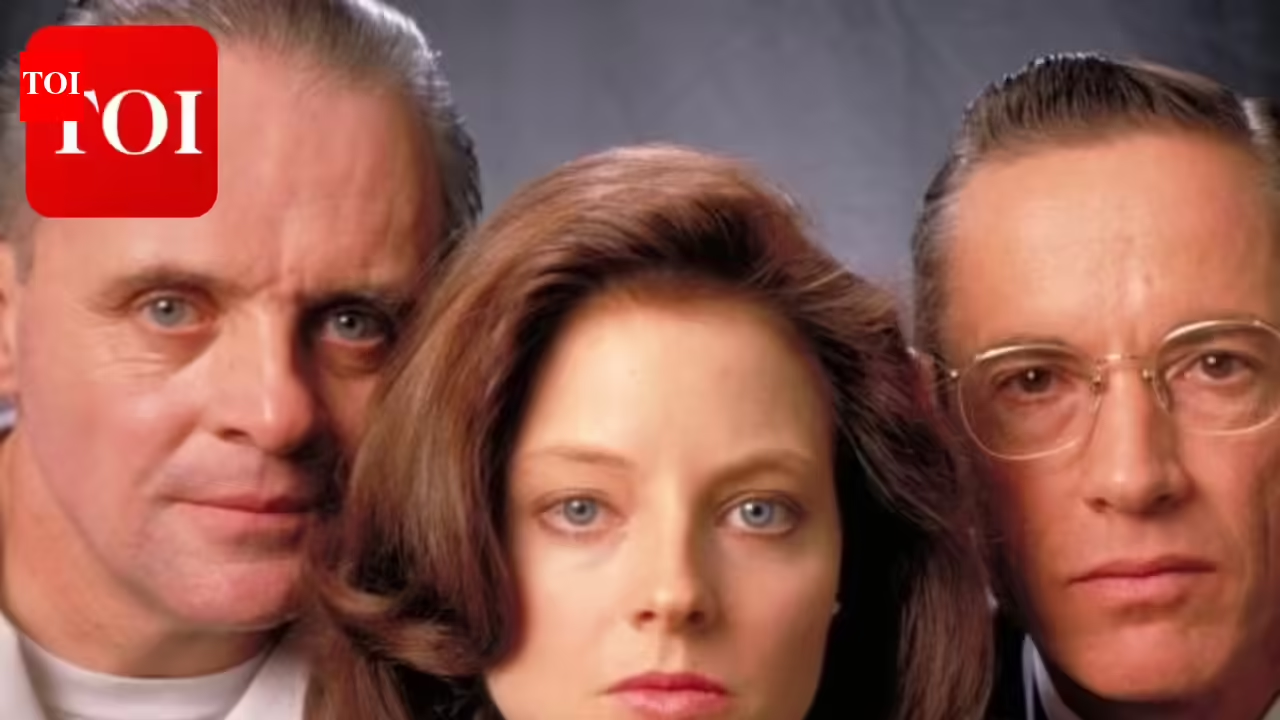
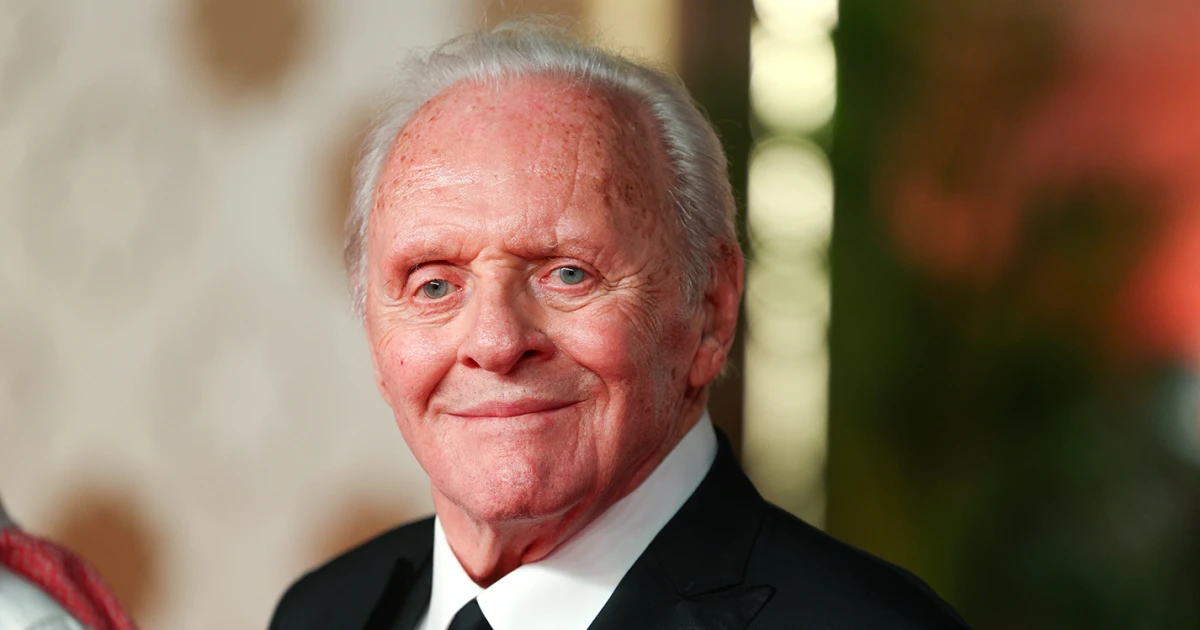
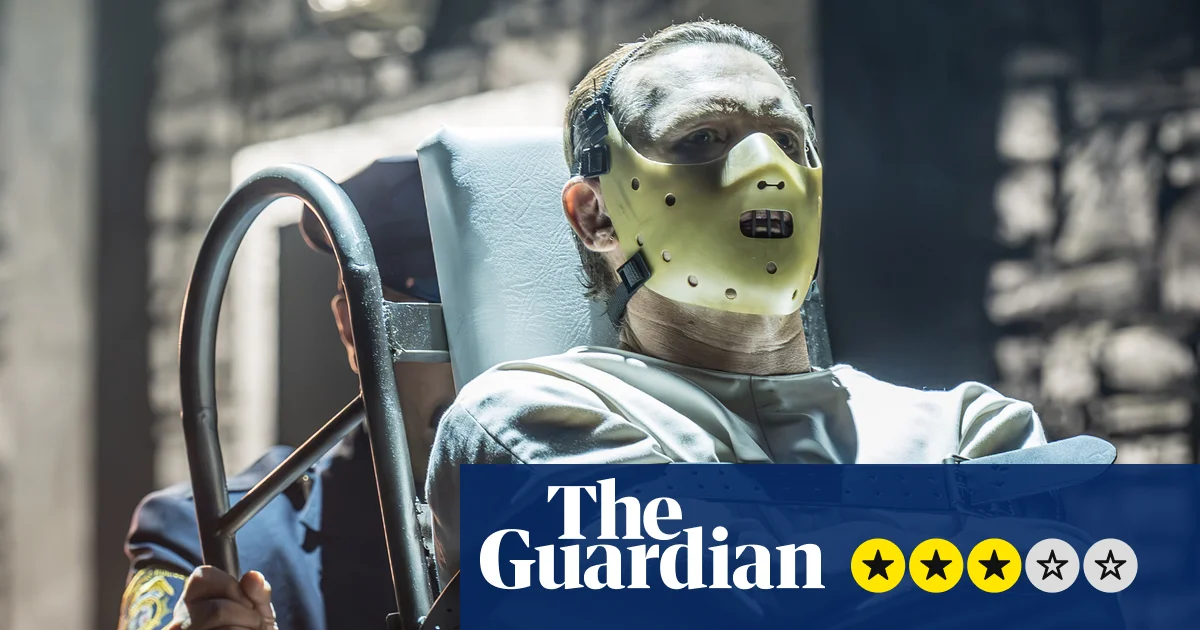
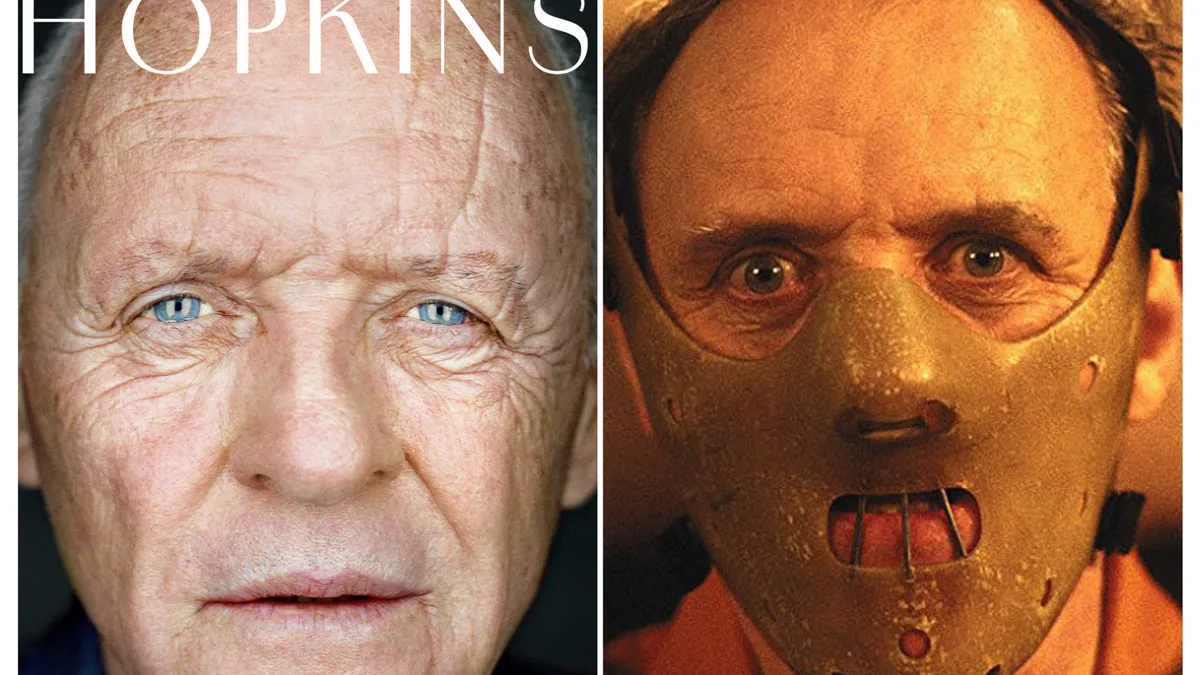
Dr. Hannibal Lecter gets special attention in Anthony Hopkins' upcoming memoir.Hopkins, 87, admits in "We Did OK, Kid: A Memoir" (Summit Books/Simon & Schuster, Nov. 4) when he first heard "The Silence of the Lambs" movie title, he thought it was a children's movie. Yet, just 15 pages into the script, the respected actor of stage and screen felt such a primal hunger to play the outwardly civilized, cannibalistic serial killer character that he couldn't read further."I called my agent and asked, 'Is this an offer?'" Hopkins tells USA TODAY. "He said, 'It's not a very big part.' I said, 'I want to do it. It's a life-changer.'"Hopkins' life was forever altered after his iconic performance in Jonathan Demme's 1991 psychological thriller, with "Hannibal the Cannibal" playing a cat-and-mouse game with FBI agent trainee Clarice Starling (Jodie Foster). Dr. Lecter still rules in hell, taking the top spot on the American Film Institute's 100 Greatest Villains list (sorry, #3 Darth Vader).In this exclusive excerpt from the chapter "Fava Beans and a Nice Chianti," Hopkins discusses his real-life inspirations for the dark Dr. Lecter. The chapter begins with the proud Welsh actor's first "Silence of the Lambs" meeting with skeptical producers and Demme, who championed Hopkins' casting, much to the actor's surprise.Anthony Hopkins memoir 'We Did OK, Kid' exclusive excerpt“Don’t you want an American actor?” I asked Jonathan Demme.He laughed and said, “Don’t you want to do it?”“Yes, I do,” I said. (Don’t ask questions, dummy! I told myself.) “I really do.”A producer at the table confessed, “We did have our doubts about an English actor playing this American killer.”“Well, that’s OK, then,” I said. “I’m not English; I’m Welsh.”I knew they had nothing to worry about because I instinctively sensed exactly how to play Hannibal. I have the devil in me. We all have the devil in us. I know what scares people. The key is to embody two inner attitudes at the same time that don’t often coexist – he was at once remote and awake.I’d encountered those two things in one entity once very early in my life, and it became part of my childhood subconscious. I suffered from a terrible fear of spiders, and unfortunately, ours was an old house with crawling and skittering creatures everywhere. One night, I switched on the light in my father’s bakery, and right next to the switch was a huge black spider — patient and still, yet completely alert at the same time. I almost jumped through the roof.That was the effect I wanted to have as Hannibal. I wanted to be the spider in my father’s bakery so that as soon as the camera was on him, he was revealed to be all readiness and all stillness too. Staring at people for a long time makes them very uneasy. Remoteness draws the witness — or victim — forward and into the circle of the predator’s personality.I thought of what I’d learned about the psychological gesture, and I intuited the inside structure of Hannibal Lecter’s head. The blueprint: remove to the background the motion factor of weight and sensing — or intending. Lecter’s main power was his penetrating thinking and sustained intuiting. That would come across, too, in the perfect clarity of his speech.Once I began acting on film, I worked hard to become still, because it’s not really in my nature to dwell for a long time in direct, sustained attention. And for this role, I had to cultivate that disposition to the most extreme degree. Hannibal had to be both awake and remote in order to create a spellbinding charisma. The way to that is through stillness.On the day of the first table reading, I didn’t get a chance to talk with Jodie Foster before we began. We just flew right into it. Even though I don’t usually give a full performance during a table read, I wanted to show what I could do, so I was as scary as I could be.As it turned out, this was quite scary. You could have heard a pin drop in the room. A couple of seconds after I started to speak as Lecter, I saw Jodie grow tense. She later confirmed that she had been petrified. And that slight distance between us remained throughout the filming.For my first meeting with Clarice, Jonathan Demme asked me what I wanted to be doing when she came down that dark hall to interview me in my cell.“Do you want to be painting? Reading?” Demme said. “Sleeping? Sitting on your bunk?”“No,” I said, thinking of the spider on the bakery wall. “I want to be standing calmly, waiting for her.”“Why?” he asked.“Because I can smell her coming down the corridor.”“Oh my God, you’re so sick, Hopkins,” said Demme, and he laughed.He thought that was very creepy and exactly right.I went on to explain that Lecter had to present as extremely civilized. I insisted the costume designer give me a slim-fitting prison jumpsuit rather than a baggy one, for example. I said that Lecter would have paid someone to tailor it, because he cared about such things.And so when Clarice comes down the corridor full of lunatics screaming at her and throwing things, here Dr. Lecter is at the end of the hallway, standing politely in his tailored jumpsuit, greeting her with his full, unblinking attention. He’s a monster, but he’s a monster who moves silently through the night.I also called on my childhood experiences of doing impersonations of Bela Lugosi at boarding school. As a kid, I went to see him in "Dracula." That had been one of the first big books I ever read. In the book, the protagonist Jonathan Harker nicks himself with a razor and senses Dracula’s rapt attention. The sound I imagined Dracula made in that moment, thirsting for Harker’s blood, was a very particular combination of hissing and slurping.That’s where I got the sound I made with my lips as Hannibal — the one that gets imitated so much. Thank you, Dracula.Copyright © 2025 by Anthony Hopkins. From the forthcoming book WE DID OK, KID: A Memoir by Anthony Hopkins to be published by Summit Books, an Imprint of Simon & Schuster, LLC. Printed by permission.