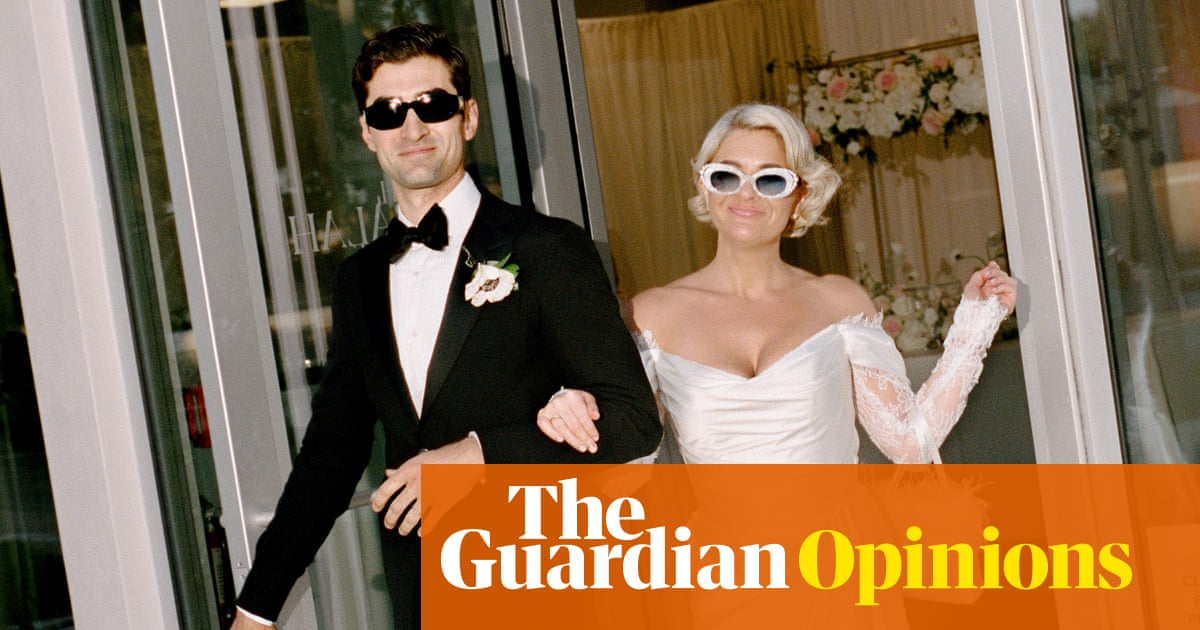
People are taking many new and unexpected approaches to matrimony, and it is surprisingly exciting
T
he lavender marriage – that administrative convenience and PR fiction of golden age Hollywood – is back. The Washington Post recently covered its reinvention, meeting Jacob Hoff, who’s gay, and Samantha Greenstone, who’s straight, a blissfully married couple with a baby on the way (they “birds’d and bees’d” Greenstone explained for the pruriently curious). The Post also spoke to friends April Lexi Lee and Sheree Wong, both “on the asexual spectrum”, who say they “bestied so hard we got married … platonically”.
Of course, if you’re talking openly about a lavender marriage, it isn’t one. The point of them was to confer a fig leaf of heteronormative respectability at a time when that was professionally and socially essential; these people aren’t in it for appearances. Hoff and Greenstone don’t like the term: “It cheapens what we really have, which is a love match,” Greenstone says. But “lavender marriage” has been co-opted online as a shorthand for different forms of loving, committed relationships that do not centre conventional romance and sexual desire, both as jokey aspiration and lived experience. They need another name: some people call themselves platonic life partners (PLPs); I’ve seen “rainbow marriage” on TikTok.