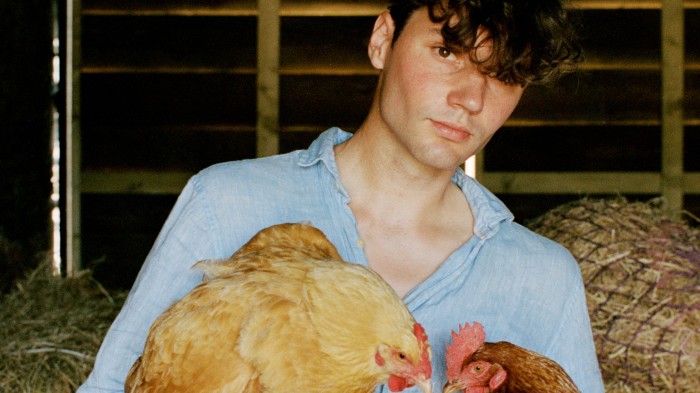
You become adept at combing your fingers through feathers. I’ve got a Buff Cochin hen on my lap who is a giant, billowing, cushion-like creation of a chicken. I’m going through her huge amount of tangerine-coloured plumage to dust her undersides, gently revealing her pink skin to puff her with a white mite-repelling powder. She clucks softly with chattering concern, and I mutter back to her in agreement. This task is more of a precaution than a need, but there is lot of what I shall term “feather dressing” for those of us who really care for and know our chickens. Such rituals are regular occurrences if our hens are to have a harmonious party.
Chickens must be tended to with consideration and care. They are creatures of habit who must be kept clean, fed well, given space and protected from predators – and even, at times, from one another. How to keep them content requires the education of many books. What follow are the lessons I have learnt from my reading.
The pecking order
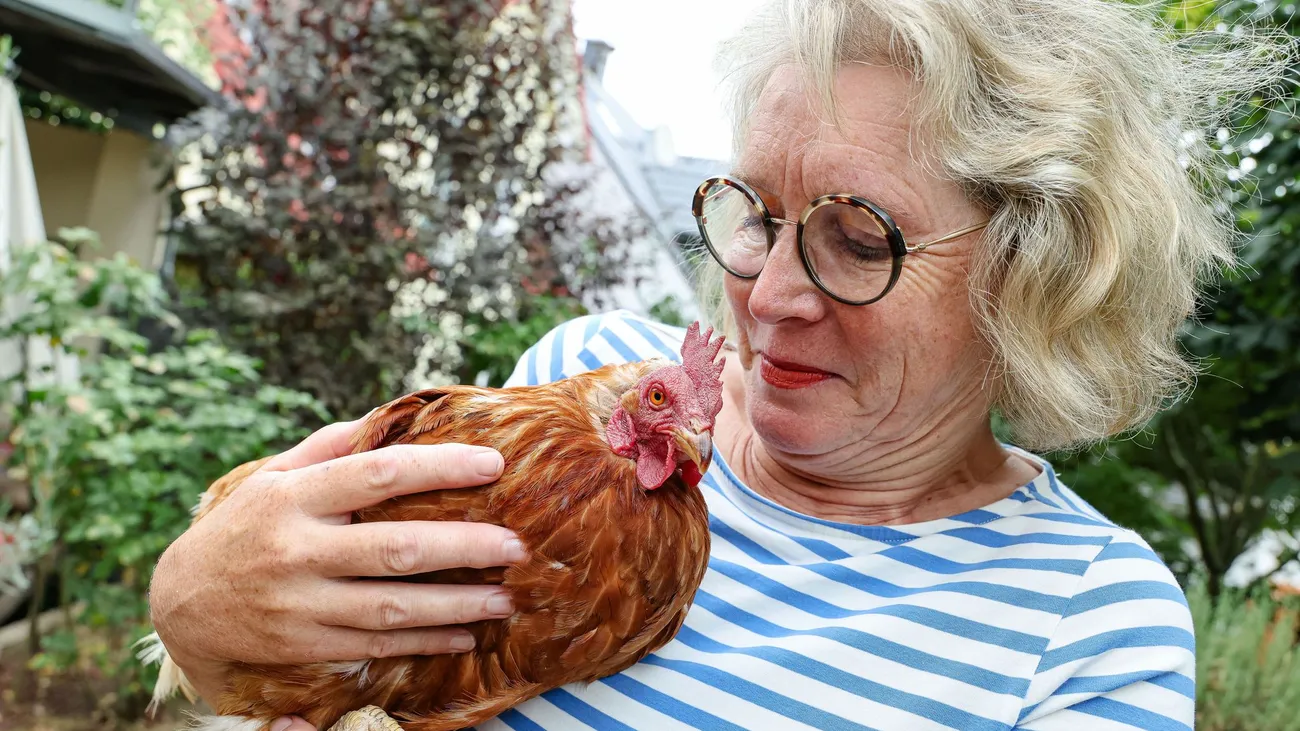
A blue Pekin bantam hen in writer and gardener Arthur Parkinson’s garden © Max Miechowski
Chicken society starts to take shape within a week of chicks hatching, which means you should always work out in advance how many hens you wish to keep so that you buy them all together. If you intend on keeping a mix of different breeds, then they need to have been reared together to avoid what can be horrific bullying as the stronger characters of more dominant breeds really show their true and horrid colours.