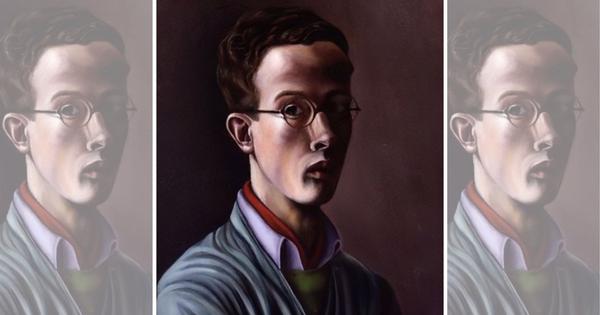
When the young painter was left severely injured after being knocked off his bike, he began to write – with astonishing vividness. As his paintings go on show, novelist Alan Hollinghurst celebrates this fierce talent
W
hat Denton Welch’s life was like before his accident we know from the books he wrote after it. They give a picture of a teenager’s experience unparalleled in its vividness and oddity. Welch was born in Shanghai in 1915, to an American mother and an English businessman father, and brought to England when he was four. In his first book, 1943’s Maiden Voyage, he describes his return to China in 1932, after he’d run away from Repton school in Derbyshire.
All his characteristics as a writer are evident from the start: an astonishing candour of response to sensations of all kinds, with childlike repulsion registered as keenly as attraction; a clarity of style unbothered by literary convention; and a fierce solipsism, his sense of others exact and often unsparing, but his overwhelming purpose the record of his own needs, excitements and perceptions: not just things seen but the acutely subjective feelings they stir up in him.
For his short 1945 novel In Youth Is Pleasure, he wrote in the third person about a holiday he’d spent at the age of 15 with his father and two elder brothers at a country-house hotel in Surrey. The book enlarges our sense of a central paradox in Welch. On the one hand there is his hunger for wild physical sensation, focused here on a scoutmaster camping in the woods nearby with two teenage boys, who stir fantasies of a homoerotic alternative to the conventional family Welch keeps trying to escape from.