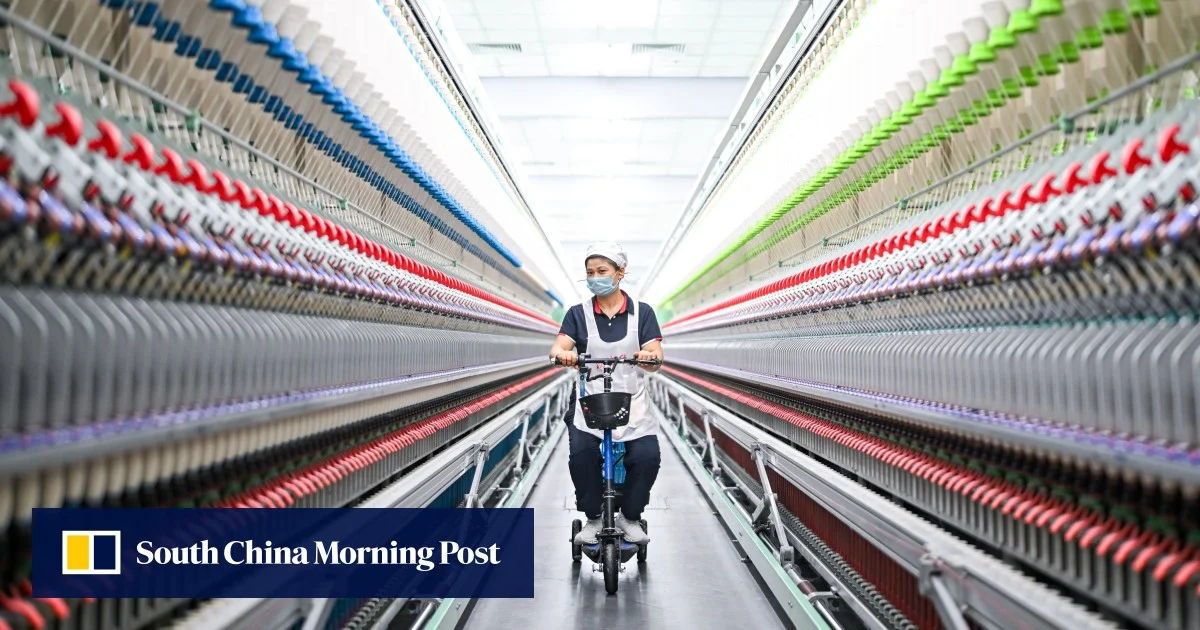
Feel strongly about these letters, or any other aspects of the news? Share your views by emailing us your Letter to the Editor at [email protected] or filling in this Google form. Submissions should not exceed 400 wordsBloomberg’s September projection that China may notch up a record US$1.2 trillion trade surplus in 2025 should command global attention. On paper, this looks like a triumph: the world’s largest exporter is strengthening its position even as sales to the United States plunge. But beneath the headline figure lies a paradox that could reshape not only China’s trajectory but also the global economy.First, it is paradoxical that China’s export machine thrives while domestic consumption stalls. For years, Beijing has promised to rebalance towards household spending. Yet the numbers tell a different story: Chinese families remain reluctant consumers, squeezed by property sector distress, job insecurity and the lack of a comprehensive welfare net. A ballooning surplus is therefore less a sign of vitality than of an economy unable to stand on its own demand.Second, a surplus of this magnitude paints a target on Beijing’s back. In late September, Washington announced tariffs on products ranging from pharmaceuticals to furniture, while Brussels has imposed steep tariffs on Chinese electric vehicles and some Chinese solar panels. The higher the surplus climbs, the easier it becomes for critics to argue that China is gaming the system – whether through industrial policy, state-backed financing or strategic currency management. In the current climate of geopolitical rivalry, a US$1.2 trillion surplus is not just a statistic; it is ammunition.Third, this figure raises uncomfortable questions about global dependence. Western governments talk of “de-risking”, yet supply chains remain deeply tied to China. From rare earths to electronics, Beijing’s grip is still strong. That resilience may be a point of pride for Chinese policymakers, but it also risks deepening the perception that the world’s economies are hostages to a single dominant supplier.The danger for Beijing is complacency. A record surplus might look like victory, but overreliance on exports leaves China vulnerable to external shocks and foreign backlash. Worse, it delays the structural reforms that could unleash genuine domestic demand and create a more balanced, less volatile economy.
Letters | The real danger of China’s trade surplus
Readers discuss the implications of Chinese reliance on exports, the US war secretary’s address, and the rebranding of the US Defence Department.
363 words~2 min read