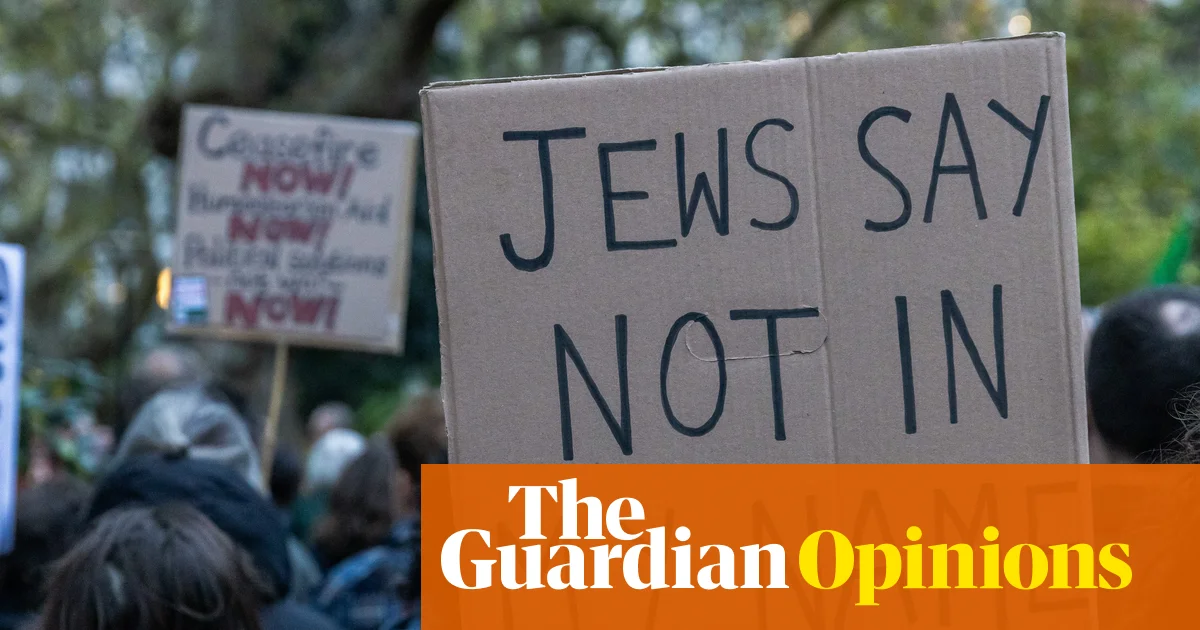
To those I have lost – the teachers, mentors, loved ones – who once taught me what it was to be Jewish. Those who once shared my table, yet now sit on the other side of a deep chasm.I write with hesitation. My words have been twisted before. But silence has become its own wound.We grew up in a world where support for Israel was assumed. Debate existed, but only within narrow confines. The state’s rightness, its necessity – these were never to be questioned.At 16, after visiting concentration camps in Poland, I went to Israel for the first time. I remember the shock of beauty, the sense of belonging. I believed the story: that our survival required this refuge. Here was the guarantee of Never Again.I did not dare to ask who had lived in the houses before 1948, who had planted the olive trees that grew by the roadside, who was being kept out by the guns and the barbed wire. I couldn’t – or maybe I refused to – imagine that the land beneath my feet was also Palestine.But you also taught me to wrestle. To argue. To resist. You taught me about the righteous among the nations – those who went against the grain, who fought fascism within their own communities, who refused to be bystanders to injustice.People participating in the Yizkor ritual for Yom Kippur – the holiest day in the Jewish calendar – block the Brooklyn Bridge on 2 October 2025 to protest against Israel’s military action in Gaza. Photograph: Adam Gray/ReutersSo when I saw soldiers demolishing homes, imprisoning children, firing on protesters marching towards the border – and when I learned of the Nakba, the dispossession, massacres and theft – I could no longer cover my ears. How could I oppose dispossession here but defend it there? How could I denounce apartheid in South Africa and ignore it when it wore the Star of David?Yet when I asked about the walls, the occupation, the bullets, my loyalty was questioned. So I chose what seemed easier: not to wrestle.But that silence was a betrayal. It robbed us of the chance to begin hard conversations when they might still have been heard. Maybe it would not have changed anything. But maybe it meant that when you first heard me speak publicly – against this genocide – you heard my words as betrayal when they were meant as love.I wish I had told you, before our dinners grew cold, that one day I would speak loudly. Not to wound, but because not speaking would betray everything I was taught to honour.Because for me, love is not blind loyalty – to an ideology, a state or even a community. Love is to be whole and honest, not fragmented. It struggles and wrestles. Perhaps it refuses to let go.I have spoken not in spite of my Jewishness but because of it – in solidarity with Palestinians, but also out of love for you.Zionism – anchoring our survival to a nation-state built on another people’s dispossession – has not brought us safety. October 7 was a painful reminder that no one can be secure while others live under siege.The very act of oppressing others has changed us as a people. Our boots may be on their necks, but those same boots also shackle our feet.And so I can no longer separate our relationships from this struggle; it threads through the fabric of my life, pulling at every seam. Yet with every loss, new connections form. The glares of some are met by embraces from others. Some loved ones slowly and then quickly change, even though it costs them dearly, carried forward by love’s stubborn tide. This moment reveals that we were never singular. We were always fractured, questioning, complex – that was our strength. The danger was never difference; the danger was the oppression that demanded silence, that forbade questions, until even love could no longer be spoken.Jewish peace activists rally against the war in Gaza in New York on 4 August 2025. Photograph: Lev Radin/ShutterstockI now build within a new Jewish community – one which sees Judaism as diaspora and solidarity, not unquestioning support for a state. One that resists the conscription of our symbols into violence, the twisting of our history into justification for murder. One that sees Never Again as a promise, not a threat.But as we build here, questions remain. Do we keep wrestling with the institutions that are complicit, that have betrayed us, or build new ones beyond their walls? And if we build outside, what of our families already split? The siblings who no longer call, the Shabbat tables with empty chairs? What of our younger selves at the tables we have vacated, who without us may never hear another view? What of those of us who love people on the other side of the chasm?I’m told my words would frighten others at your table. Perhaps they would. But I am scared too – of returning and finding only silence, of being unable to speak, or worse, finding it easy not to. I am scared of not being able to look you in the eye.So we are left with words that hover like ghosts between us. They are love and grief and betrayal – the words I wish I’d said, the words I still cannot say.And I don’t know if they are words of wrestling, or words of farewell.
When you first heard me speak against this genocide, you heard my words as betrayal. But they were meant as love | Sarah Schwartz
Not speaking would go against everything I was taught to honour: the righteous among the nations – those who refused to be bystanders to injustice
906 words~4 min read