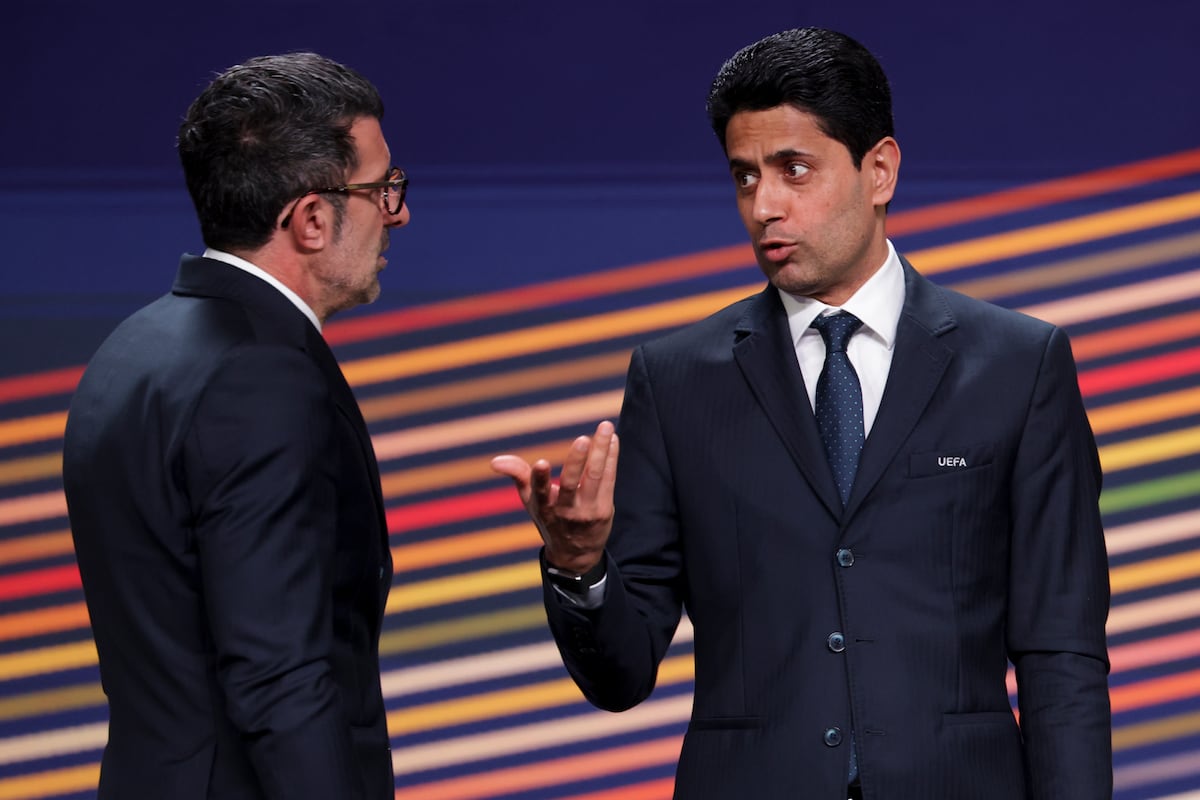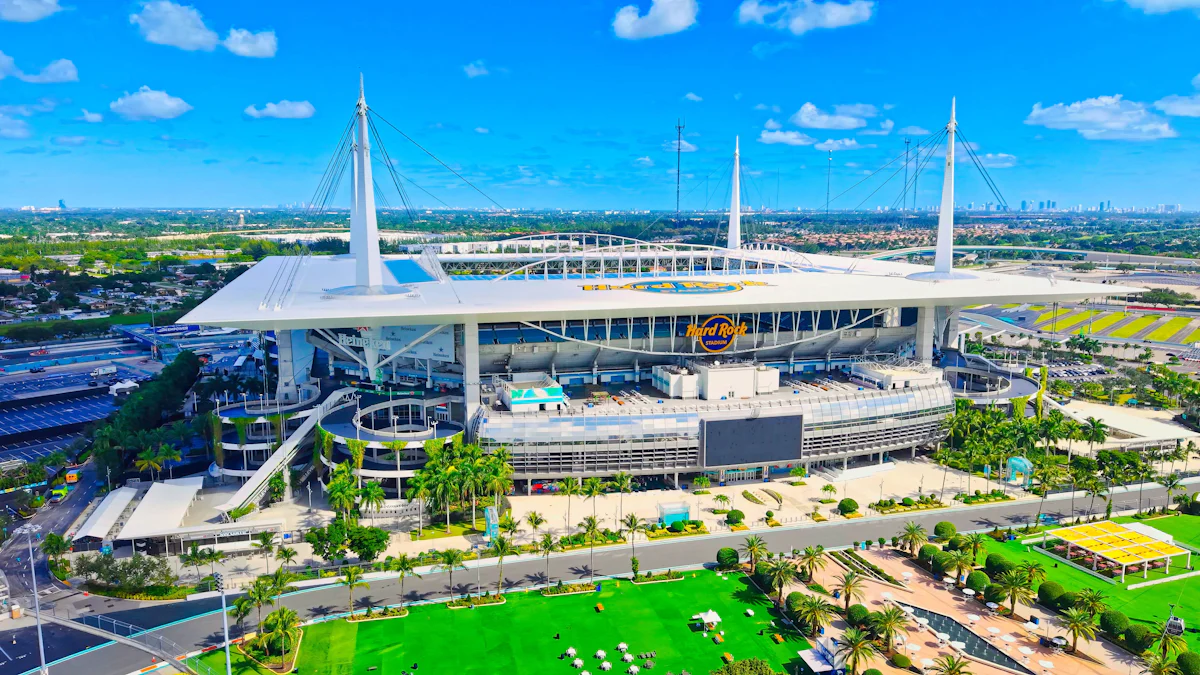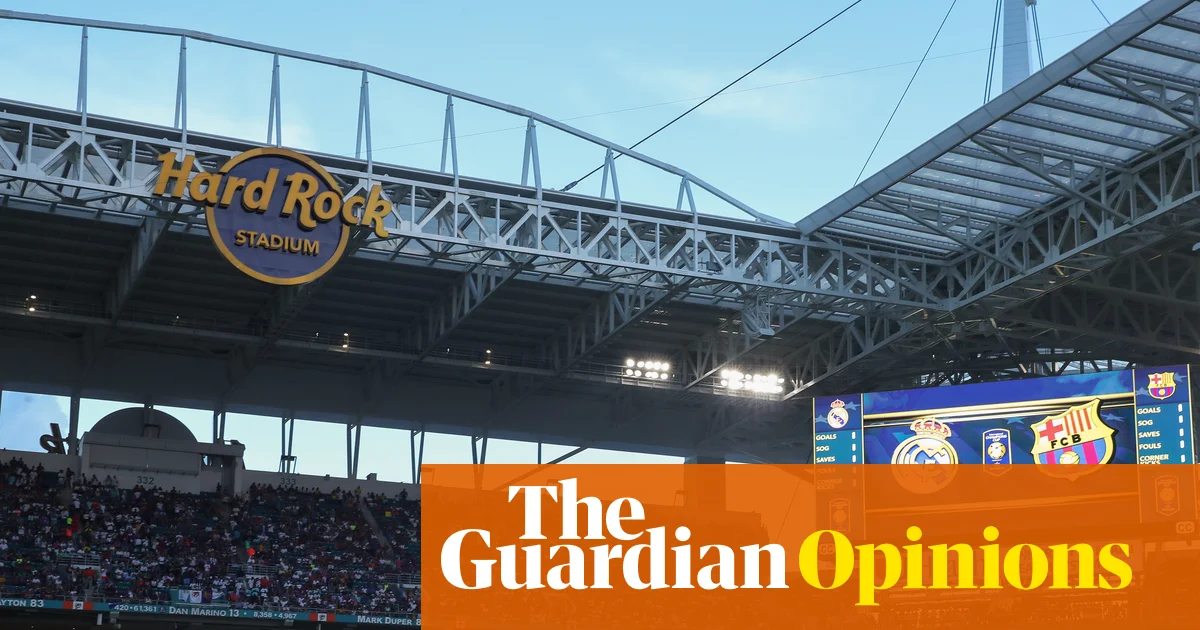
Looking back someday, it may be hard to identify the exact moment when soccer altogether lost the silhouette that had loosely contained its shape for a century. When its governing bodies let go at last, handing the reins to the horses. When the last line holding against the sport’s self-immolating avarice collapsed and all were free to just do whatever they want. When crotchety pundits were finally right and the game was fully gone.Or maybe we’ll know precisely when it was: 6 October 2025, when the Uefa executive committee declared in an extraordinary release that it was opposed to domestic league matches being played abroad – while allowing two of them “on an exceptional basis.” Barcelona and Villarreal will stage an ostensibly domestic La Liga game in Miami in December. Milan and Como are to play a Serie A match in Perth, Australia – a mere 20-hour flight from Italy – in February.In their statement, Uefa took pains not just to express its opposition to the measure, but also to lay the blame for it at the foot of Fifa, whose rules it said were “not clear and detailed enough” to merit a rejection. Uefa said it wants to work with Fifa to create new rules to curb league games played abroad – presumably in a way that will not run afoul of Relevent Sports, the sports promotion company whose antitrust suit got Fifa to drop its statutes. Relevent dropped Fifa from the suit without prejudice, meaning it can be reopened at any time if things aren’t to the promotion company’s satisfaction.“While it is regrettable to have to let these two games go ahead, this decision is exceptional and shall not be seen as setting a precedent,” Uefa president Aleksander Čeferin said. It’s hard to see how that can be true. This is not how precedents work.The floodgates are open. The toothpaste has been squeezed from the tube. The foundation upon which professional soccer is built, structured primarily as a series of domestic circuits, is cracked. Any game can now theoretically be played anywhere, wherever the highest bidder happens to be. Once the Spanish league – or any league – is no longer a thing that can only be played on home soil, there is no going back.We have been on a long, unrelenting march to this place for decades. And the forces that carried the sport there were powered at least partially by American money and methods. We have to be frank about that.The La Liga president, Javier Tebas, spent more than seven years working to put a Barça league game in Miami in an effort to keep up with the Premier League – a cash-churning colossus created through the American model of sporting monetization. He and others have done this because all of soccer sees the United States as an ATM with no pin number, luring one competition after another. In this effort, Tebas was abetted by Relevent, an American promoter.Clubs will now be free to chase after revenue anywhere they can find it. People may try to get in their way on account of the sport’s – or the players’ or the fans’ – best interests, but they stand little chance of actually stopping anything with so much money at stake.
Uefa allowing domestic games abroad is a sad turning point, ending soccer as we’ve known it | Leander Schaerlaeckens
The change may seem small, but the profit-seeking games are clearly the first step in a mass reorientation of the club game
991 words~5 min read