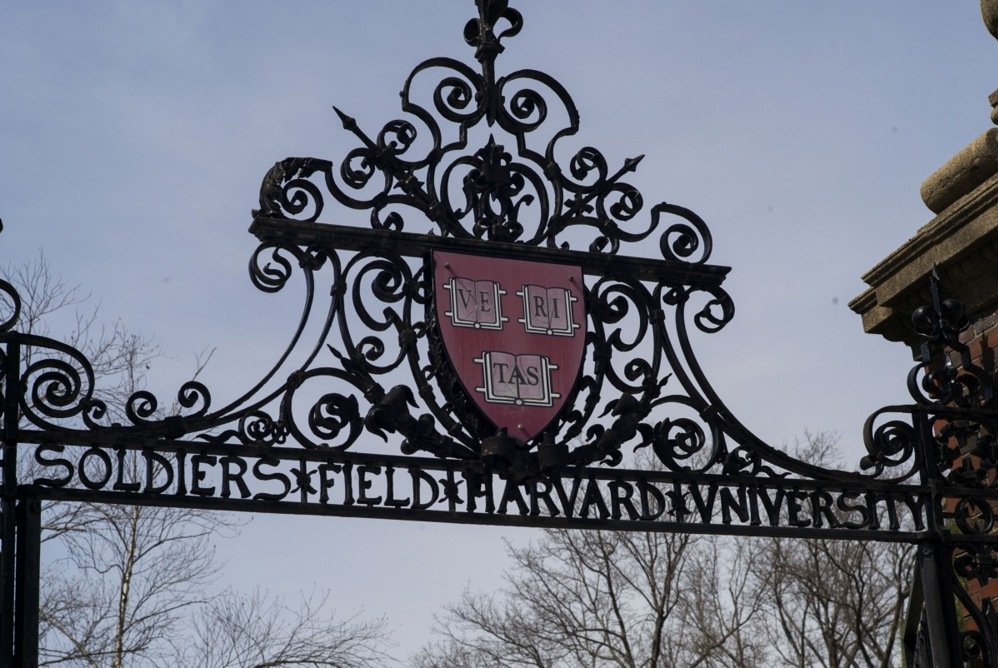
A federal judge has dismissed a lawsuit claiming 40 elite universities had schemed to offer less financial aid to students than they should have.gettyA lawsuit accusing 40 elite colleges and universities and the College Board of a price-fixing conspiracy has been dismissed. The suit had alleged that the institutions overcharged students for tuition as a result of counting the assets of noncustodial parents when making their financial aid determinations.But last week, U.S. District Judge Sara Ellis ruled that the plaintiffs, “have not plausibly alleged that Defendants entered into an agreement” on tuition setting and therefore did not violate antitrust law under Section 1 of the Sherman Act as the plaintiffs had charged.The federal class action lawsuit was filed last October in U.S. District Court for the Northern District of Illinois by a Boston University student and a former student at Cornell University on behalf of a class of students. It also named the College Board as a defendant.Every Ivy League institution, with the exception of Princeton University, was named as a defendant as were other elite schools such as Northwestern University, Duke University, Stanford University, Johns Hopkins University, the University of Southern California and dozens of others.According to the plaintiffs, the defendant universties “engaged in concerted action to require a noncustodial parent of any applicant seeking non-federal financial aid to provide financial information,” substantially raising the prices the plaintiff class had to pay to attend college. “Absent this agreement the University Defendants would have competed in offering financial aid in order to enroll their top candidates,” it argued.MORE FOR YOUThe College Board was named because plaintiffs charged that it developed the methodology, known as the CSS Profile, that the universities used to help make their financial aid decisions. “Starting in 2006, College Board made an intentional push to require schools to agree to the consideration of the income and assets of noncustodial parents when making financial aid determinations.”The lawsuit claimed that “the College Board, with prominent involvement from the University Defendants,” developed the strategy to include the consideration of financial assets of noncustodial parents. That strategy “was the product of a collective effort of University Defendants to agree on for the process for making financial aid determinations for students.”As a result, plaintiffs contended that the average net price charged to students by the named universities was about $6,200 more than that charged by other top-50 schools that did not use the financial aid methodology in question.In her 26-page ruling, Judge Ellis first dismissed the case against several universities not located in Illinois, agreeing with their argument that the venue was improper and the court did not have personal jurisdiction over them. And she also rejected the claims of the plaintiffs as to the other universities engaging in a price-fixing scheme.“Nothing in Plaintiffs’ complaint suggests that the University Defendants exchanged their own internal financial aid decisionmaking processes or guidelines or otherwise shared with the other University Defendants the amount of financial aid they planned to offer a particular student,” she wrote. “Nor does the complaint allege that the University Defendants all agreed on the same exact formula for calculating financial aid based on the NCP financial information.”The judge found plaintiff’s argument that the defendants had engaged in “concerted action” and “collective effort” to be short on details and “lacking in plausibility.” And she rejected allegations that a conspiracy was in place simply because some of the universities had representatives on the relevant College Board committees and began requiring information about noncustodial parents’ finances as the College Board had directed in 2006.
Judge Dismisses Federal Price Fixing Lawsuit Against 40 Universities
A federal judge has dismissed a class-action lawsuit accusing the College Board and 40 elite colleges of a price-fixing conspiracy that overcharged students for tuition.
590 words~3 min read