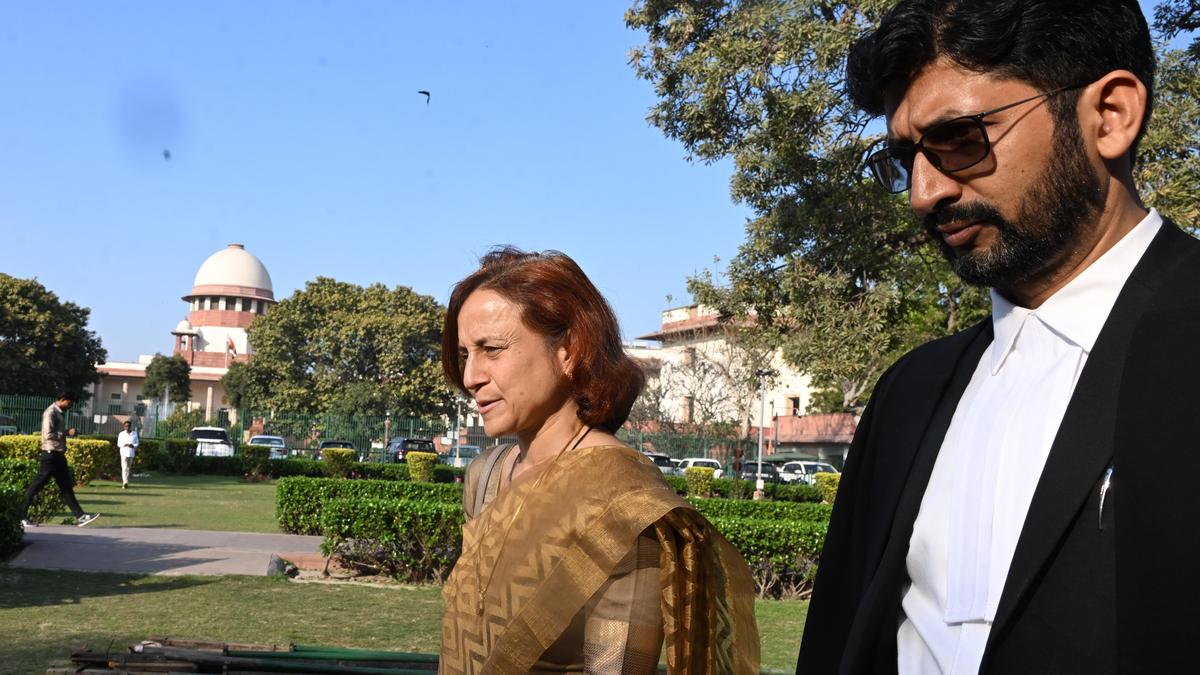
Gitanjali J. Angmo, wife of climate activist Sonam Wangchuk.
| Photo Credit: PTI
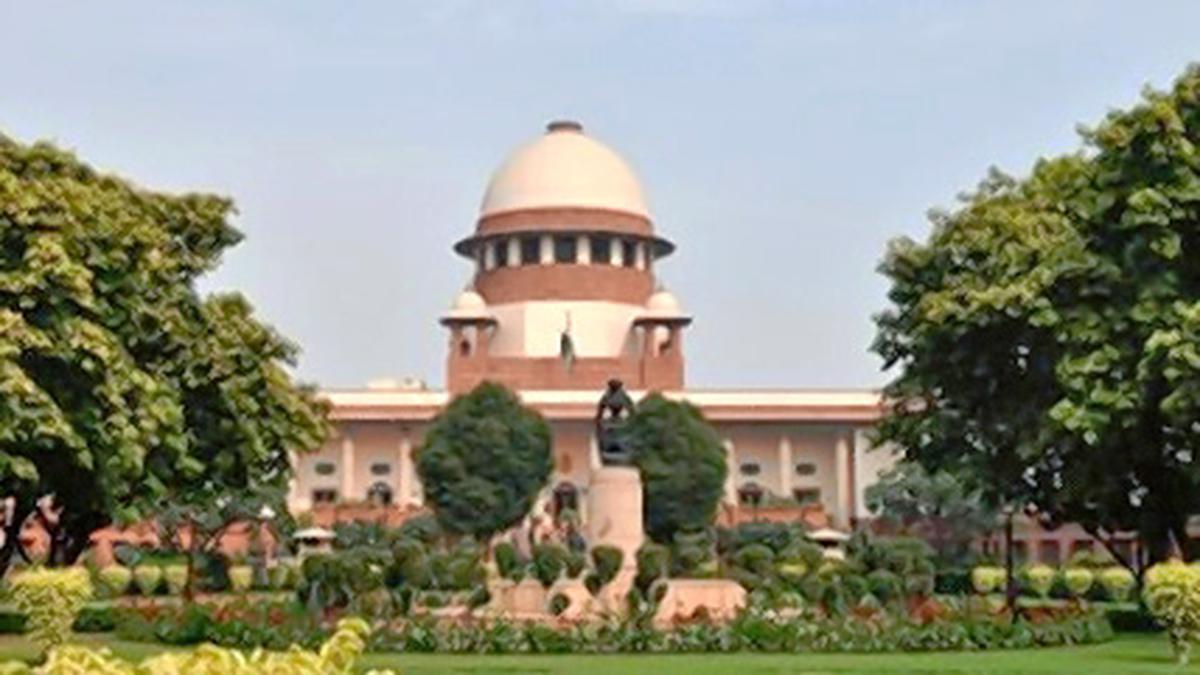
The Supreme Court is scheduled to hear on October 6 a habeas corpus petition filed by climate activist Sonam Wangchuk’s wife, Dr. Gitanjali J. Angmo, against the preventive detention of her husband under the National Security Act (NSA), 1980, following violent protests on September 24 in Leh.A Bench of Justices Aravind Kumar and N.V. Anjaria would hear the plea on the day of reopening of the top court after the week-long Dussehra vacation.The case has been marked for priority hearing as the first item on the board of the two-judge Bench on Monday (October 6, 2025).Ms. Angmo has asked the apex court to direct the authorities to produce Mr. Wangchuk in court. She submitted that it has been a week since Mr. Wangchuk was reported to have been detained at Jodhpur in Rajasthan on September 26. She said there was no information about the grounds of his detention or about the state of his health. She sought his immediate release.Rejecting allegations that her husband has links with Pakistan and China as baseless, Ms. Angmo said the arrest was mala fide and designed to suppress democratic dissent.“The arbitrary transfer of Mr. Wangchuk to Jodhpur, the harassment of students and staff of the Himalayan Institute of Alternatives of Ladakh (HIAL), the virtual house arrest of the petitioner herself, and the false propaganda linking Mr. Wangchuk to foreign entities clearly demonstrate mala fide state action intended to suppress democratic dissent and peaceful environmental activism,” the petition argues.The petition said that, along with the illegal detention of Mr. Wangchuk, a systematic, untruthful, and false campaign had been unleashed against him and his colleagues.It said this was done solely to harass and defame a peaceful Gandhian movement for the protection of Ladakh, its fragile ecology, its mountains, glaciers, and the livelihoods of its people.The false propaganda stigmatised dissent and portrayed environmental action as anti-national, the petition said.It argued that Mr. Wangchuk had consistently worked for strengthening national unity, and supported the Indian Army through innovations such as high-altitude shelters and grassroots mobilisation in border areas. It said a copy of the detention order or the grounds for detaining him was not given or communicated to the family as mandated under Article 22(5) of the Constitution. No opportunity for representation was afforded. The detention was patently illegal, arbitrary, and unconstitutional.Section 3 of the NSA empowers the appropriate government to issue a detention order for preventive detention if the activities of an individual are found prejudicial to public order, security of the state, India’s relations with foreign powers, or the maintenance of supplies and services essential to the community.The NSA requires the detention order to be issued only after the competent authority found “vital and relevant material” to show that the person under question’s actions were prejudicial to national interests or public order. The detention order ought to be reasoned and supplied to the person concerned or his family.The Supreme Court, in a series of judgments, has laid down guidelines for authorities using their subjective satisfaction to detain persons under the NSA, including taking into consideration only relevant and proximate material to arrive at the requisite subjective satisfaction.The court is bound to examine whether the authorities exercised their implicit duty to eschew anything irrelevant and remote to deprive a person of his fundamental right to personal liberty. Judicial review would involve looking into whether the ‘subjective satisfaction’ of the authority leading to the detention of a person was based on objective facts or, on the other hand, influenced by any caprice, malice or irrelevant considerations or non-application of mind.The apex court has consistently held that “preventive detention of a person is a drastic measure and an order of preventive detention has the effect of invading a person’s personal liberty”. Published - October 05, 2025 02:14 am IST