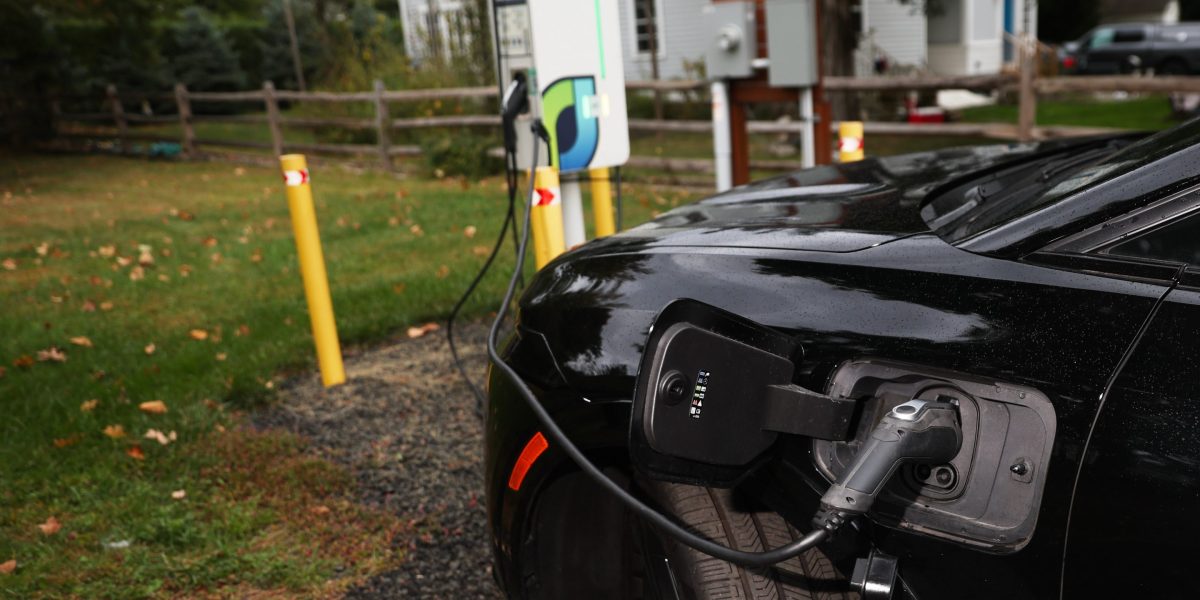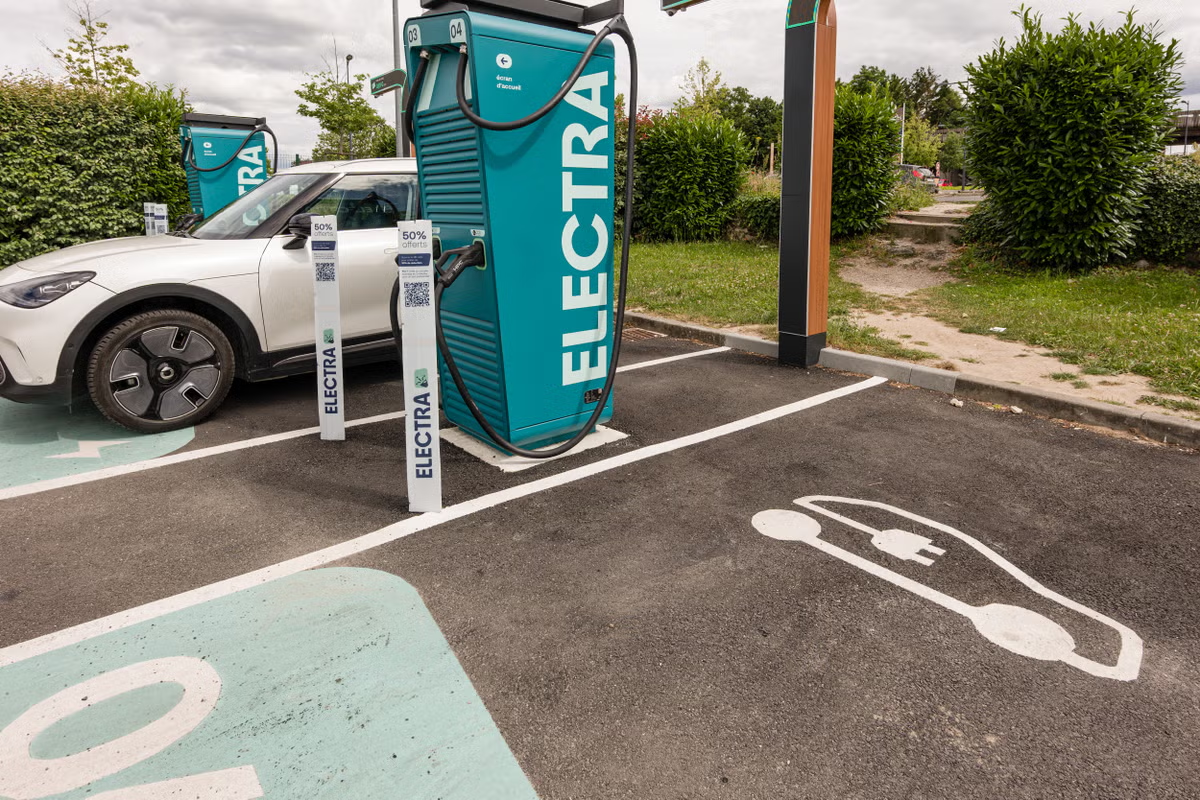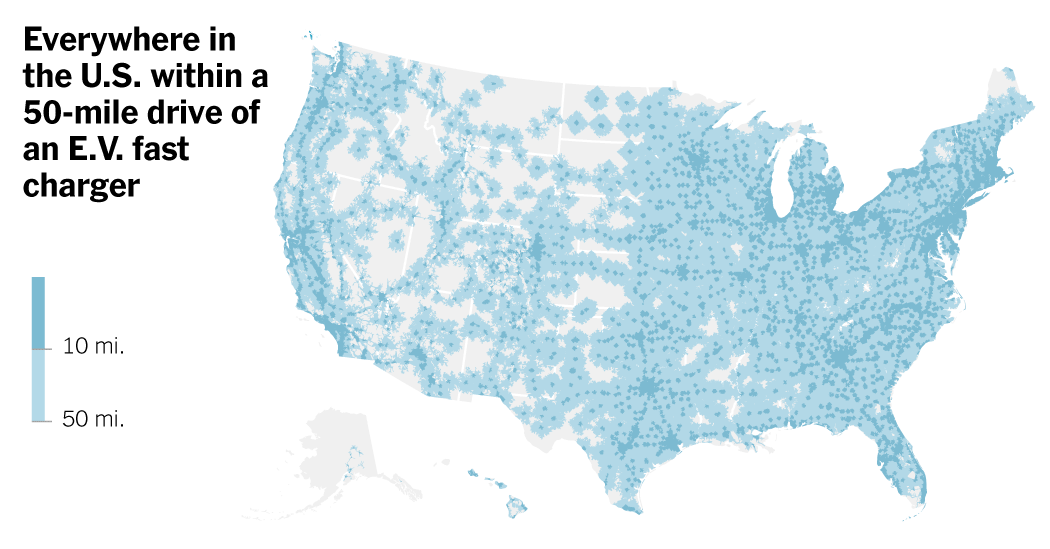
By Francesca Paris and Eve Washington Francesca Paris has taken a 400-mile road trip in an electric car. Eve Washington makes great road trip playlists. Sept. 29, 2025 Long drives that were once effectively impossible with an electric car have become doable. Routes that once required careful planning now have abundant fast chargers.For E.V. owners, one quintessential American experience — hitting the open road — is no longer just a dream.Consider the drive from Nashville to New Orleans. E.V. fast-charging stations in the United States have soared in number from around 1,000 a decade ago to 12,000 today, according to federal government data. And despite the Trump administration’s hostility toward electric vehicles, and its attempts to end federal funding for public chargers, new stations are still going up — around 2,000 so far this year.The cumulative effect of that boom means that large portions of the country are now within reach of a fast charger, though some rural regions and smaller roadways lag behind. Everywhere in the U.S. within a 50-mile drive of a fast charger 2015 2025 Fast chargers are the key to an E.V. road trip because they can fill up a car in around half an hour. (Other chargers, like the kind you use at home, take hours.)The Upshot used charger location data from the Department of Energy to analyze more than 1,000 single-day trips connecting major U.S. cities. A decade ago, all but a handful of those routes had gaps of more than 100 miles between fast chargers. In many cases, those charging deserts stretched over 200 miles, making many routes effectively impassable for E.V.s.By 2025, that had flipped. The vast majority of these routes now have a fast charger at least every 100 miles; most have far more than that.We picked major cities from each state and mapped out trips between them. (We looked at drives you can do in a day; any longer than that and you can use a slow charger overnight.) You can find a route — and see how it’s changed — on the map below. Or, just pan around to see the whole country. Fast chargers are often built at gas stations, outside restaurants and by shopping outlets. Most electric car owners don’t need to use them frequently. The overwhelming majority of car trips are below 50 miles, and most new E.V.s can easily drive well over 50 miles, even in poor conditions, so charging usually happens at home. New fast-charging stations are often next to gasoline pumps, like this one in Pearl River, La., on the route from New Orleans to Nashville. Annie Flanagan for The New York TimesBut just as the rest-stop gas station has become an integral part of American highways, fast chargers are critical for driving beyond a single charge, whether to visit family, work or sightsee. (They’re also important for people who can’t charge at home, or who drive Ubers and Lyfts.) And they’re a key to soothing “range anxiety,” or people’s fear of not making it to the next charger — which for years has been the single most important concern among potential E.V. buyers, according to the market research firm J.D. Power.Their concerns haven’t been unfounded. Through the 2010s, it was hard for E.V. drivers to leave certain urban pockets. But for most major destinations now — thanks to both longer vehicle ranges and the proliferation of chargers — E.V. drivers can just get up and go.Some of that growth is recent, in just the last few years. Since 2020, fast chargers have popped up across the South, Midwest, Great Plains and more rural parts of the Northeast, playing catch-up with more populated areas. Number of fast-charging stations StateIn 2020In 2025Pct. ChangeAlabama16160+900%Alaska321+600%Mississippi961+578%Louisiana1276+533%Nebraska1275+525%Arkansas952+478%New Hampshire1269+475%Michigan66379+474%North Dakota740+471%Indiana34180+429% The picture isn’t perfect. On-the-go fast charging still takes more time and can cost more than going to the gas pump. (Home charging is typically cheaper than gas.) On average, 3 percent of fast chargers are out of commission at any time, according to the E.V. charging data firm Paren, and those that do work can be challenging and confusing to use, depending on your car.But things are getting better. New chargers can refill E.V.s faster, on average, than those built just a few years ago. And new stations have more chargers than they used to: In 2015, the average fast-charging station had two ports. Now it has five. Total number of fast-charging ... stations plug-in ports Data as of Sept. 3 of each year. Meanwhile, the charging gap between Tesla owners and everyone else is shrinking.Tesla has opened up its extensive charging network to other cars, and some carmakers are building new vehicles with Tesla’s style of port or offering adapters. If you buy a new E.V. this year, there’s a decent chance you can access both Tesla and non-Tesla chargers.That makes a big difference. Tesla has built around a fifth of the country’s fast-charging stations, and because its stations tend to be large, more than half of all ports. Number of stations Number of charging ports From Big Gaps to FeasibleTesla was first to build chargers across swaths of the U.S. interior, and others followed. In just the past five years, dozens of routes that were effectively impassable or at least quite tricky — with charging gaps more than 200 miles long — have become reasonable to drive. Most challenging routes in 2020 that are doable in 2025 Routelargest gap on routein 2020in 2025Amarillo, Texas, to
See How E.V. Road Trips Went From Impossible to Easy
There are a lot more fast chargers than there used to be. Look up what that could mean for a route near you.
2,154 words~10 min read