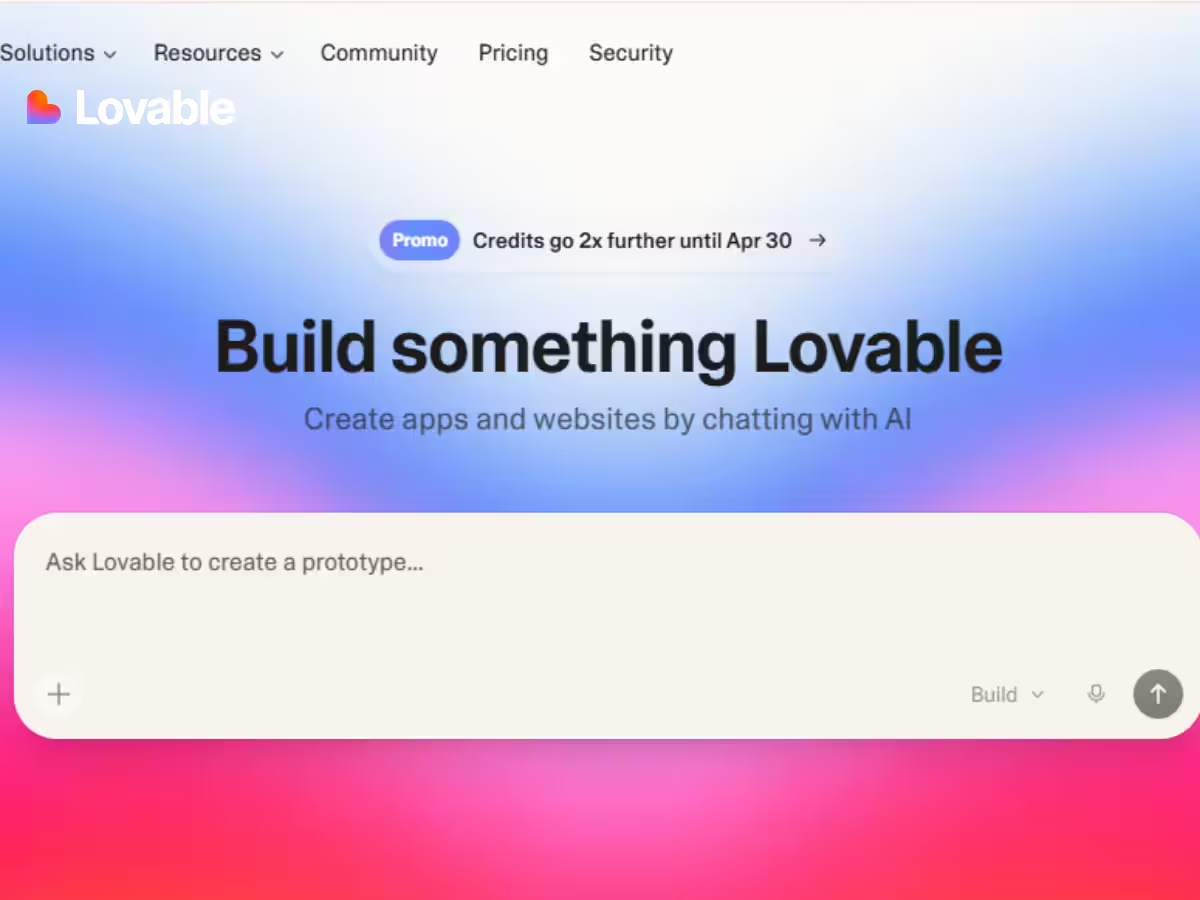
It’s no secret that vibe coding — using AI-powered coding tools to build apps and websites via natural language prompts — is exploding in popularity.
In July, Swedish vibe-coding startup Lovable hit $100 million in annual recurring revenue (ARR) just eight months after launch. It plans to close the year at $250 million ARR and thinks it will hit $1 billion ARR within the next 12 months. Meanwhile, Replit said earlier this month that its ARR soared from $2.8 million to $150 million in less than a year.
These companies’ remarkable growth has fueled a wave of competitors, many of which are also quickly gaining momentum. “This is one of those spaces where every company is growing like a weed,” said Nikhil Basu Trivedi, co-founder and general partner at VC firm Footwork.
However, despite their rapid growth, Lovable, Replit, and other vibe-coding startups have a significant shortcoming, argues Basu Trivedi: They excel at developing prototypes but struggle to enable users to launch production-ready software.
The problem with most vibe-coding companies, Basu Trivedi says, is that they don’t provide all the infrastructure that nontechnical users need to launch a functional product.