The numbers are eye-popping.
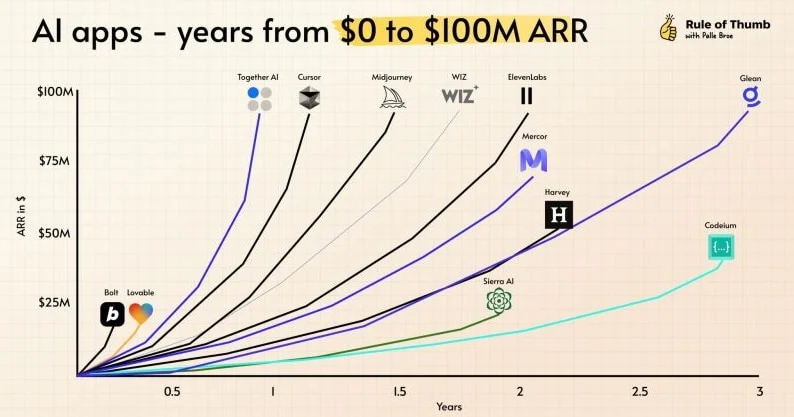
Beginning in 2024, a stream of “holy shit” growth metrics from VC-backed startups began to pop up on X (formerly Twitter). In less than three years, Midjourney’s ARR went from zero to $200 million. In 20 months, ElevenLabs, a voice AI startup, saw its ARR soar from zero to near $100 million. In three months, vibe coding darling Lovable went from zero to $17 million in ARR, this summer hitting $100 million in ARR. In its first six months, Decagon hit “seven figures” in ARR, the company reported. The most famous example: AI coding tool Cursor went from nada to $100 million in ARR in a year. But who needs a year, anyway? Two VCs Fortune spoke to highlighted the announcement made by Andreessen Horowitz–backed AI “cheat on everything” tool Cluely, which claimed over the summer to have doubled ARR to $7 million over a week.
“There is all this pressure from companies like Decagon, Cursor, and Cognition that are just crushing it,” said one VC. “There’s so much pressure to be the company that went from zero to $100 million in X days.”
All the examples have one thing in common: ARR, or “annual recurring revenue.” The metric came to be a favorite of VCs and startups through the software-as-a-service (SaaS) wave starting in the 2000s, when it was widely accepted as a trusted proxy for a stable startup, with a reliable source of revenue and a reasonably shored-up future.