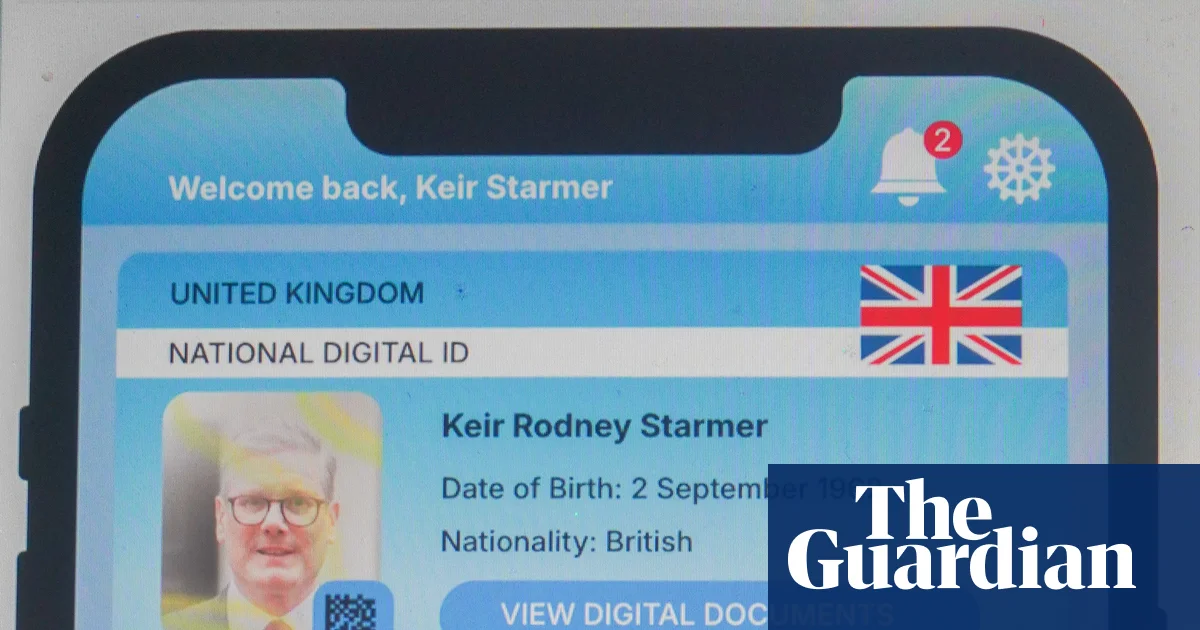
Keir Starmer has announced plans for a digital ID system, which will become mandatory as a means of proving the right to work in the UK.From concerns around civil liberties and cybersecurity to a helpful system to streamline services in line with other European countries’ existing ID schemes, eight people share their views.‘A danger of the system evolving into mass surveillance’This issue was not given to the electorate in the mandate and is being addressed in a parliamentary recess. It does not sit well with me. I did not vote for this. Countries such as France already operate with digital identification systems, yet still face challenges with irregular or unauthorised crossings. Introducing a digital ID does not in itself close borders or prevent determined illegal entry. There is a danger of such a system evolving into a form of mass surveillance or being misused for state control. The requirement for everyone to register with a state-controlled digital identity raises serious questions over data security, privacy and oversight. Rory, engineering service planner, London ‘It allows streamlined access to services’Most European nations have a similar scheme in place – it allows streamlined access to services and is universally accepted by the population and businesses alike. We already have “gifted” our personal information to both private and publicly owned companies – extending this from the NHS and HMRC apps can only be a good thing. The personal details held by private companies are more easily hacked than our government-held data, and yet we seem so happy to share it.
‘A hacker’s dream’: Britons on Keir Starmer’s plan for digital ID cards
Views range from concerns over civil liberties and cybersecurity, to welcoming it as a helpful system to streamline services
1,036 words~5 min read