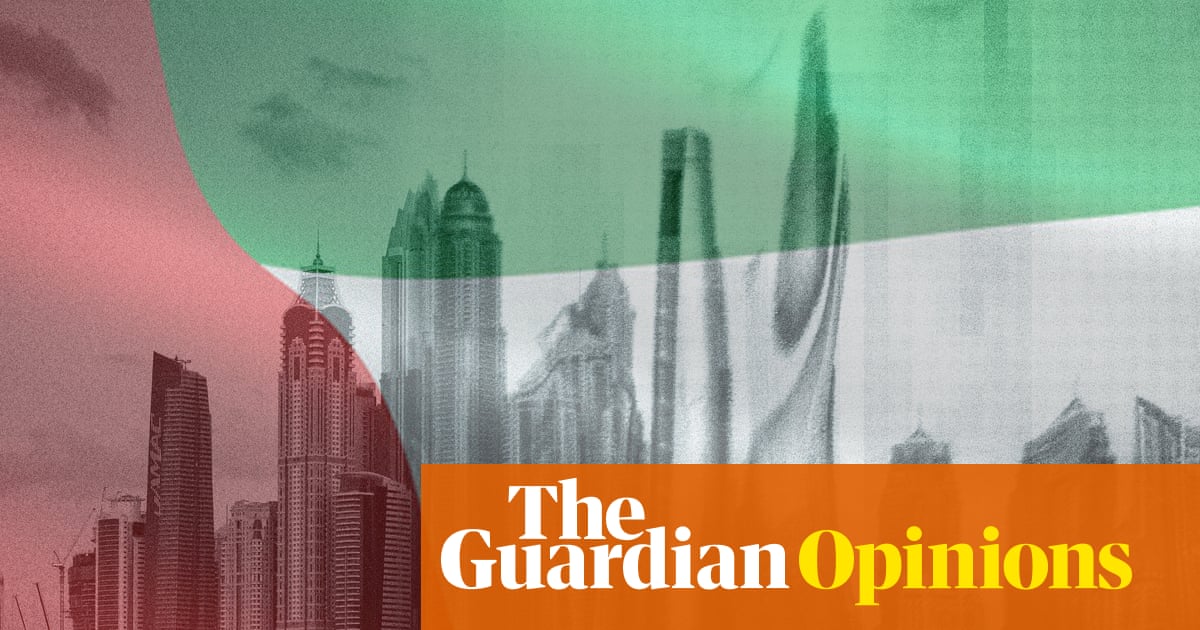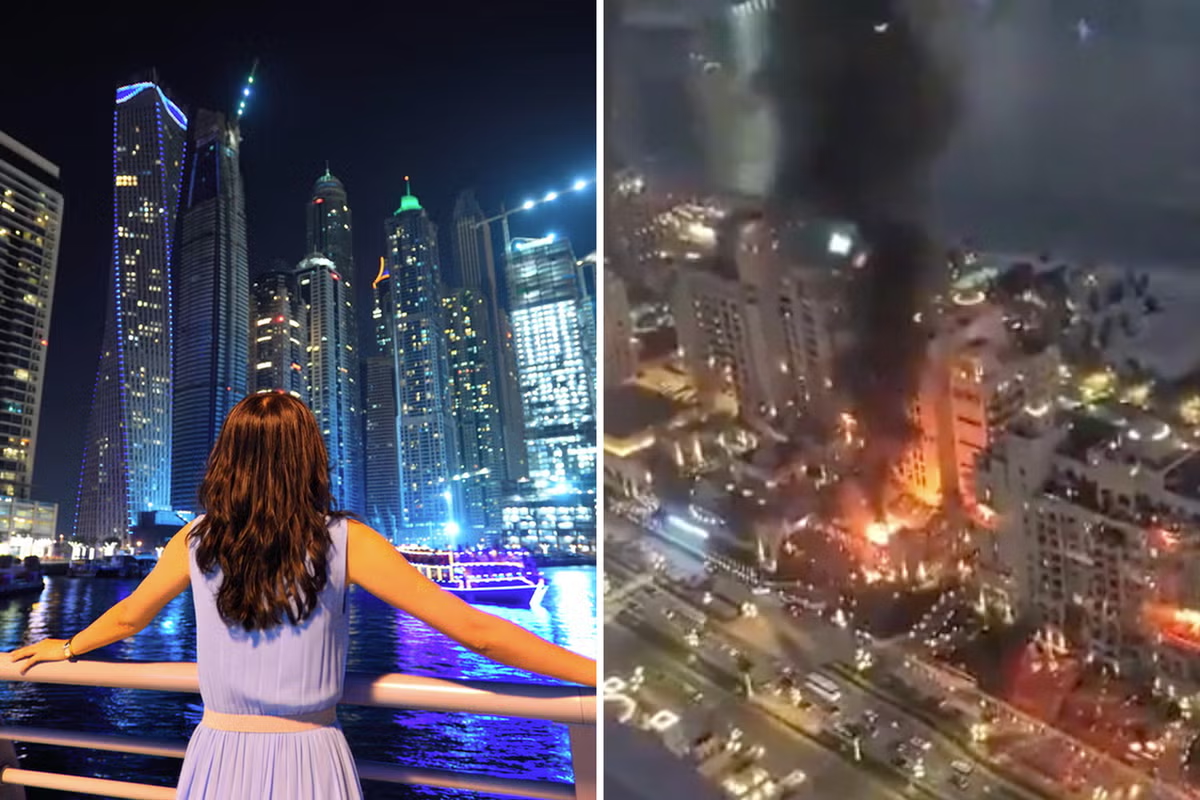
Politicians and influencers eulogise the emirate as a place of cleanliness, convenience and low crime. The truth is far darker
I
arrived at my friend’s apartment close to midnight, crumpled and groggy, too weary to do anything except brush my teeth and go to bed. Open the suitcase: no toothpaste. No problem, my friend insisted, grabbing his phone with the little twinkle in his eye that people get when they’re about to show off a neat trick. They deliver everything here, he said. We’ll call the store downstairs. And so it was with a kind of slack-jawed astonishment I answered the doorbell nine minutes later to a man in a motorcycle helmet, proffering a single blue carrier bag containing a single tube of Colgate, taking the money and receding wordlessly back into the night.
This, a decade ago, was my first contact with Dubai. And though of course you can get gig-economy groceries in most major cities these days, Dubai still stands out as a world of shortcuts and simple conveniences, a world of abundance and plenty, a world where everyone and everything has its price. If you fancy a quadruple-decker club sandwich at 3am, Dubai has you covered. Taxis are cheap and everywhere. At the famous Friday brunches hosted by most of the luxury hotels, afternoons dissolve in a bouquet of bottomless fizz, the plates shovelled high with food that will never be eaten. For three weeks I drifted through its five-star establishments and pristine malls, pursued by aggressive blasts of air conditioning, trying not to look into the shadows.