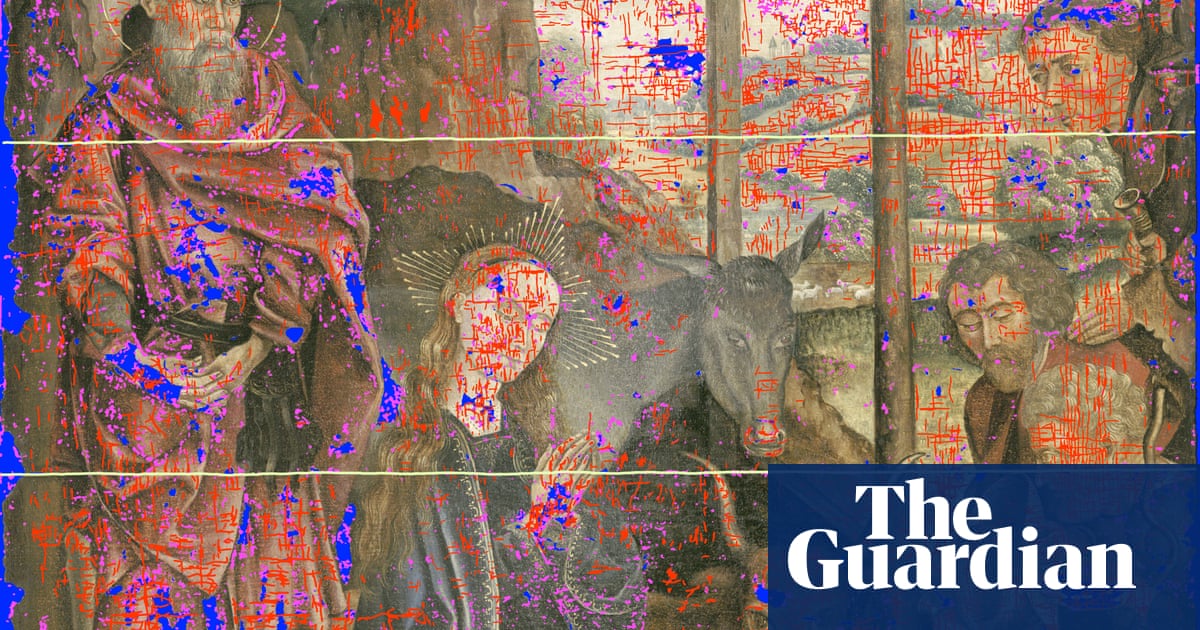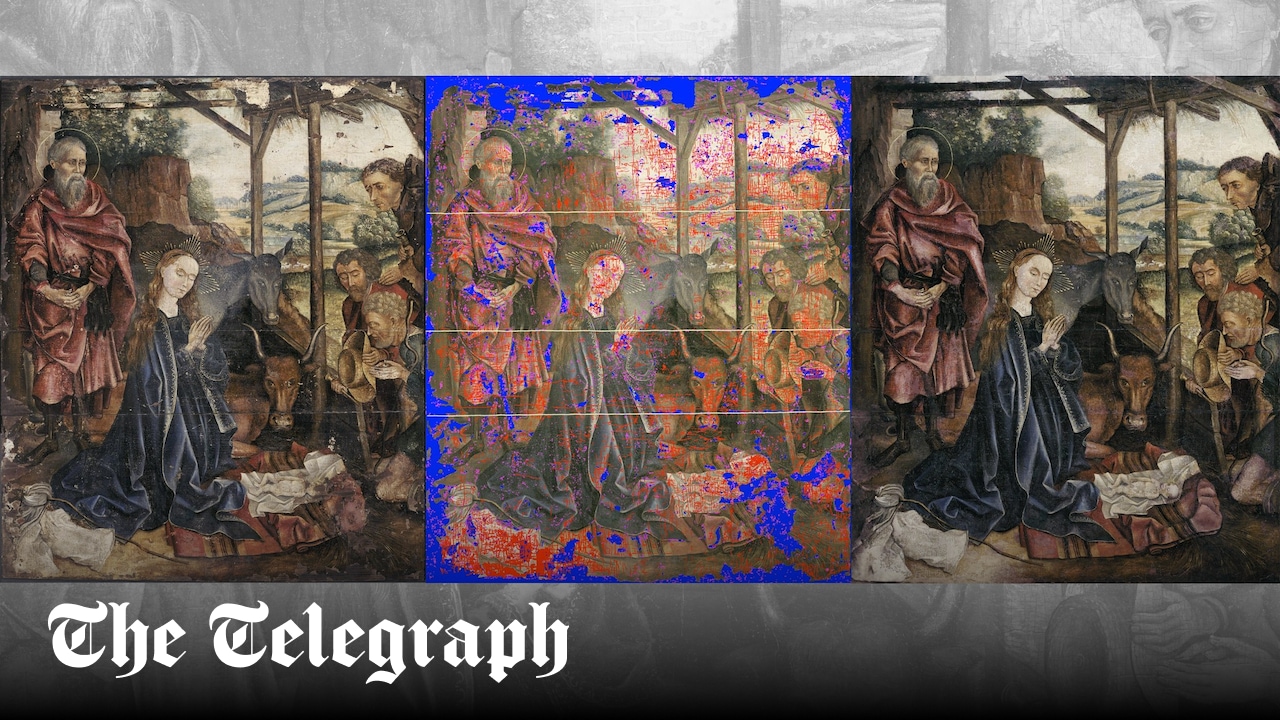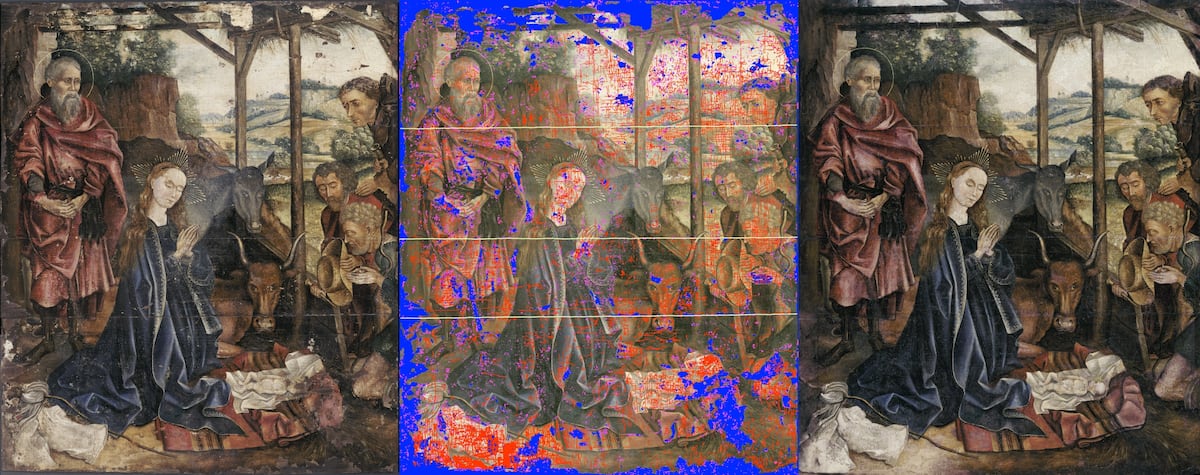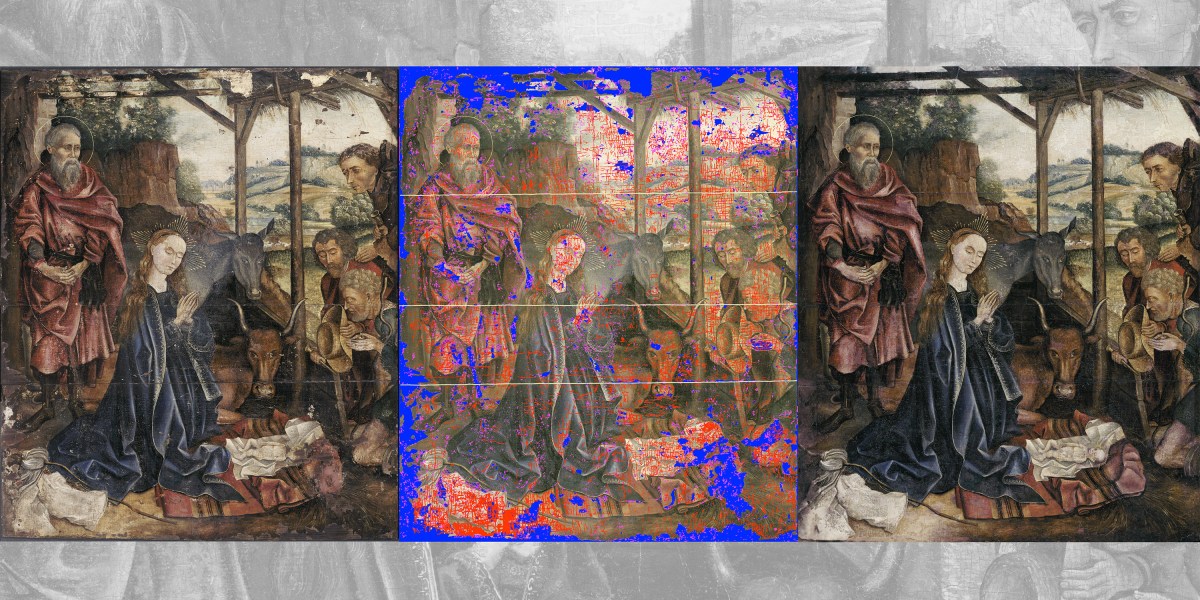
A new method can physically restore original paintings using digitally constructed films.
Art restoration takes steady hands and a discerning eye. For centuries, conservators have identified areas needing repair and then mixed the exact shades needed to fill in one area at a time. Restoring a single painting can take anywhere from a few weeks to over a decade. Now an MIT graduate student in mechanical engineering has used artificial intelligence to speed up the process by orders of magnitude.
Digital restoration tools are not new; computer vision, image recognition, and color matching have all helped generate repaired versions of damaged paintings in recent years. But until now, there has been no way to apply the results directly onto an original canvas. Instead, they are usually displayed virtually or printed as stand-alone works.
In his study, Alex Kachkine, SM ’23, presents a new method he’s developed that involves printing the restoration on a very thin polymer film that can be carefully aligned with a painting and adhered to it or easily removed. As a demonstration, he used the method to repair a highly damaged 15th-century oil painting he owned. First he used traditional techniques to clean the painting and remove any past restoration efforts. Then he scanned the painting, including the many regions where paint had faded or cracked, and used existing algorithms to create a virtual version of what it may have looked like originally.