When Alfred E. Burton was appointed MIT’s first dean in 1902, he was already known for leading research expeditions to the Arctic and the jungle. Naturally, students adored him.
When the Institute dedicated the Alfred Edgar Burton House in 1951, a generation of students had traveled through the Infinite Corridor without having met the legendary man after whom the dorm was named.
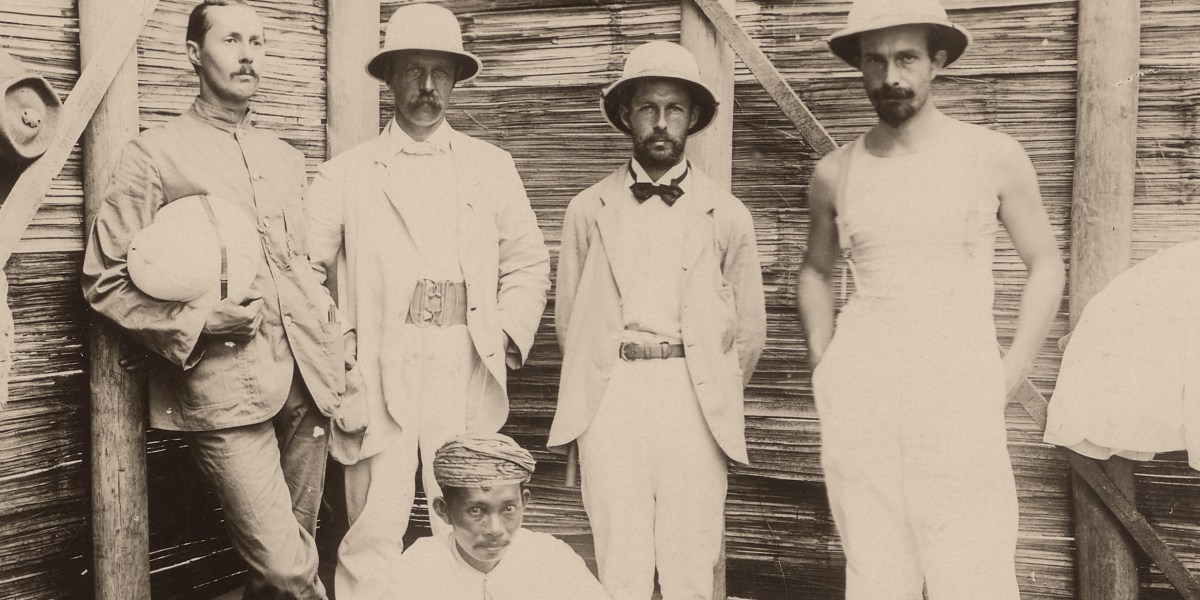
To the MIT community of the early 20th century, Burton was a beloved professor of civil engineering and a hands-on dean—the first person to serve in that position. A topographer by trade, he was also a globetrotting scientific swashbuckler. In the span of five years, Burton had journeyed to the Arctic Circle and to Dutch Sumatra in the name of science. In an era when international travel might mean weeks at sea and trekking to remote areas meant privation and risk of bodily danger, Burton gamely forged ahead, bringing with him incredibly delicate and precise scientific instruments.
Burton had joined the Institute staff in 1882 and become an assistant professor of topographical engineering in 1884. In the summer of 1896—the same year he was named a full professor—he had been invited by his Bowdoin College roommate and longtime friend, the Arctic explorer and future admiral Robert E. Peary, to lead a six-person scientific expedition to the west coast of Greenland. Peary was leading his own expedition to the land of the midnight sun and offered Burton and his group free passage on his steamer. Eager to study the movement of the Karajak Glaciers and conduct general investigations of polar gravity, weather, and indigenous flora and fauna, Burton assembled a team including a fellow MIT professor, an MIT student, and two students from Harvard. A complete “thermophone outfit” used to determine air, ice, and water temperatures in hard-to-reach spots was donated to the cause by A.M. Ritchie, whose family manufactured the device in Brookline.