The Republican-backed measure would keep the government open for another seven weeks. But Democrats, seeking to reverse Medicaid and Obamacare cuts, have vowed to oppose it.Show Caption
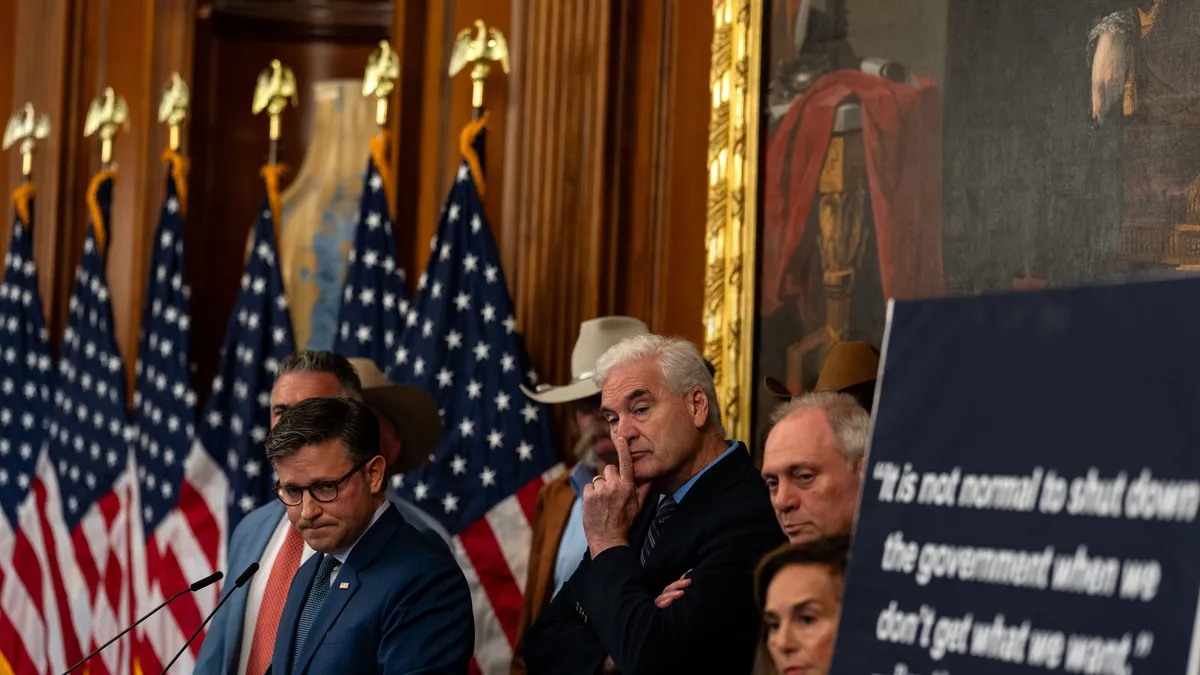
WASHINGTON – Hoping to steer the country away from an impending government shutdown, the House of Representatives narrowly passed a short-term funding bill Sept. 19.But the funding extension is unlikely to succeed in the Senate, meaning a shutdown is still fast approaching.The House approved the measure largely on party lines, 217-212, and has little chance of passing in the Senate, where a 60-vote threshold means Democrats would need to support it.Yet leaders of both parties have dug into their positions: Republicans want to keep the government funded at current levels until just before Thanksgiving, while Democrats are using a rare moment of political leverage to demand that the GOP help them reverse looming cuts to Medicaid and lapsing Obamacare subsidies.In a speech ahead of the vote, House Minority Leader Hakeem Jeffries said the Democrats have become united in "principled opposition.""Access to high-quality, affordable health care is a right, and Democrats are on the floor of the House of Representatives vindicating that right at all times," he said. "That's why we're voting no."Additional negotiations could still happen on those topics, responded Rep. Tom Cole, R-Oklahoma, one of Congress' top budget negotiators. But the GOP doesn't think big health care changes should be included in a stopgap funding bill."All of a sudden we have extraneous demands for things unrelated to the day-to-day operation of the government," Cole said.The Senate is set to vote on the measure later in the day. Government funding runs out Sept. 30.Zachary Schermele is a congressional reporter for USA TODAY. You can reach him by email at zschermele@usatoday.com. Follow him on X at @ZachSchermele and Bluesky at @zachschermele.bsky.social.