The scientists, based at Stanford University and the nonprofit Arc Institute, both in Palo Alto, say the germs with AI-written DNA represent the “the first generative design of complete genomes.” The work, described in a preprint paper, has the potential to create new treatments and accelerate research into artificially engineered cells. It is also an “impressive first step” toward AI-designed life forms, says Jef Boeke, a biologist at NYU Langone Health, who was provided an advance copy of the paper by MIT Technology Review.
Boeke says the AI’s performance was surprisingly good and that its ideas were unexpected. “They saw viruses with new genes, with truncated genes, and even different gene orders and arrangements,” he says. This is not yet AI-designed life, however. That’s because viruses are not alive. They’re more like renegade bits of genetic code with relatively puny, simple genomes.
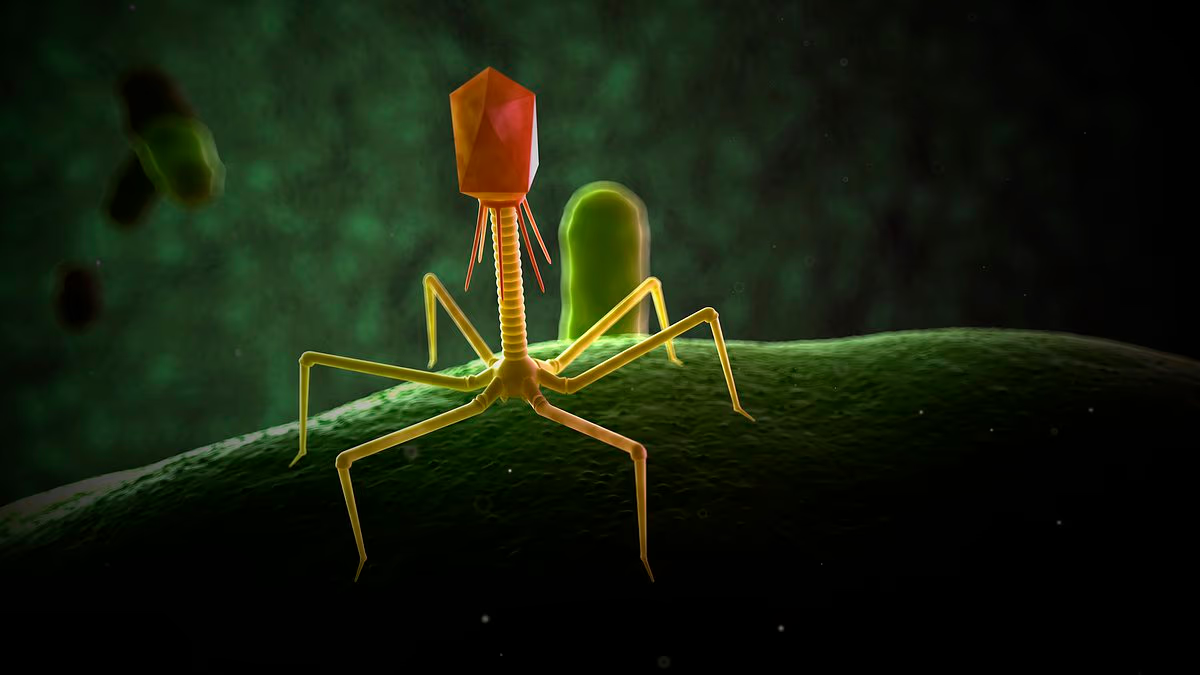
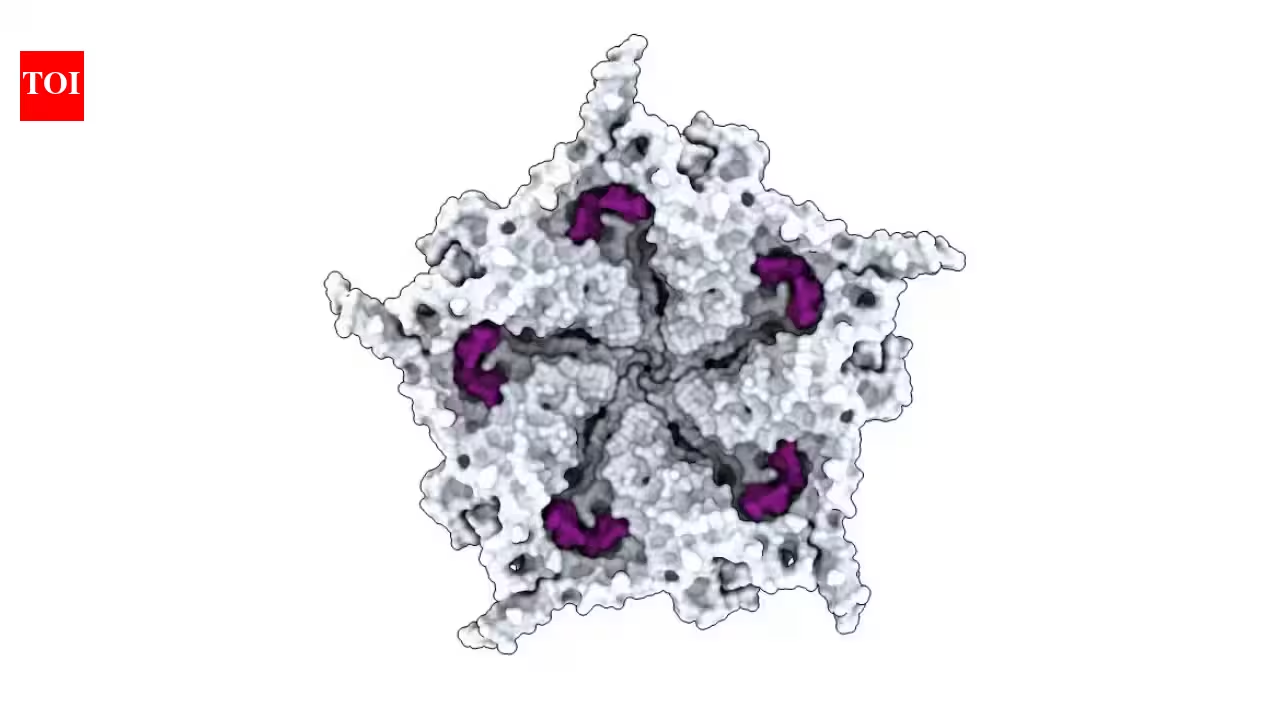
In the new work, researchers at the Arc Institute sought to develop variants of a bacteriophage—a virus that infects bacteria—called phiX174, which has only 11 genes and about 5,000 DNA letters. To do so, they used two versions of an AI called Evo, which works on the same principles as large language models like ChatGPT. Instead of feeding them textbooks and blog posts to learn from, the scientists trained the models on the genomes of about 2 million other bacteriophage viruses. But would the genomes proposed by the AI make any sense? To find out, the California researchers chemically printed 302 of the genome designs as DNA strands and then mixed those with E. coli bacteria. That led to a profound “AI is here” moment when, one night, the scientists saw plaques of dead bacteria in their petri dishes. They later took microscope pictures of the tiny viral particles, which look like fuzzy dots. “That was pretty striking, just actually seeing, like, this AI-generated sphere,” says Brian Hie, who leads the lab at the Arc Institute where the work was carried out. Overall, 16 of the 302 designs ended up working—that is, the computer-designed phage started to replicate, eventually bursting through the bacteria and killing them. J. Craig Venter, who created some of the first organisms with lab-made DNA nearly two decades ago, says the AI methods look to him like “just a faster version of trial-and-error experiments.” For instance, when a team he led managed to create a bacterium with a lab-printed genome in 2008, it was after a long hit-or-miss process of testing out different genes. “We did the manual AI version—combing through the literature, taking what was known,” he says.