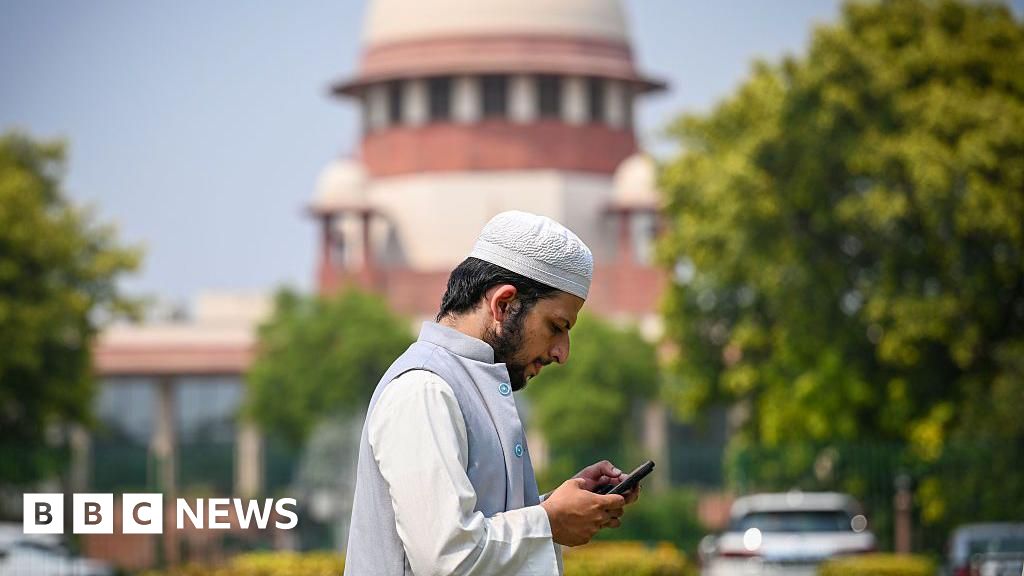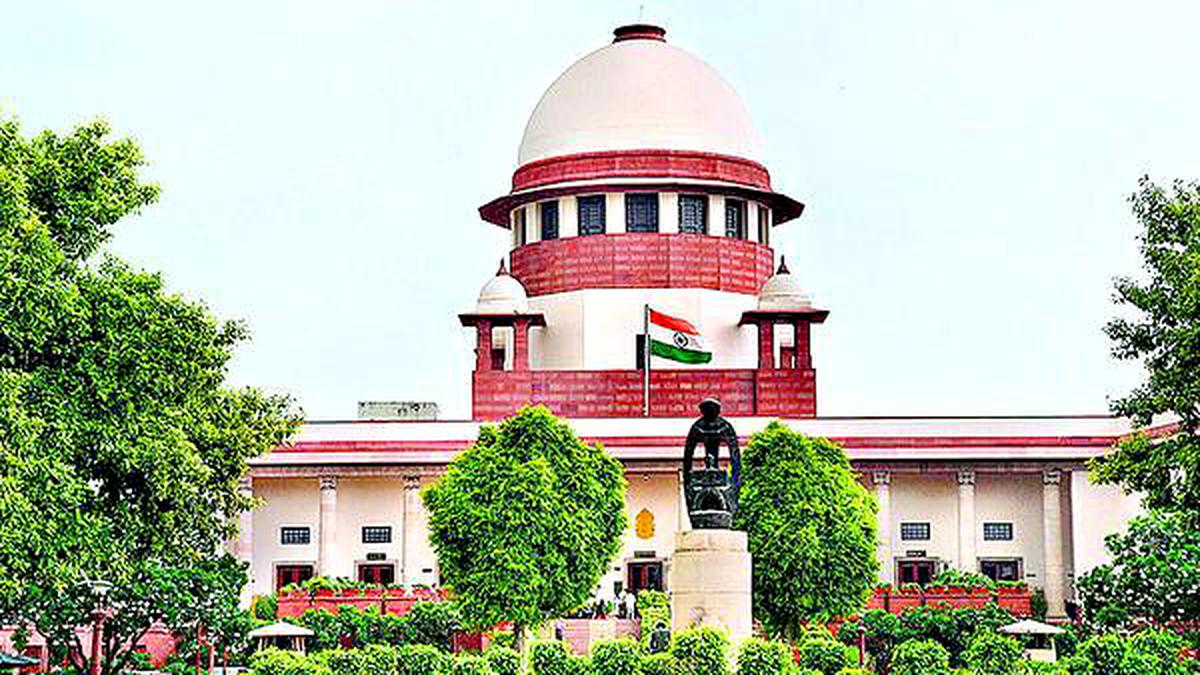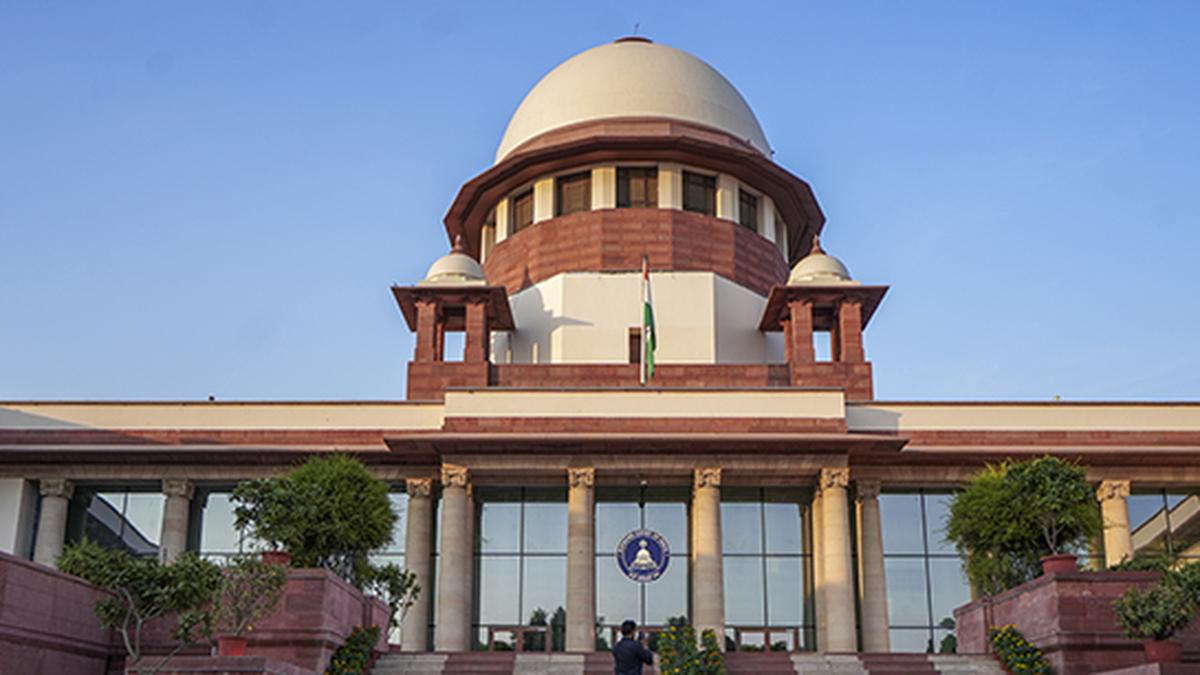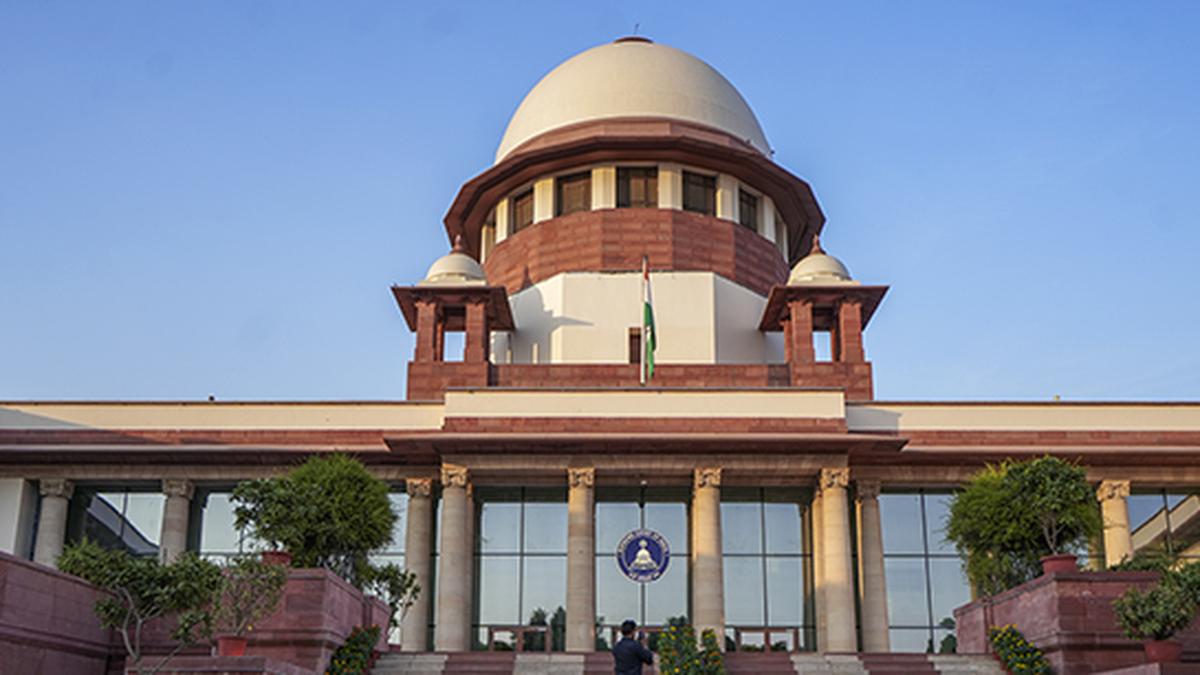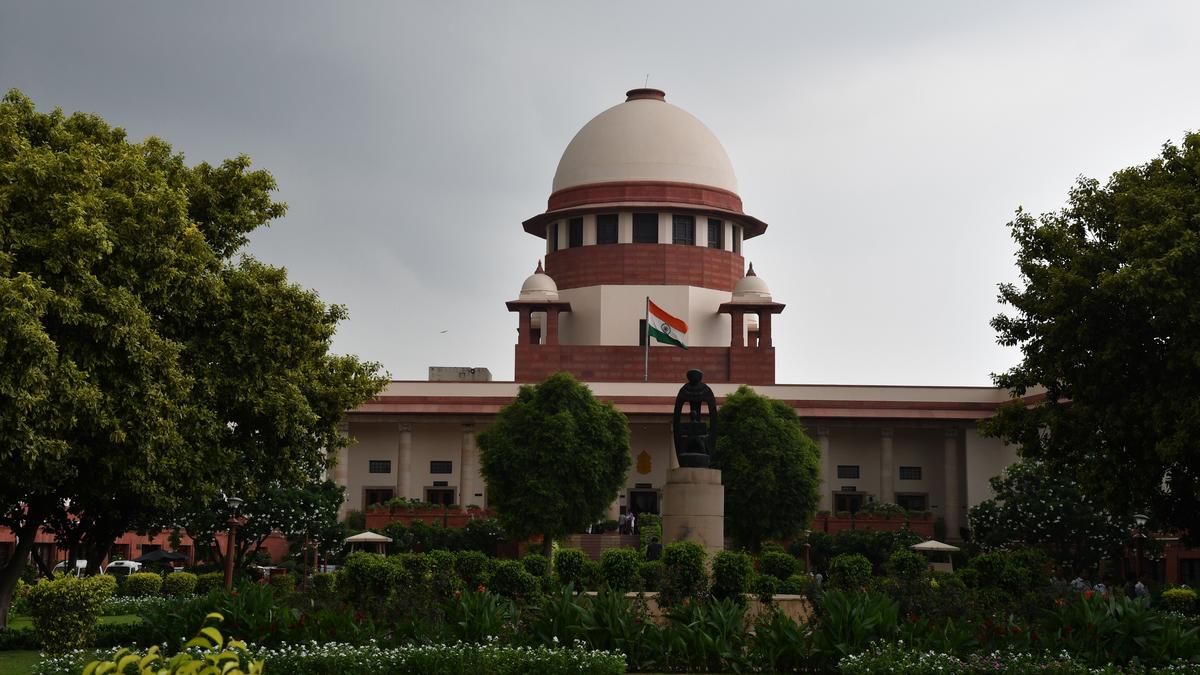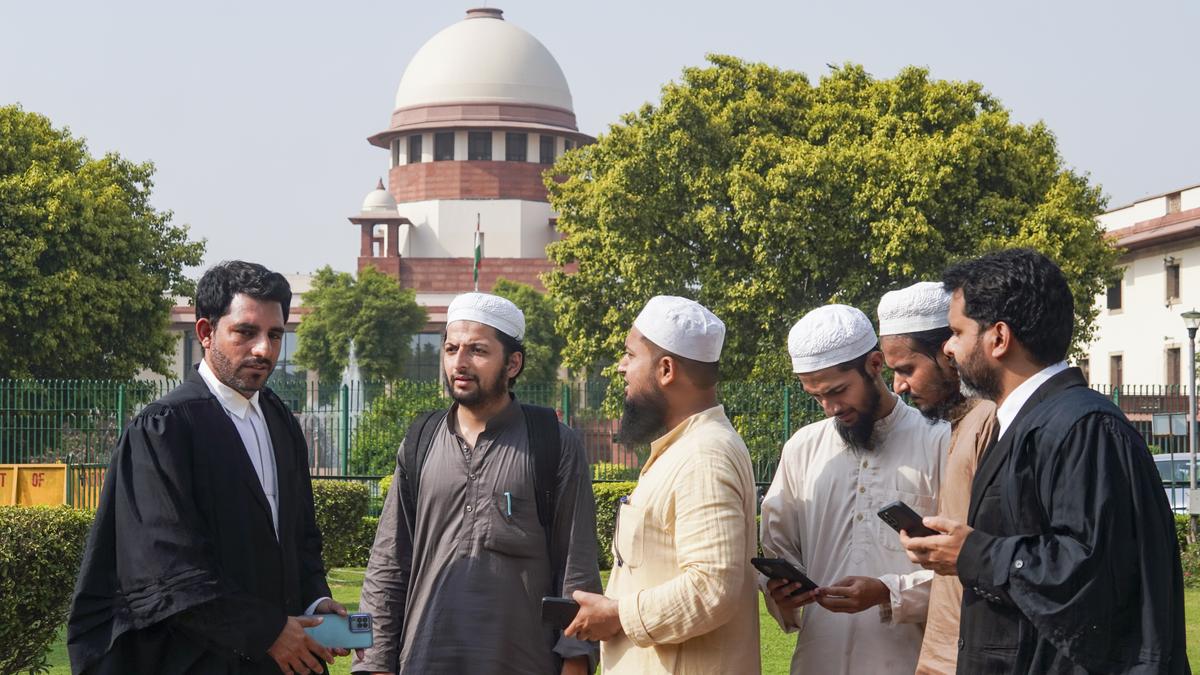
Petitioners interact with an advocate at the Supreme Court lawn during hearing on pleas challenging the Waqf Act amendments. File
| Photo Credit: PTI
The Supreme Court on September 15, 2025, declined to suspend the Waqf (Amendment) Act, 2025 (2025 Act) in its entirety, but stayed the operation of certain contentious provisions pending further judicial scrutiny. The interim order, delivered by a Bench led by Chief Justice of India B.R. Gavai and Justice A.G. Masih, put on hold the enforcement of provisions that empowered District Collectors to unilaterally decide whether a property claimed as waqf belonged to the government, and the clause stipulating that only a lawful property owner who has been practising Islam for at least five years could create waqf through a formal deed. It also capped the number of non-Muslims who may be appointed to the Central Waqf Council and State Waqf Boards.Waqf, under Islamic law, denotes a charitable endowment through which property is dedicated for religious or philanthropic purposes. The 2025 law, notified in April as an amendment to the Waqf Act of 1995 (1995 Act), has been projected by the government as a comprehensive reform aimed at streamlining the administration of these properties. However, critics have described it as an attempt to extend state control over religious institutions. Published - September 17, 2025 07:10 pm IST