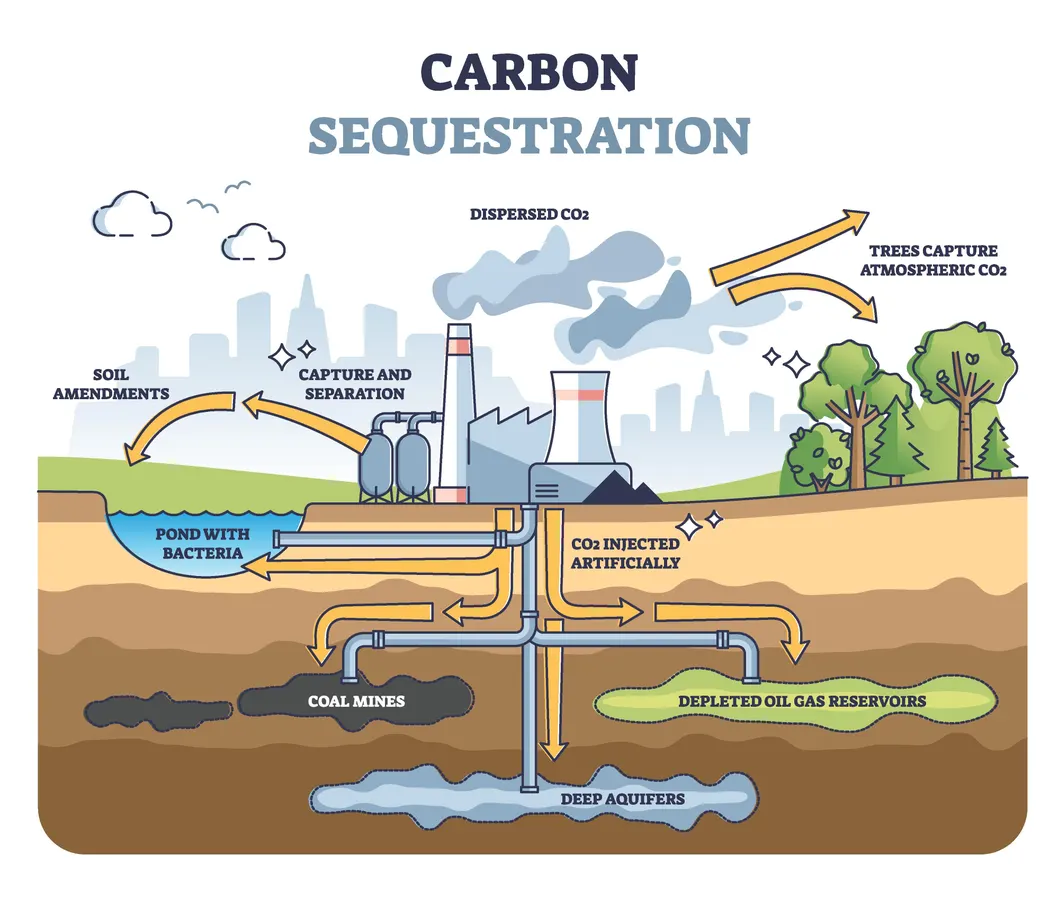
Carbon capture is gaining momentum in the US as expanded tax credits and new legislation improve project economics and attract investment. A growing pipeline of projects and early industry partnerships signal potential for scale. Still, questions around permitting, policy durability and financing highlight the uncertainties that will shape how far and how fast the sector develops.
When the US Inflation Reduction Act (IRA) became law on Aug. 16, 2022, it gave carbon capture a powerful boost. The act raised the federal tax credit for projects that capture and store carbon dioxide from $50 to $85 per ton, and to $60 for CO2 used in enhanced oil recovery or industrial processes. That shift under Section 45Q of the tax code suddenly made carbon capture and storage (CCS) a much stronger business proposition.
Even before the increase, the incentive was enough to get certain projects off the ground. A North Dakota ethanol plant, Red Trail Energy, used the $50 credit to capture and store its emissions while also selling low-carbon ethanol into premium markets. But with the credit now set at $85/ton — a 70% jump — the economics have improved dramatically. Deloitte’s carbon capture specialist, Jeremy DuMuth, noted that before the IRA, fewer than half of the US projects he reviewed made financial sense. Afterward, every one of them did.