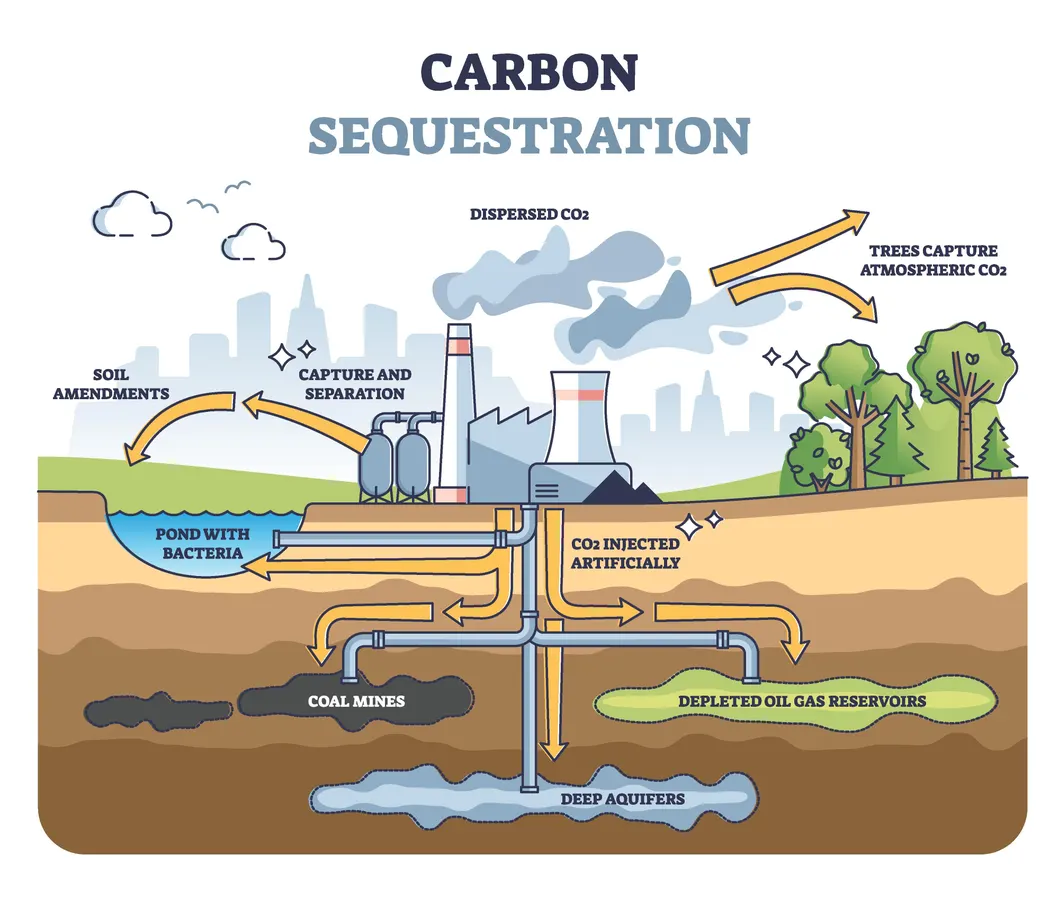
Last week's expansion of landmark US tax credits for carbon capture, utilization and storage (CCUS) and preservation of key existing offerings offer the still-fledgling US carbon capture sector a tremendous uplift in support. Would-be developers can now breathe a sigh of relief as the uncertainty hanging over the fate of these crucial credits since US President Donald Trump took office in January has passed without incident. Eligible projects still have until the end of 2032 to break ground, while the "transferability" of tax credits to third parties with higher tax burdens — a wonky financial mechanism that can unlock additional capital for developers — was preserved; both were threatened under previously proposed legislation. Most notably, however, the One Big Beautiful Bill Act signed into law last week paves the way for more investment in CCUS from a wider range of players thanks to a now-leveled financial playing field between projects utilizing CO2 — including for enhanced oil recovery (EOR) — and those sequestering it in permanent geologic storage. It could also throw a welcome lifeline to promising, but eye-wateringly expensive, direct air capture (DAC) technologies at a time when less capital is headed into the sector.
US '45Q' CCS Credit Expansion Offers Big Utilization Uplift
Upsized US tax credits for CO2 utilization could compel a greater openness toward enhanced oil recovery as a means to expedite developments, particularly DAC.
1,183 words~5 min read