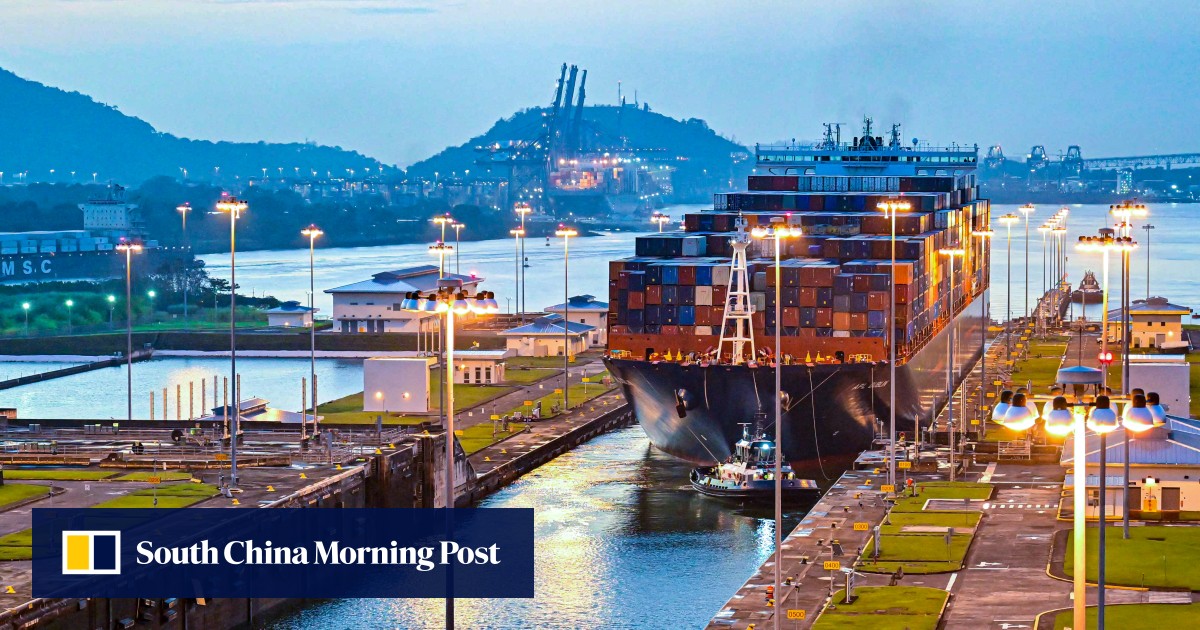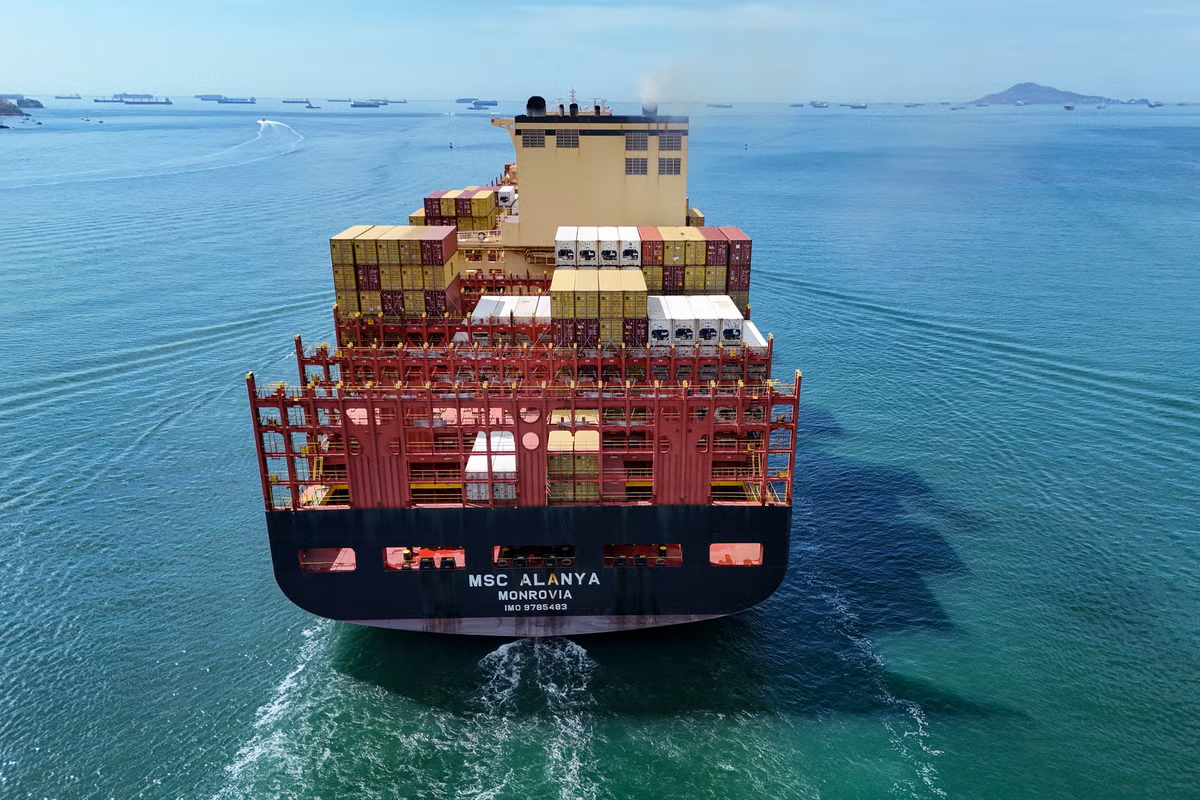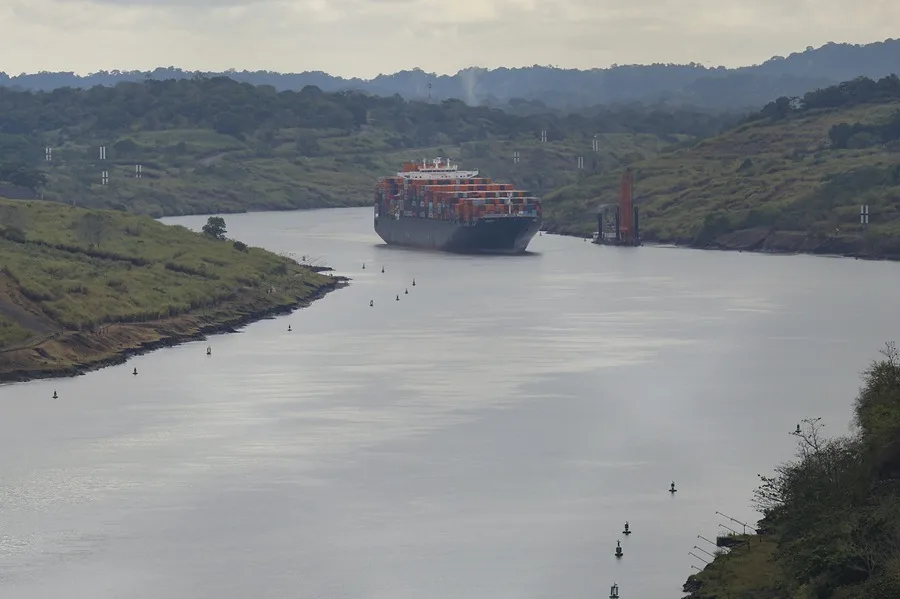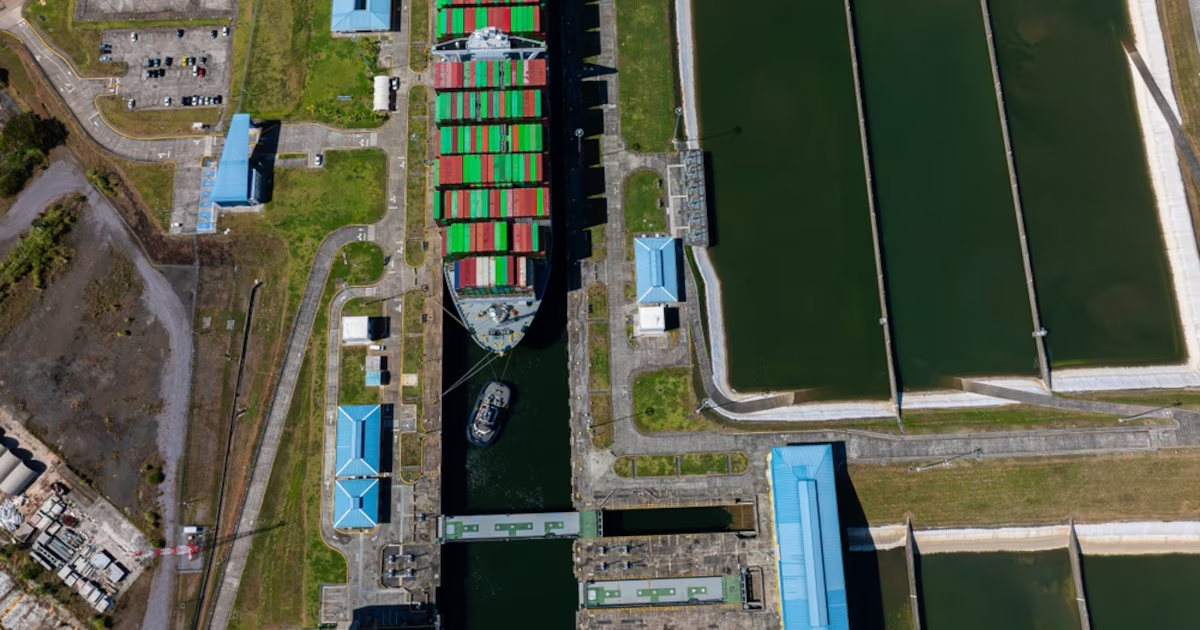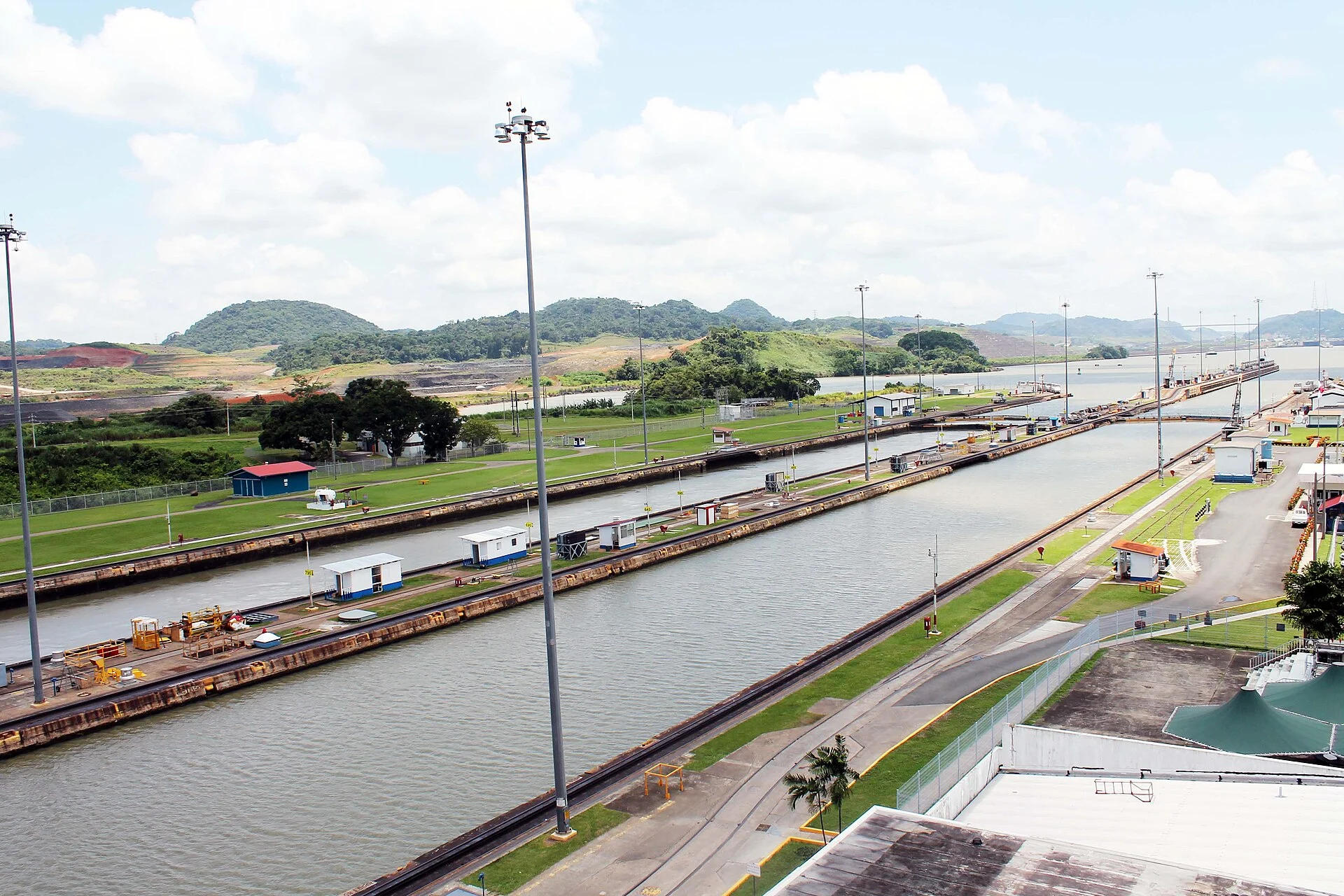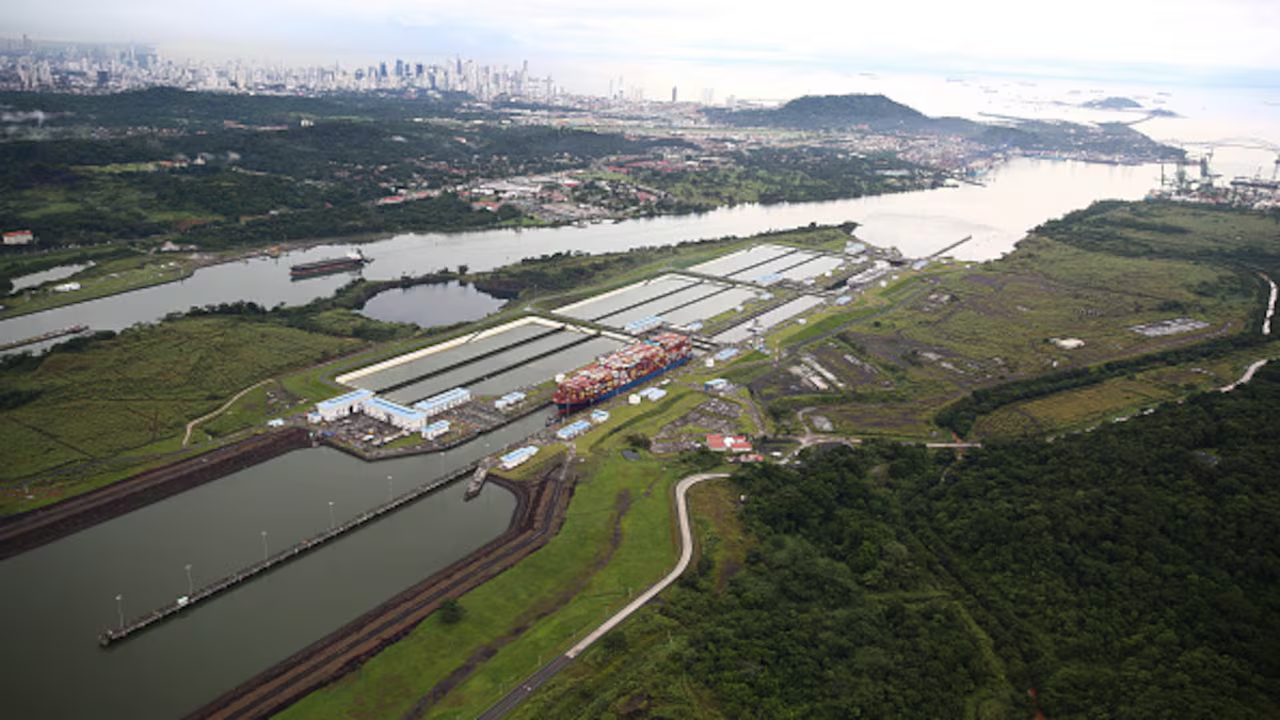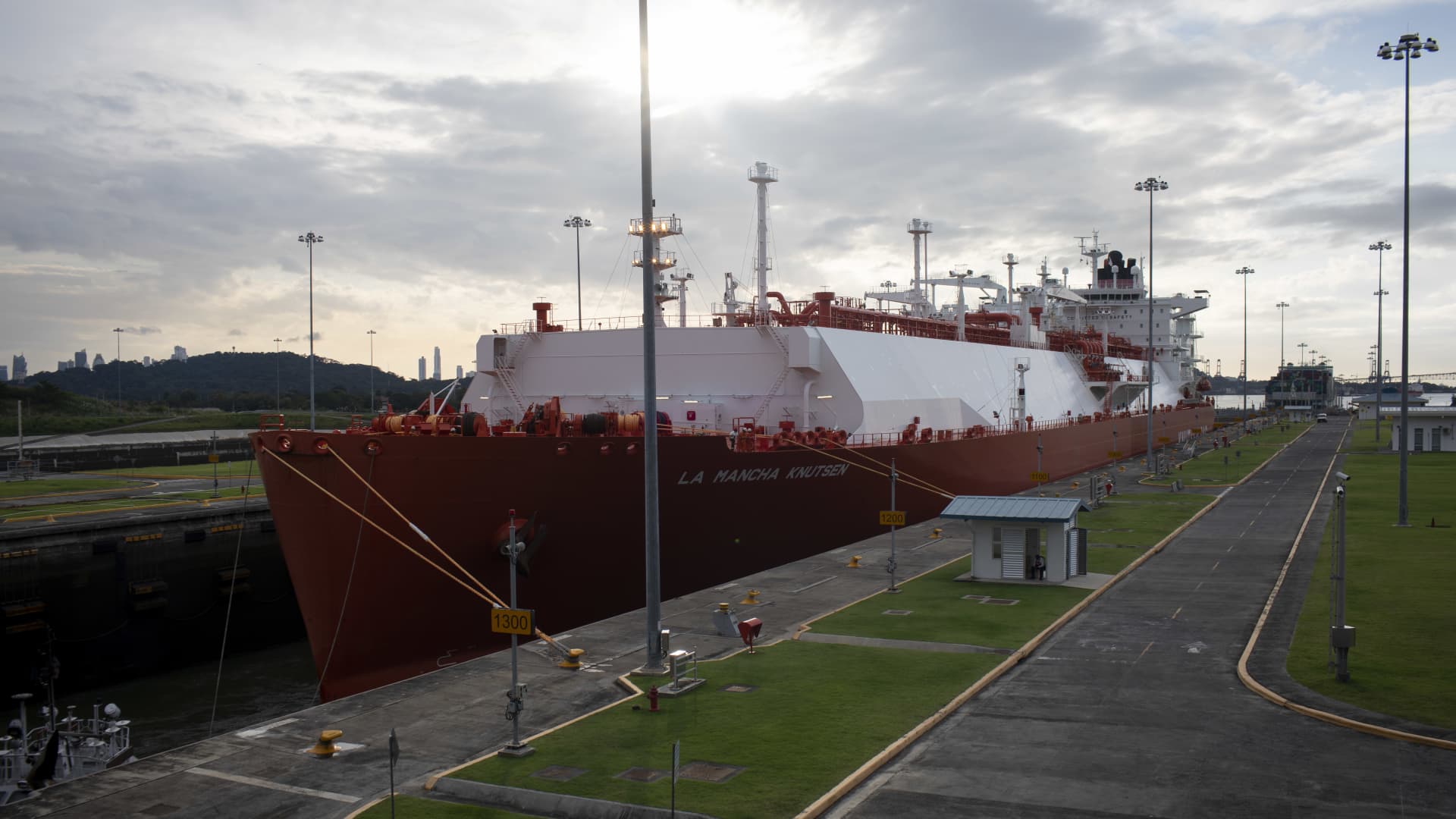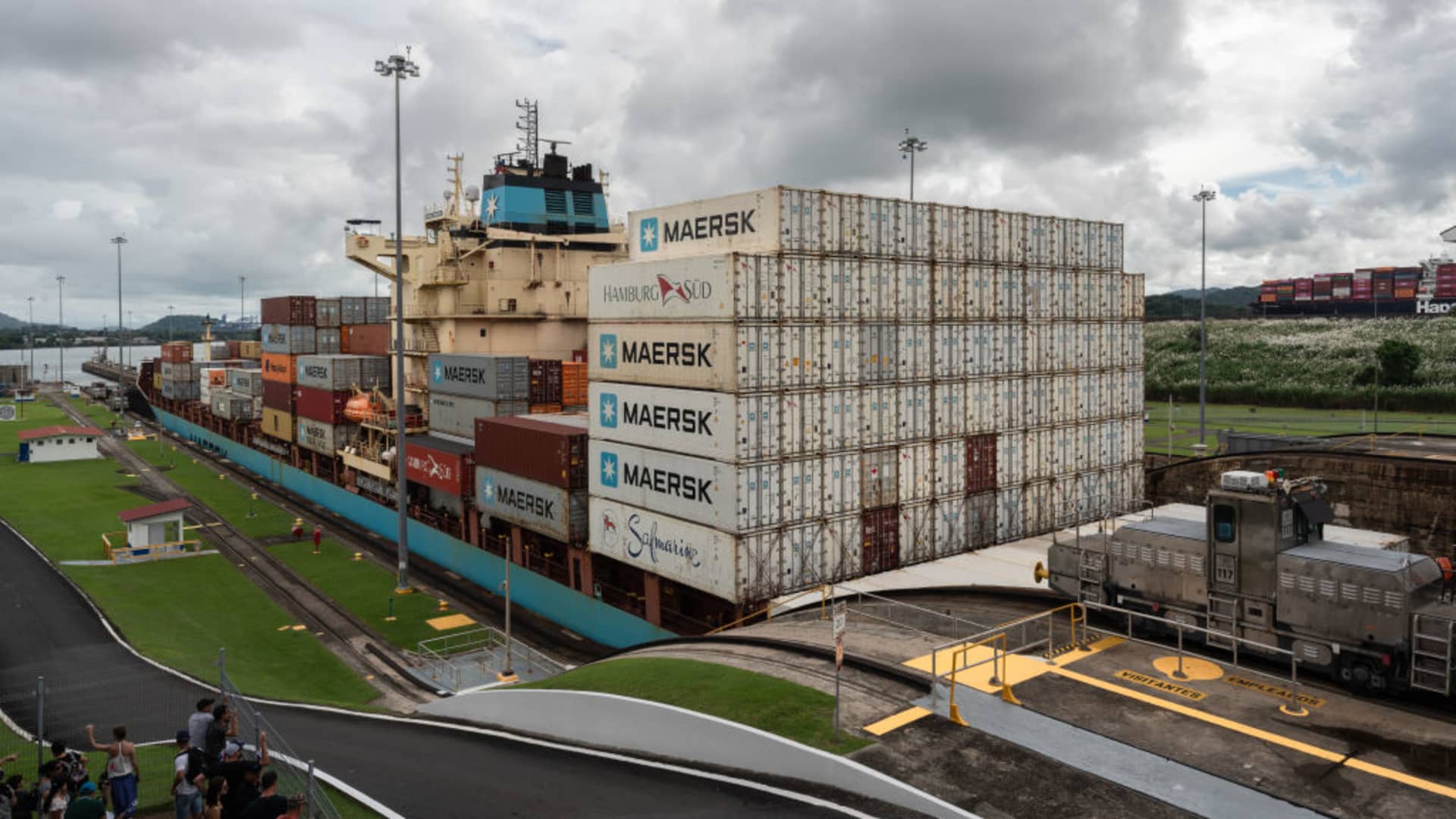
After a historic drought that paralyzed vessel transits through the Panama Canal, the Panama Canal Authority is moving ahead with major investments in new infrastructure to mitigate future droughts and the risk of low water levels that in recent years plagued the key global trade gateway.
The Panama Canal depends on fresh water for its operations and is rainfall dependent.
“We use about two and a half times the amount of water a city of the size of New York uses for the canal operation,” Ricaurte Vásquez, Administrator of the Panama Canal Authority, told CNBC.
In a good year of rain, that means over 50 vessel transits through the canal’s locks a day, but in recent years, weather has not cooperated. Severe drought conditions hit the region from late 2022 to 2024, forcing the canal to reduce transits and put in place vessel weight restrictions in an effort to conserve water.
The canal is critical to the U.S. economy and trade. The U.S. is the largest user of the Panama Canal, with total U.S. commodity export and import containers representing about 73% of Panama Canal traffic, and 40% of all U.S. container traffic traveling through the Panama Canal every year. In all, roughly $270 billion in cargo is handled annually.