Underwater curtains and ice thickening divert attention from cutting fossil fuel use, warns climate research group
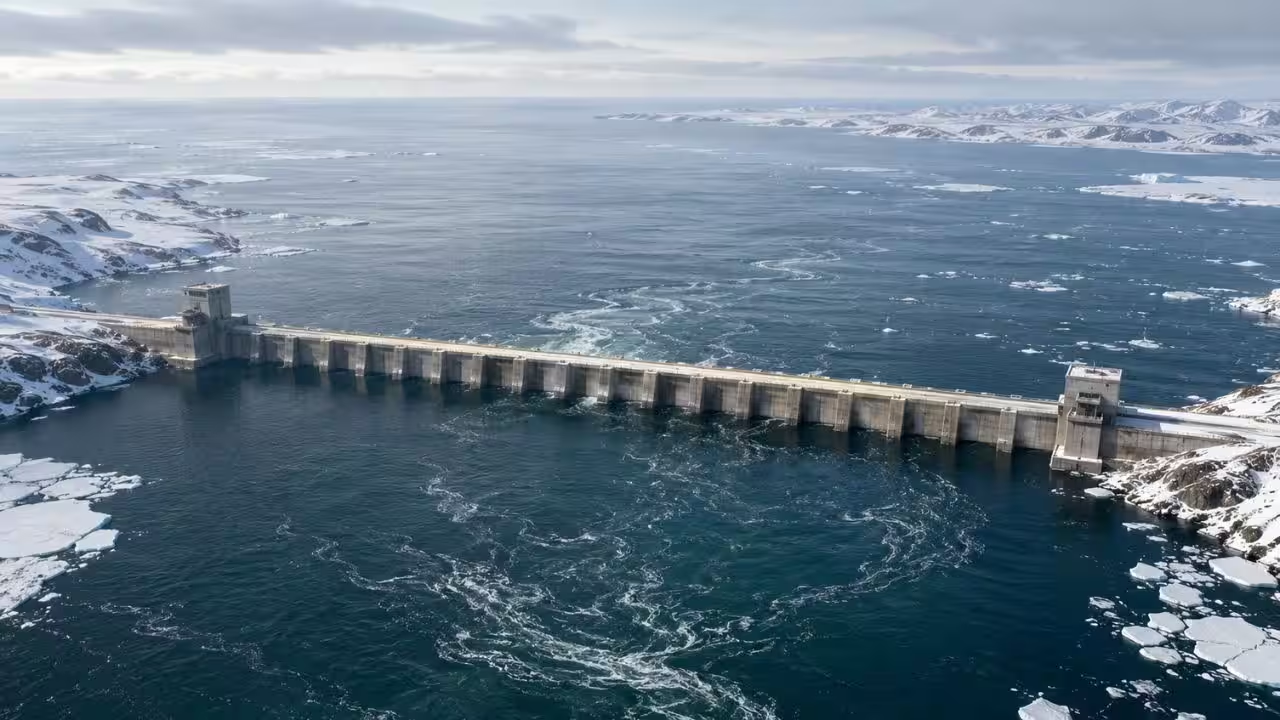
Proposals to fight the impact of the climate crisis at the poles, from giant underwater curtains to scattering glass beads across the ice, have been dismissed by a group of scientists as an “unimaginably expensive” and “dangerous” distraction.
Geoengineering, which includes blocking sunlight with airborne particles and thickening ice with pumped seawater, has become highly divisive among scientists. Its proponents argue that, with cuts in carbon emissions going far too slowly, exploring options for “emergency brakes” would be valuable.
However, a new analysis argues that schemes proposed for polar regions are so flawed that no amount of research could resolve them and that they treat only the symptoms and not the causes of the climate emergency.
The researchers argue that continuing to investigate the schemes wastes time and funding that would be far better spent on emissions cuts. Critics of the analysis said it looked solely at the negative aspects of the geoengineering schemes and did not compare these with the damage caused by global heating.