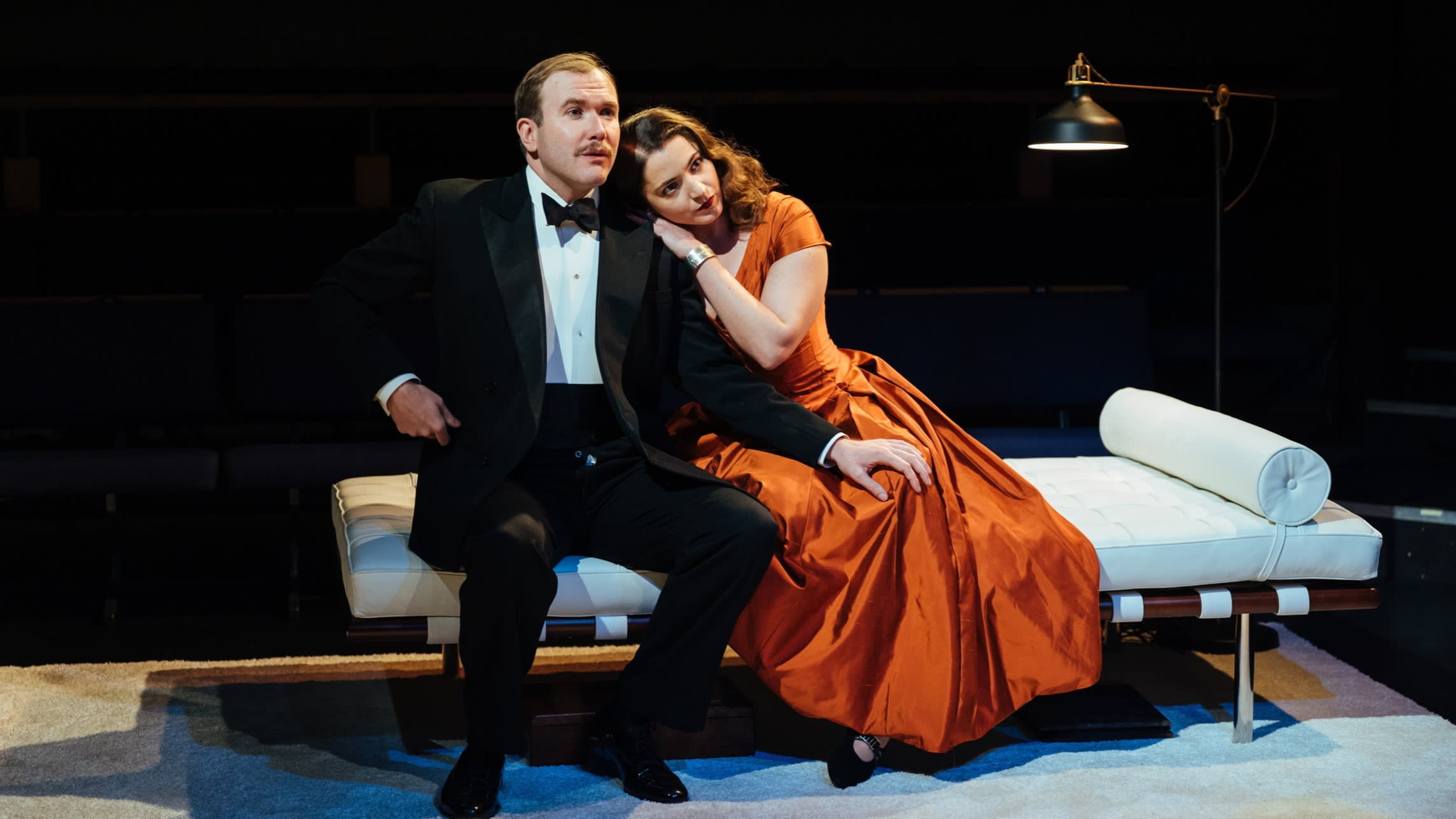
Toronto film festival: Nia DaCosta ups the nastiness of Hedda Gabler in a stylish but over-egged adaptation with lead Tessa Thompson losing the film to a standout Nina Hoss
H
enrik Ibsen’s second-most famous play, Hedda Gabler, has been plenty messed around with in recent years. There was a much-derided stage production starring Mary-Louise Parker. There was Liz Meriwether’s sci-fi reimagining, Heddatron. And now there is Nia DaCosta’s film Hedda, a rejiggering of the narrative that places a premium on subterfuge and sexual intrigue. It sometimes lands its intended jolt, but too often mistakes arch style for profundity.
That was also true of DaCosta’s Candyman sequel, an endlessly attractive film that was an otherwise confused update of the 1992 classic. Hedda fares better; it’s the work of a more assured and restrained writer-director, one who is willing to, on occasion, let visual flash take a backseat to more mechanical matters of storytelling. But there is nonetheless a recklessness to DaCosta’s version, its brash iconoclasm throws both baby and bathwater out of the manor-house window.
The action has been transposed from 19th-century Oslo to 1950s Great Britain, where former bohemian free-spirit Hedda (Tessa Thompson) has moved into a sprawling estate with her new husband, pinched and humorless academic George (Tom Bateman). They’ve decided to throw a party, ostensibly to celebrate the house and their return from a long honeymoon, but actually functioning as a way to secure George a crucial teaching position. DaCosta immediately foreshadows that the bash is going to end badly, sending Hedda stalking around the place with a wicked strut, pistol in hand. An old friend – really, an old lover – has just phoned to say she’ll stop by and Hedda seems both unnerved and invigorated by the news.