The humble inventions that power our modern world wouldn’t have been possible without decades of support for early-stage research.
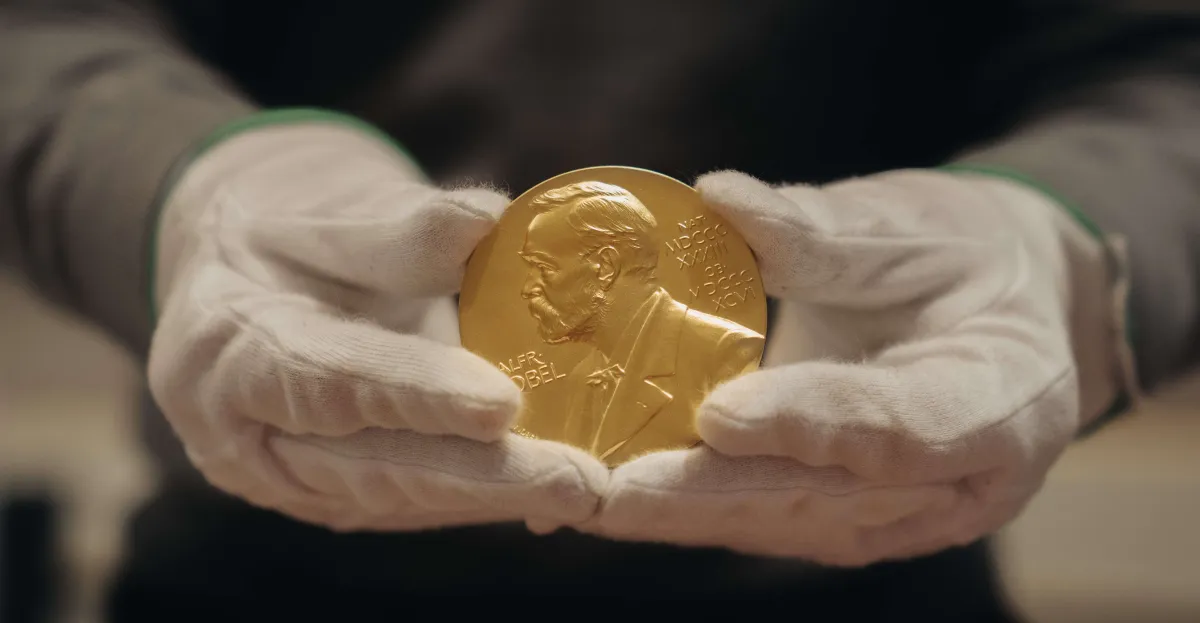
In December 1947, three physicists at Bell Telephone Laboratories—John Bardeen, William Shockley, and Walter Brattain—built a compact electronic device using thin gold wires and a piece of germanium, a material known as a semiconductor. Their invention, later named the transistor (for which they were awarded the Nobel Prize in 1956), could amplify and switch electrical signals, marking a dramatic departure from the bulky and fragile vacuum tubes that had powered electronics until then.
Its inventors weren’t chasing a specific product. They were asking fundamental questions about how electrons behave in semiconductors, experimenting with surface states and electron mobility in germanium crystals. Over months of trial and refinement, they combined theoretical insights from quantum mechanics with hands-on experimentation in solid-state physics—work many might have dismissed as too basic, academic, or unprofitable.
Their efforts culminated in a moment that now marks the dawn of the information age. Transistors don’t usually get the credit they deserve, yet they are the bedrock of every smartphone, computer, satellite, MRI scanner, GPS system, and artificial-intelligence platform we use today. With their ability to modulate (and route) electrical current at astonishing speeds, transistors make modern and future computing and electronics possible.