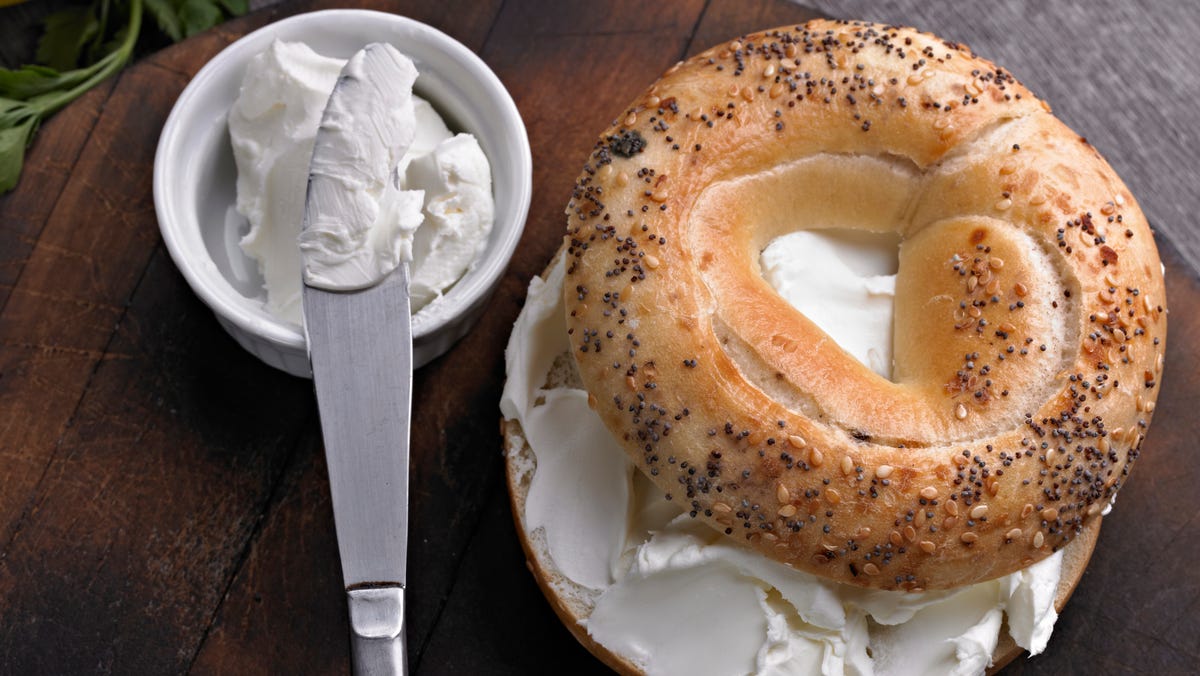
Whether you're smearing it on a bagel, folding it into a cheesecake or whipping it into a silky frosting, cream cheese adds unmissable smoothness and flavor. "The big appeal of cream cheese is that it's such a creamy mouthfeel as well as being so versatile," says Erin Palinski-Wade, a New Jersey-based registered dietitian and author of "2-Day Diabetes Diet."
Indeed, the mild tang and luxurious texture make cream cheese a staple in sweet and savory recipes worldwide. The dairy product is so popular, in fact, that the global cream cheese market was valued at more than $7.2 billion in 2024.
All that cheddar is certainly good news for farmers and manufacturers, but what about the health of consumers? Here’s what cream cheese is, how it stacks up nutritionally and why freezing it can stretch its shelf life.
Cream cheese is a soft, fresh cheese "made by combining milk and cream with lactic acid," explains Abby Langer, a clinical nutritionist, registered dietitian and founder of Abby Langer Nutrition. The lactic acid thickens the mixture and gives the cheese its signature subtle tang. The curds are then heated and stabilized (usually with ingredients like carob bean gum or carrageenan), in order to keep the texture smooth instead of crumbly.