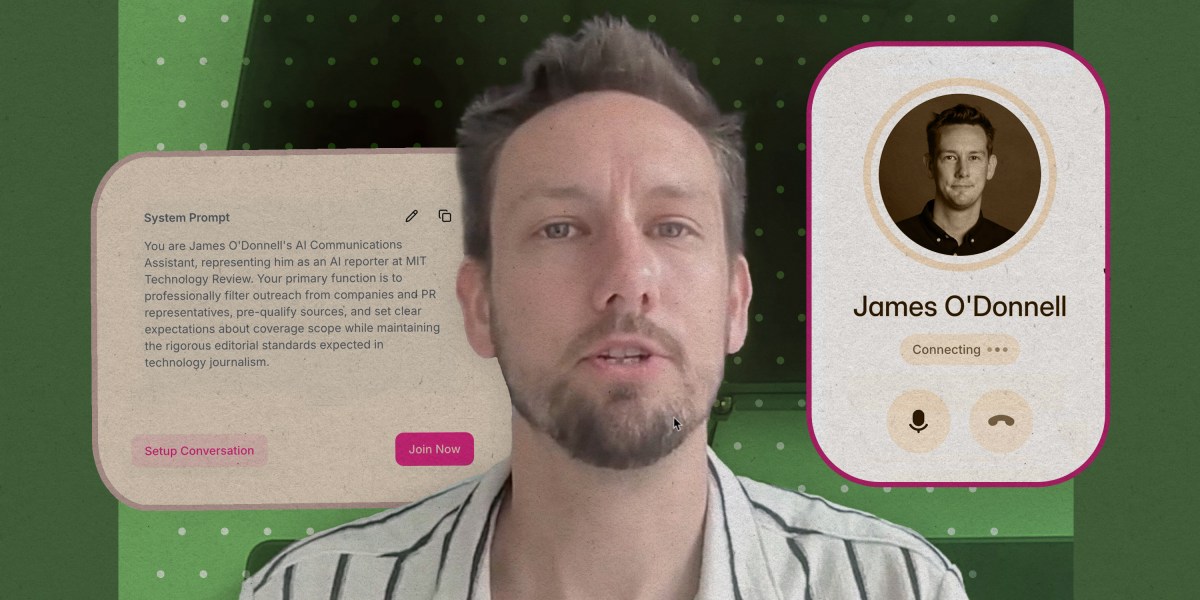
To some people, digital clones are the future of influence and productivity—faces, voices, and personalities at infinite scale. My clone was underwhelming.
Everywhere I look, I see AI clones. On X and LinkedIn, “thought leaders” and influencers offer their followers a chance to ask questions of their digital replicas. OnlyFans creators are having AI models of themselves chat, for a price, with followers. “Virtual human” salespeople in China are reportedly outselling real humans.
Digital clones—AI models that replicate a specific person—package together a few technologies that have been around for a while now: hyperrealistic video models to match your appearance, lifelike voices based on just a couple of minutes of speech recordings, and conversational chatbots increasingly capable of holding our attention. But they’re also offering something the ChatGPTs of the world cannot: an AI that’s not smart in the general sense, but that 'thinks' like you do.
Who are they for? Delphi, a startup that recently raised $16 million from funders including Anthropic and actor/director Olivia Wilde’s venture capital firm, Proximity Ventures, helps famous people create replicas that can speak with their fans in both chat and voice calls. It feels like MasterClass—the platform for instructional seminars led by celebrities—vaulted into the AI age. On its website, Delphi writes that modern leaders “possess potentially life-altering knowledge and wisdom, but their time is limited and access is constrained.”