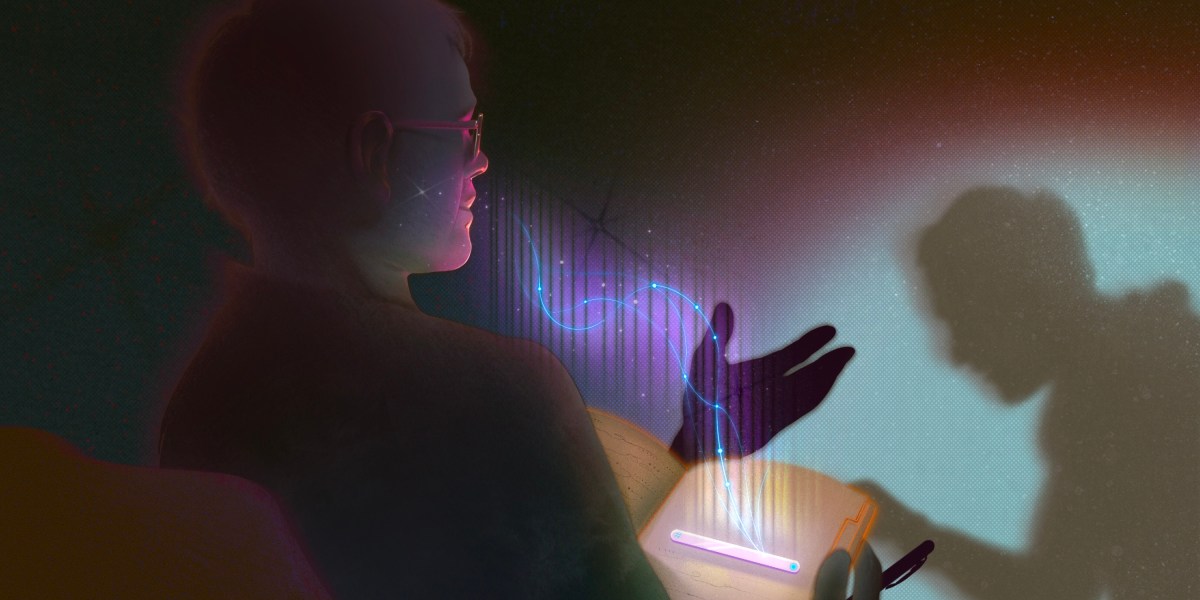
Some therapists are using AI during therapy sessions. They’re risking their clients’ trust and privacy in the process.
Declan would never have found out his therapist was using ChatGPT had it not been for a technical mishap. The connection was patchy during one of their online sessions, so Declan suggested they turn off their video feeds. Instead, his therapist began inadvertently sharing his screen.
“Suddenly, I was watching him use ChatGPT,” says Declan, 31, who lives in Los Angeles. “He was taking what I was saying and putting it into ChatGPT, and then summarizing or cherry-picking answers.”
Declan was so shocked he didn’t say anything, and for the rest of the session he was privy to a real-time stream of ChatGPT analysis rippling across his therapist’s screen. The session became even more surreal when Declan began echoing ChatGPT in his own responses, preempting his therapist.
“I became the best patient ever,” he says, “because ChatGPT would be like, ‘Well, do you consider that your way of thinking might be a little too black and white?’ And I would be like, ‘Huh, you know, I think my way of thinking might be too black and white,’ and [my therapist would] be like, ‘Exactly.’ I’m sure it was his dream session.”