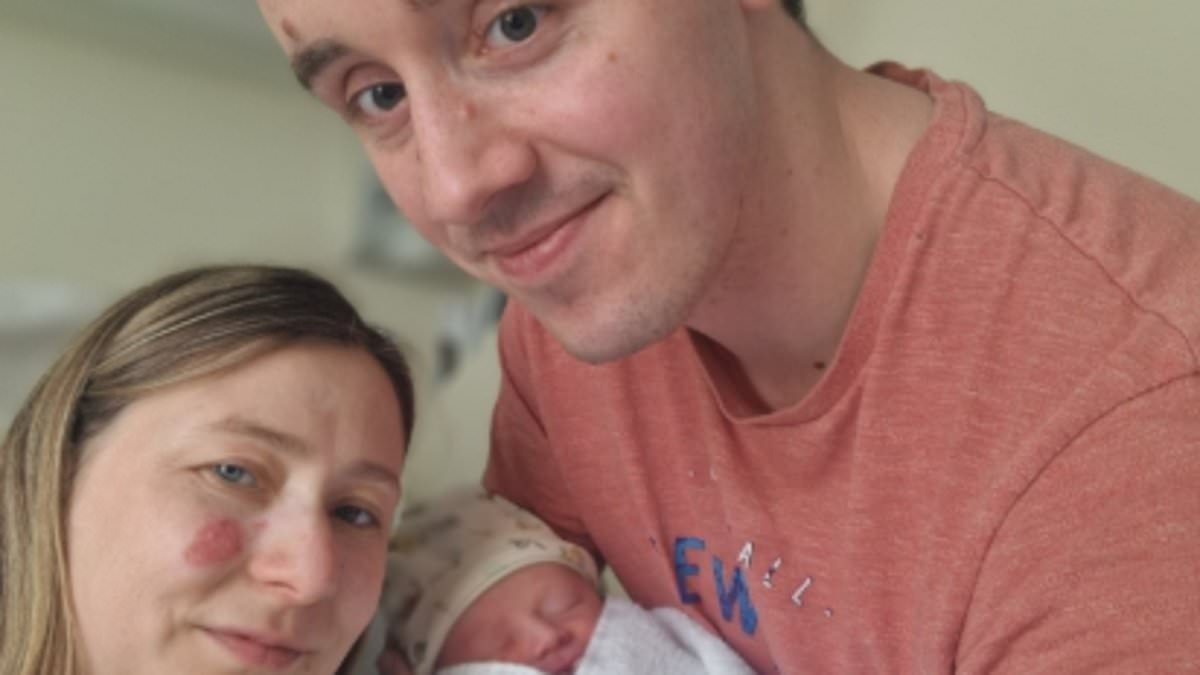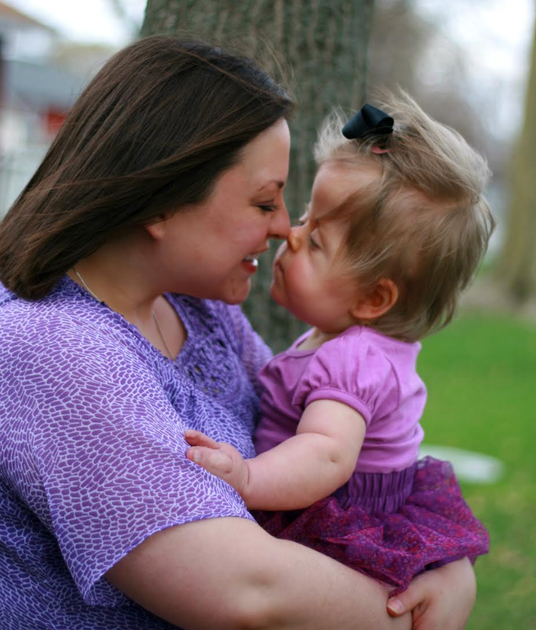
Two weeks after our daughter Sarah’s birth, my husband Ben and I found ourselves standing in a geneticist’s exam room. I placed Sarah’s baby carrier on the floor and she kicked her legs and cooed at my feet.
The geneticist, Dr. Brown, and her assistant entered the room and briskly introduced themselves. After measuring the circumference of Sarah’s head, Dr. Brown plucked an old medical textbook from the shelf behind us, blew the dust off it, and instructed her assistant to copy the page “about Apert syndrome.”
This was the second time I’d heard that phrase — Apert syndrome — and still, I didn’t know what it meant. Not fully, at least. I knew that Sarah’s head was shaped differently than most newborns, which we were told was likely due to the fusion of one or more sutures in her skull. She was born with what we affectionately called mitten hands, because her fingers were conjoined and wrapped in one smooth layer of skin. Her feet were the same.
Dr. Brown spoke with confidence, as if she’d had this conversation with enough people throughout her years of practice that Sarah’s diagnosis was obvious. I don’t recall the words she spoke that day, not specifically. Everything she said was filtered in muted and muffled tones, as if we were standing in a tunnel and everything spoken changed into gibberish — nonsense.