Three books push back on a rising tide of optimism about space settlements.
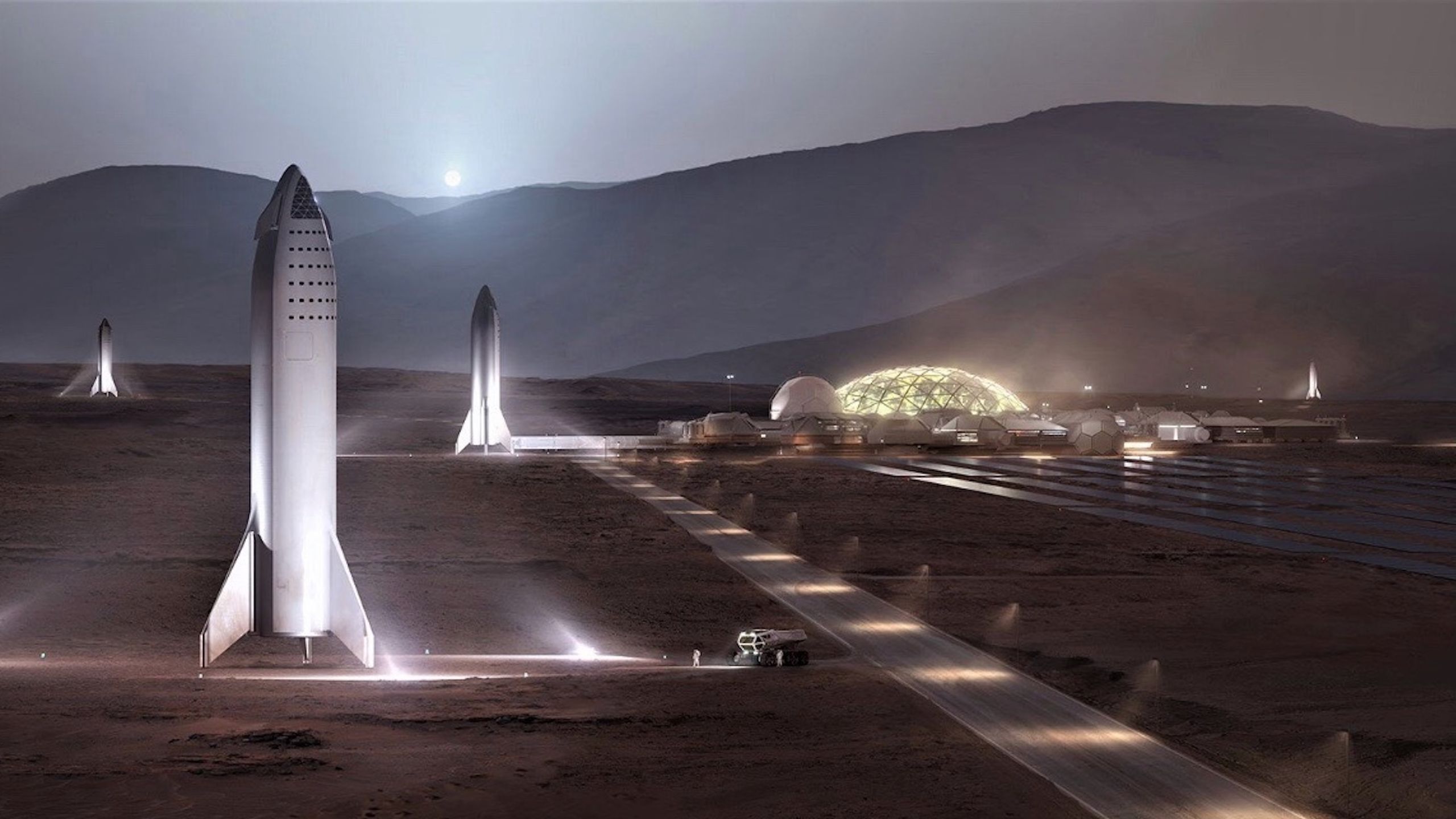
Elon Musk and Jeff Bezos are bitter rivals in the commercial space race, but they agree on one thing: Settling space is an existential imperative. Space is the place. The final frontier. It is our human destiny to transcend our home world and expand our civilization to extraterrestrial vistas.
This belief has been mainstream for decades, but its rise has been positively meteoric in this new gilded age of astropreneurs. Expanding humanity beyond Earth is both our birthright and our duty to the future, they insist. Failing to do so would consign our species to certain extinction—either by our own hand, perhaps through nuclear war or climate change, or in some cosmic disaster, like a massive asteroid impact.
But as visions of giant orbital stations and Martian cities dance in our heads, a case against human space colonization has found its footing in a number of recent books. The argument grows from many grounds: Doubts about the practical feasibility of off-Earth communities. Concerns about the exorbitant costs, including who would bear them and who would profit. Realism about the harsh environment of space and the enormous tax it would exact on the human body. Suspicion of the underlying ideologies and mythologies that animate the race to settle space.