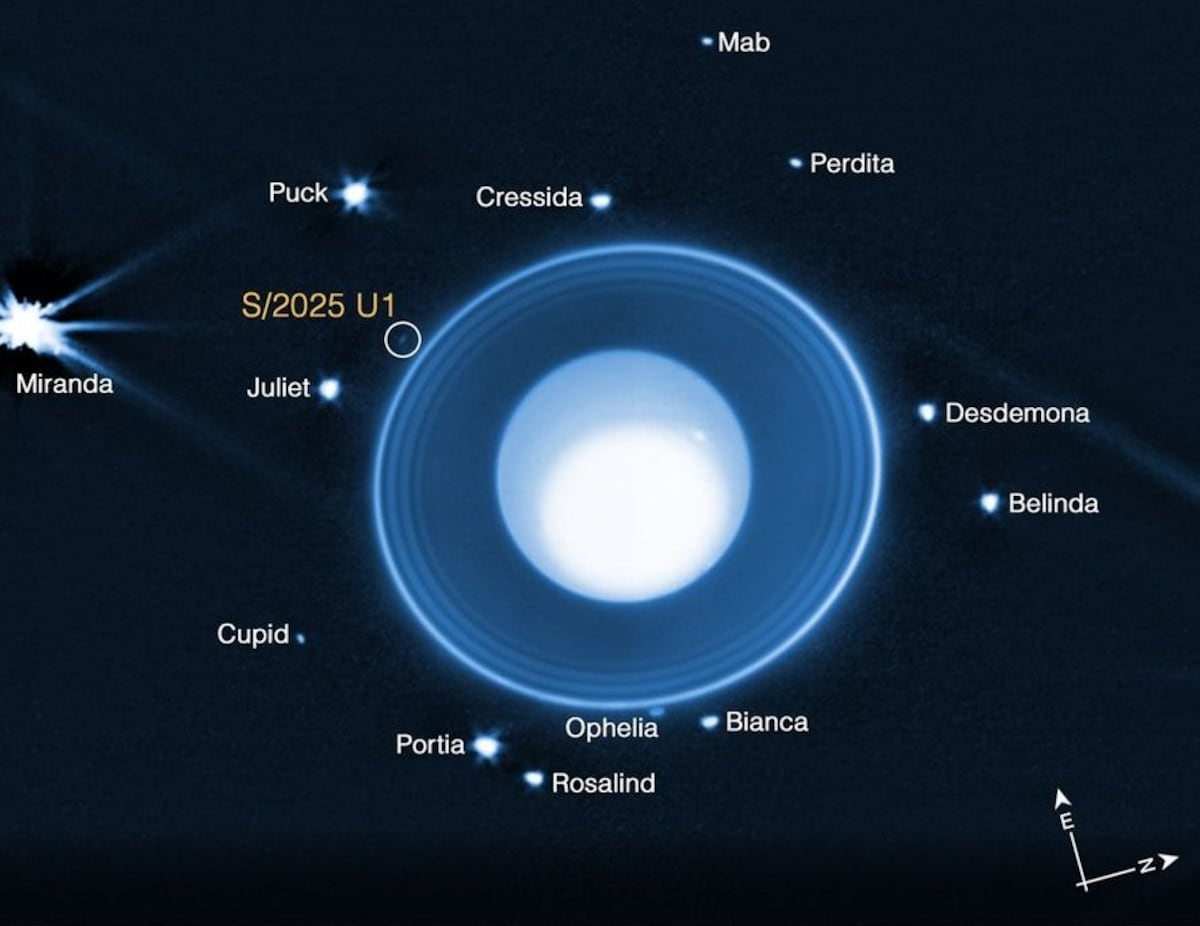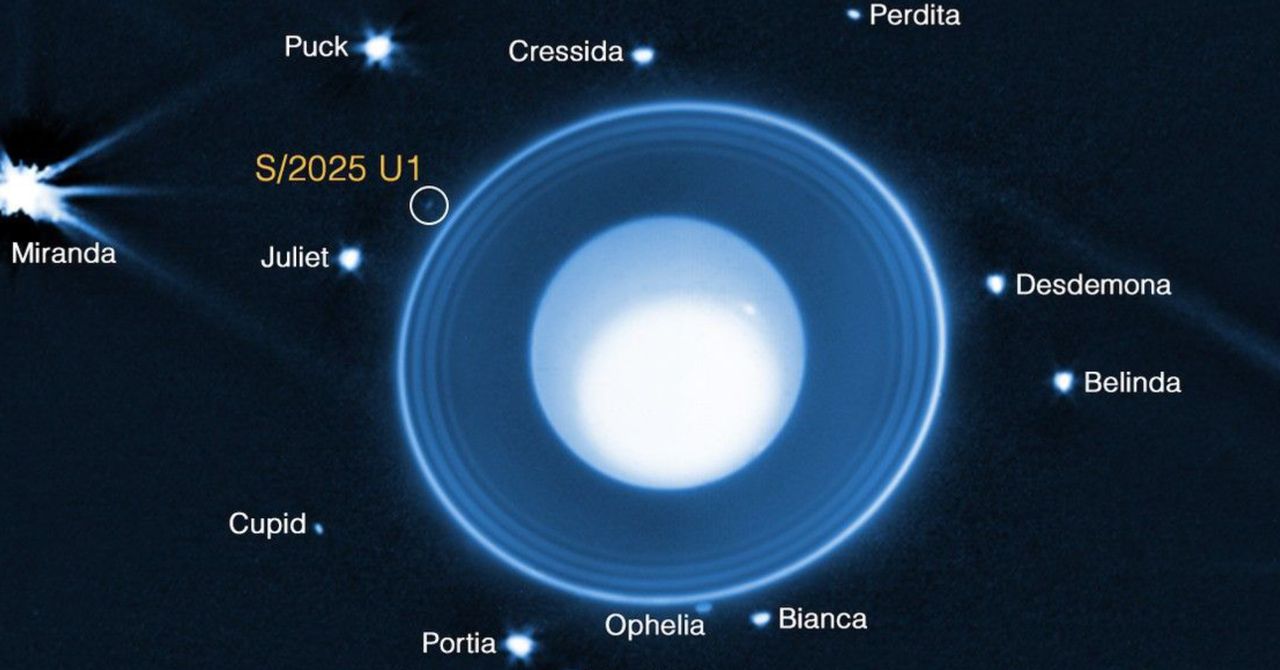
Aug. 19 (UPI) -- NASA scientists at the Southwest Research Institute discovered a 29th moon orbiting Uranus while using infrared detection through the James Webb Space Telescope.
The discovery was made on Feb. 2, but NASA officials did not announce the discovery until Tuesday in a news release.
"This object was spotted in a series of 10 40-minute long-exposure images captured by the Near-Infrared Camera," said Maryame El Moutamid, lead scientist at NASA's Solar System Science and Exploration Division in Boulder, Colo.
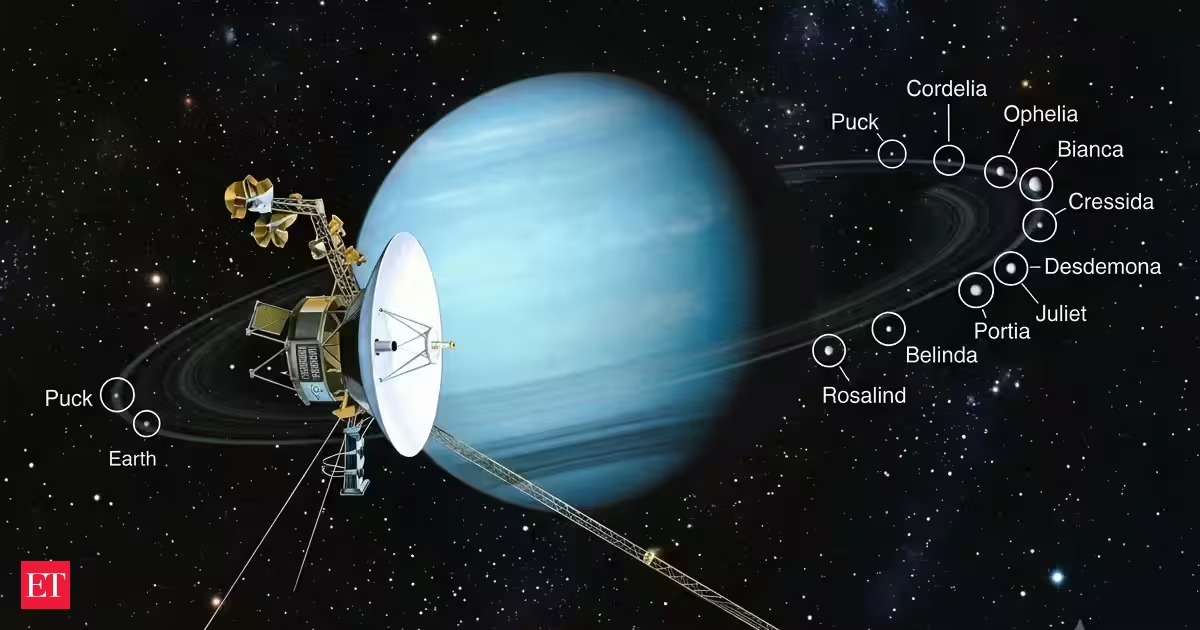
"It's a small moon but a significant discovery," El Moutamid said. "Even NASA's Voyager 2 spacecraft didn't see [the moon] during its flyby nearly 40 years ago."
NASA scientists estimate the newly discovered moon is 6 miles in diameter, which made it nearly impossible for Voyager 2 or other telescopes to discover.