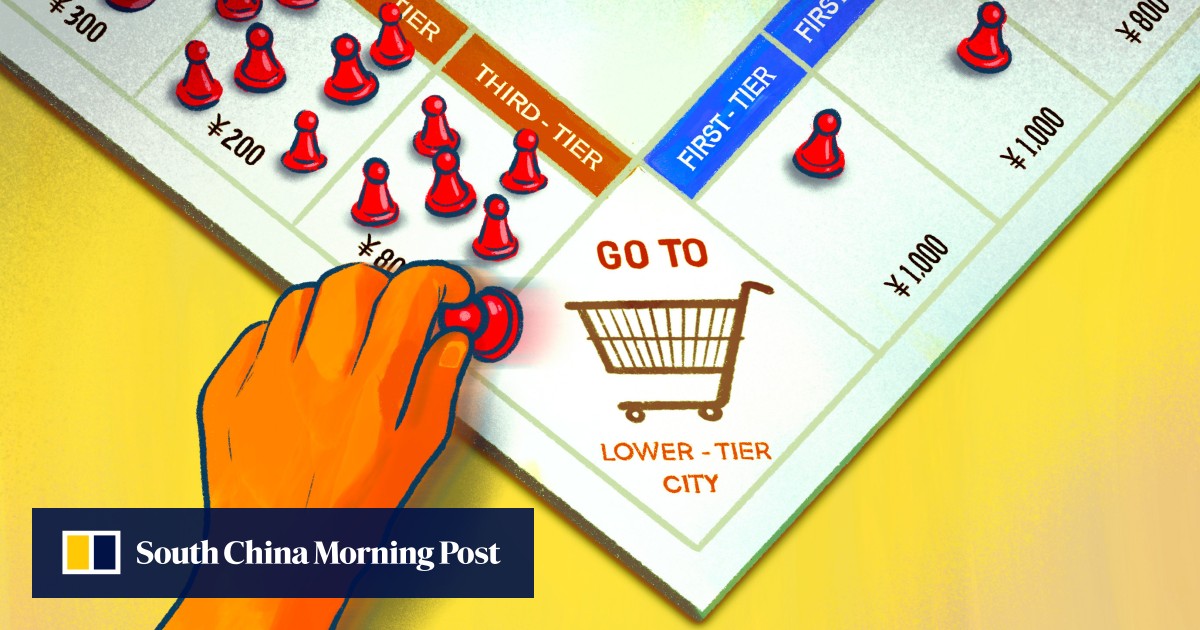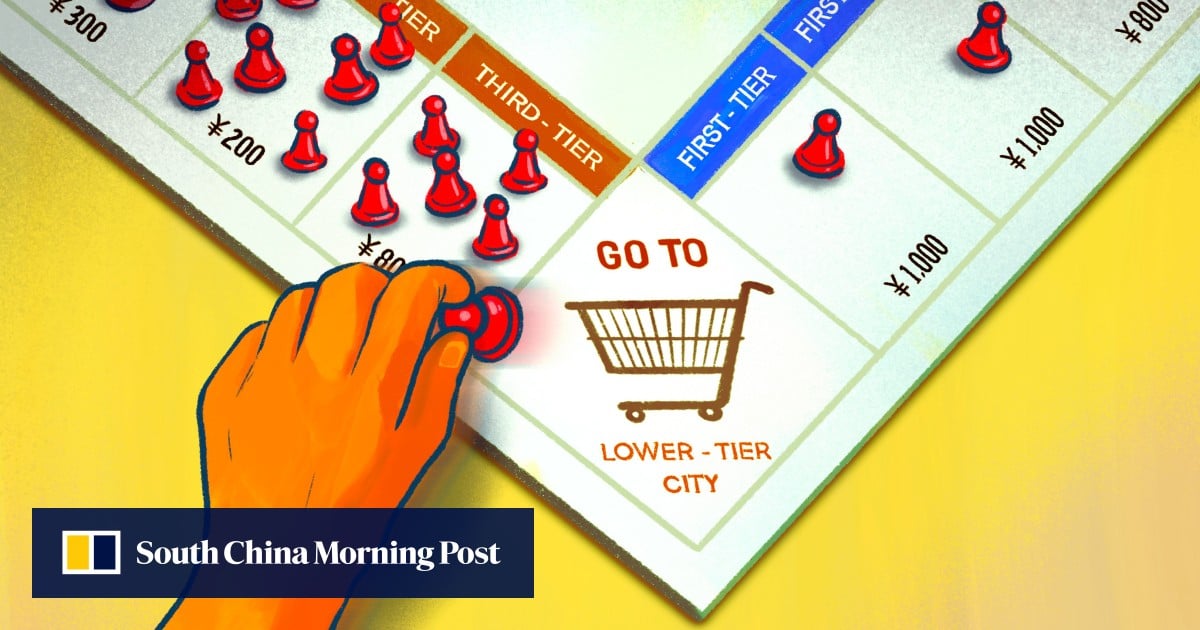
Survey last year found that nearly 80 per cent of consumers in China’s third- and fourth-tier cities were optimistic about the economy
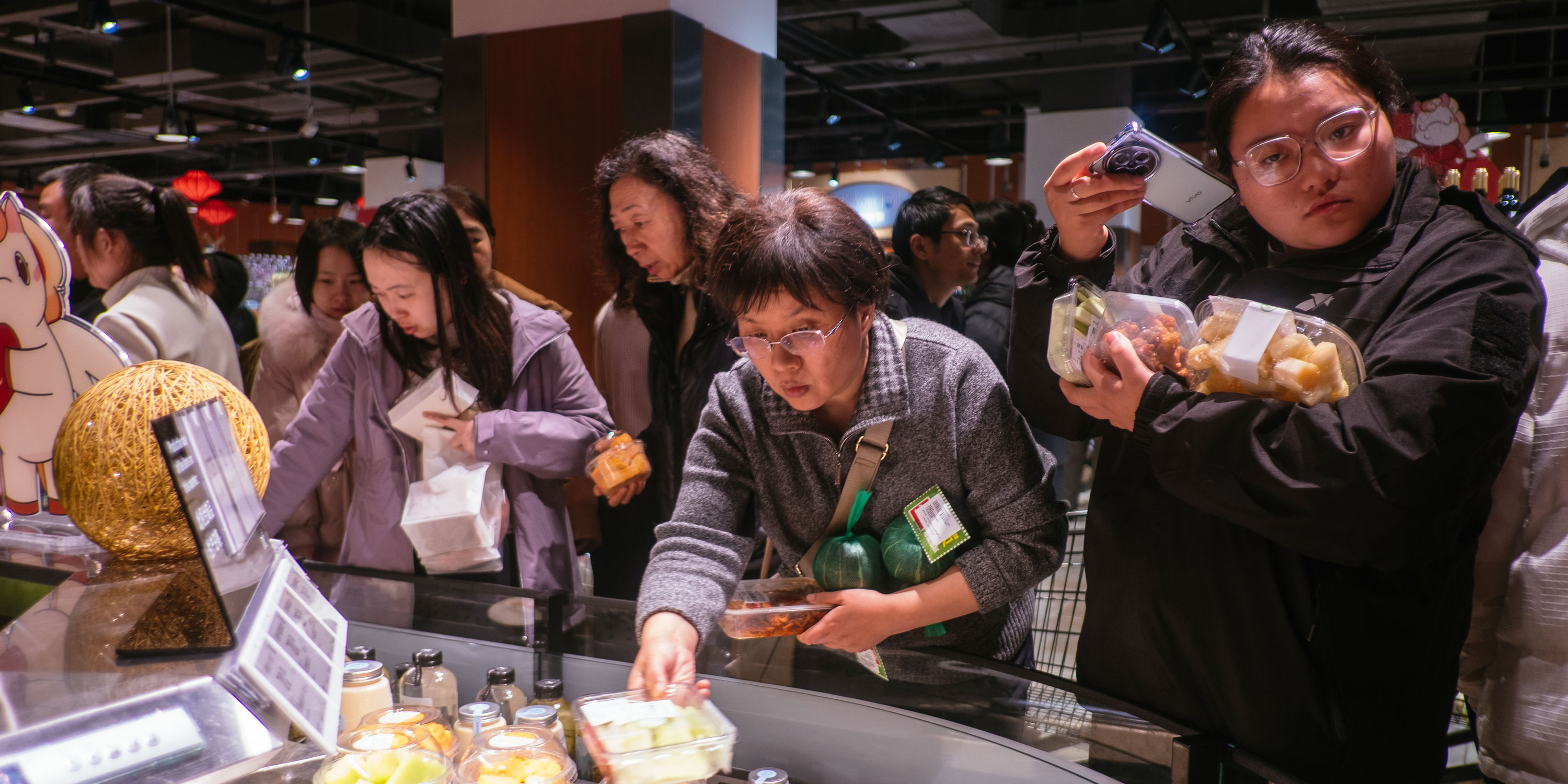
While county shopping centres might not stock Dyson vacuum cleaners and hairdryers, they have already become part of daily life in households in urban counties thanks to China’s ubiquitous e-commerce networks.
Driving Teslas and eating expensive cherries imported from South America, the expanding middle class in smaller cities and towns is fuelling China’s next wave of consumption.
As the world’s second-largest economy grows more slowly, residents of major cities have reined in their spending. But the consumption upgrade in China’s more numerous lower-tier markets is far from complete, experts said.
With lighter economic burdens, faster income growth and greater confidence in the future, consumers in such areas have stronger purchasing power and a greater willingness to spend, becoming a new engine for consumption growth as China seeks to shift its economy towards a consumption-driven model and away from one relying on exports and investment.