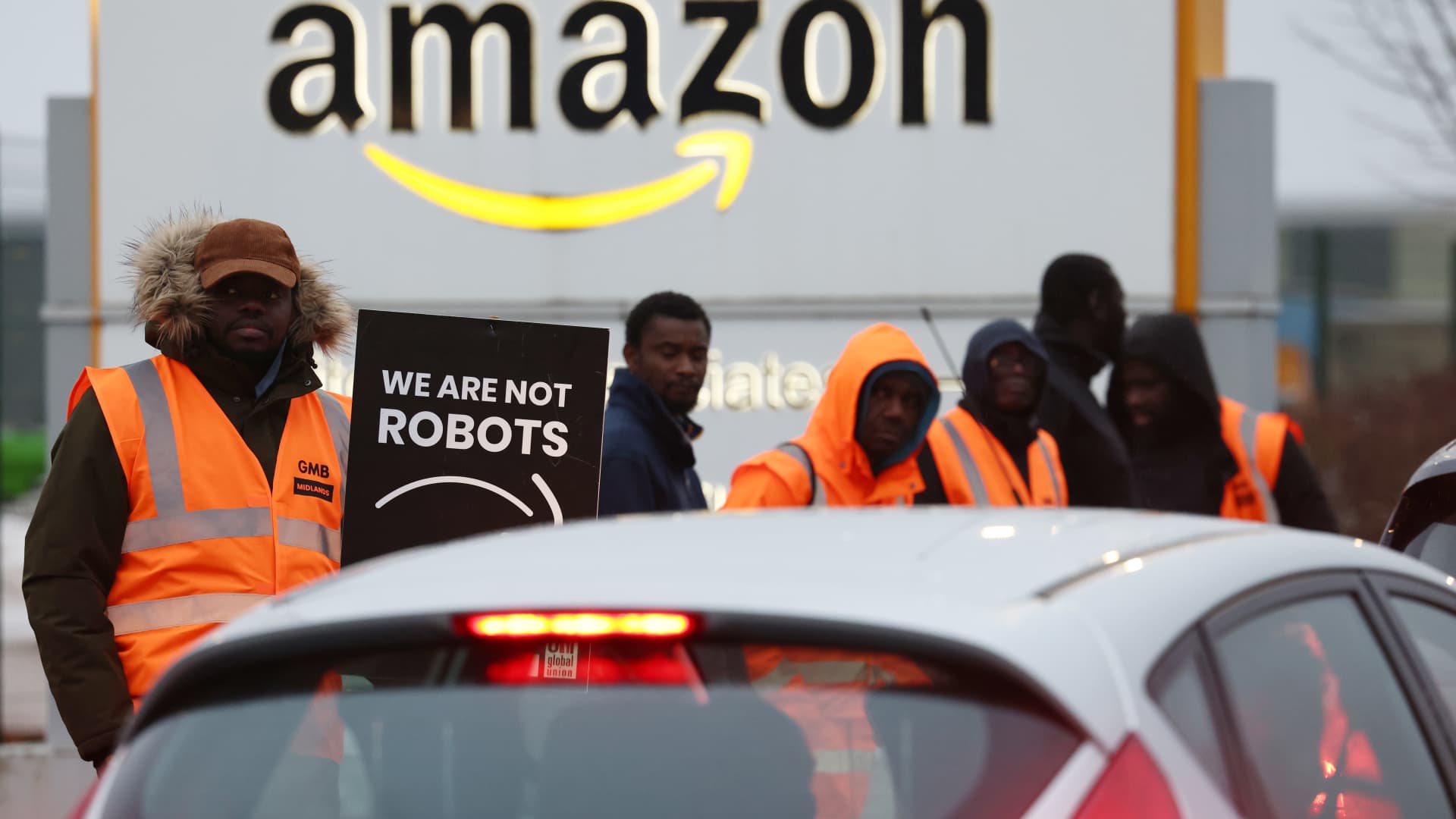
Artificial intelligence has emerged as a key tool for companies to drive growth — and reduce labor costs —particularly as pressure mounts for businesses to remain competitive.
Companies in industries ranging from cloud software to fast food to e-commerce have internally deployed AI tools to to improve productivity, customer experience and supply chains. AI is also leading to less reliance on human labor in some spaces, particularly entry level jobs and positions tied to automation and manual tasks.
Unemployment has risen this year specifically among young tech workers whose skills overlap with AI models, according to Goldman Sachs chief U.S. economist Jan Hatzius.
“Although aggregate labor market impacts from generative AI remain limited, we are starting to see evidence of labor demand hits in the most AI-exposed industries,” Hatzius wrote in a July 25 note to clients. “Employment growth has turned negative in marketing consulting, call centers, graphic design, web search and software development, and the tech sector’s employment share has declined below its long-run trend.”
To be sure, it’s hard to quantify the exact effect AI is having on labor at this stage of the tech cycle. One way to understand the trend is by assessing commentary made by the top executives at big employers and high-growth firms.